

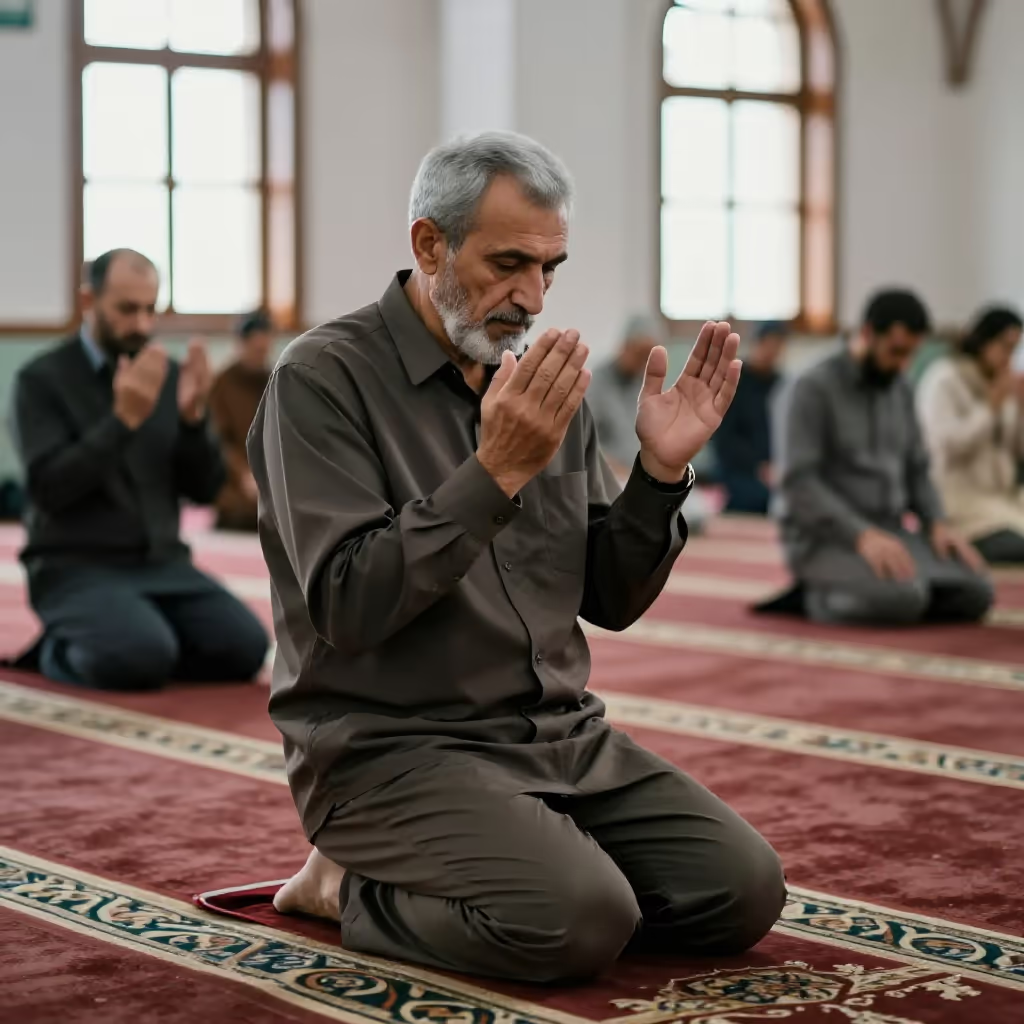
An attitude characterized by deep faith in a religion and by following its rules and rituals.
example
Ihre Frömmigkeit zeigt sich in täglichen Gebeten und dem Besuch des Gottesdienstes.
Her piety is shown in daily prayers and attending church services.
Usage tips
Word family
The noun 'Frömmigkeit' (piety) is derived from the adjective 'fromm' (pious/devout). The ending '-keit' is often used to form abstract nouns from adjectives that describe a quality or state.
EXAMPLE
Er ist bekannt für seine tiefe Frömmigkeit und seinen Glauben.
He is known for his deep piety and his faith.
Typical collocations
'Frömmigkeit' (piety) is often used with verbs such as 'zeigen' (to show) or 'leben' (to live/practice). People also speak of 'tiefer' (deep), 'innerer' (inner), or 'gelebter' (lived/practiced) piety.
EXAMPLE
Manche Menschen zeigen ihre Frömmigkeit nicht öffentlich.
Some people do not show their piety publicly.
Register
This word belongs more to elevated or written language. It is mainly used in texts or conversations about religion, history, or philosophy.
EXAMPLE
In dem Buch wird die Frömmigkeit im Mittelalter thematisiert.
The book discusses piety in the Middle Ages.
Compare with
near_synonym
Frömmigkeit vs Religion
religion
'die Religion' and 'die Frömmigkeit' both have to do with religious faith. 'Religion' means the faith itself or an entire belief system with teachings, rules, and rituals. 'Frömmigkeit' describes more the attitude of a person: they believe deeply and live according to the rules and rituals of their religion. So you use Religion when talking about the system or belonging to it. 'Frömmigkeit' fits better when you want to show how strongly and seriously someone expresses their faith in life.
Frömmigkeit
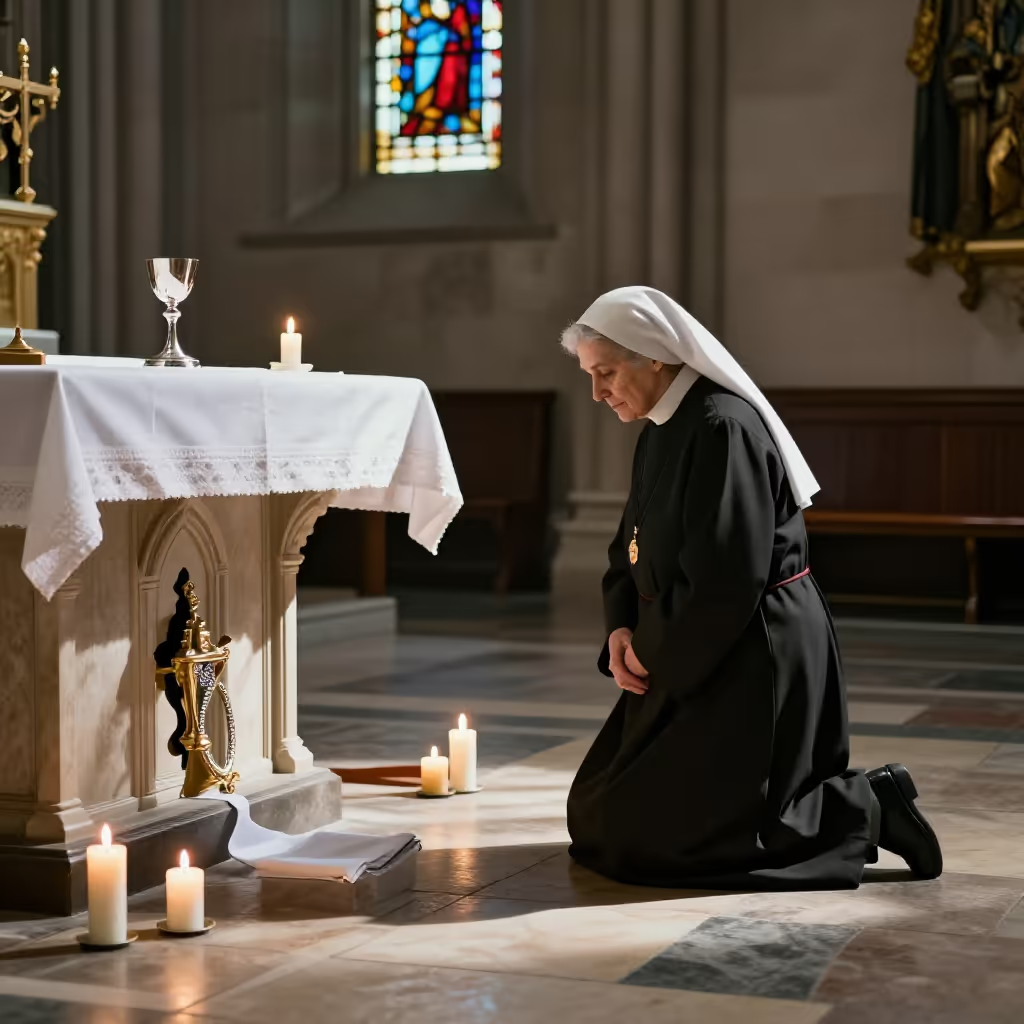
Die Frömmigkeit der alten Frau zeigt sich in ihrem täglichen Gebet.
The old woman's piety is shown in her daily prayer.
Religion
Religion spielt in diesem Land in vielen Feiertagen eine Rolle.
Religion plays a role in many holidays in this country.