

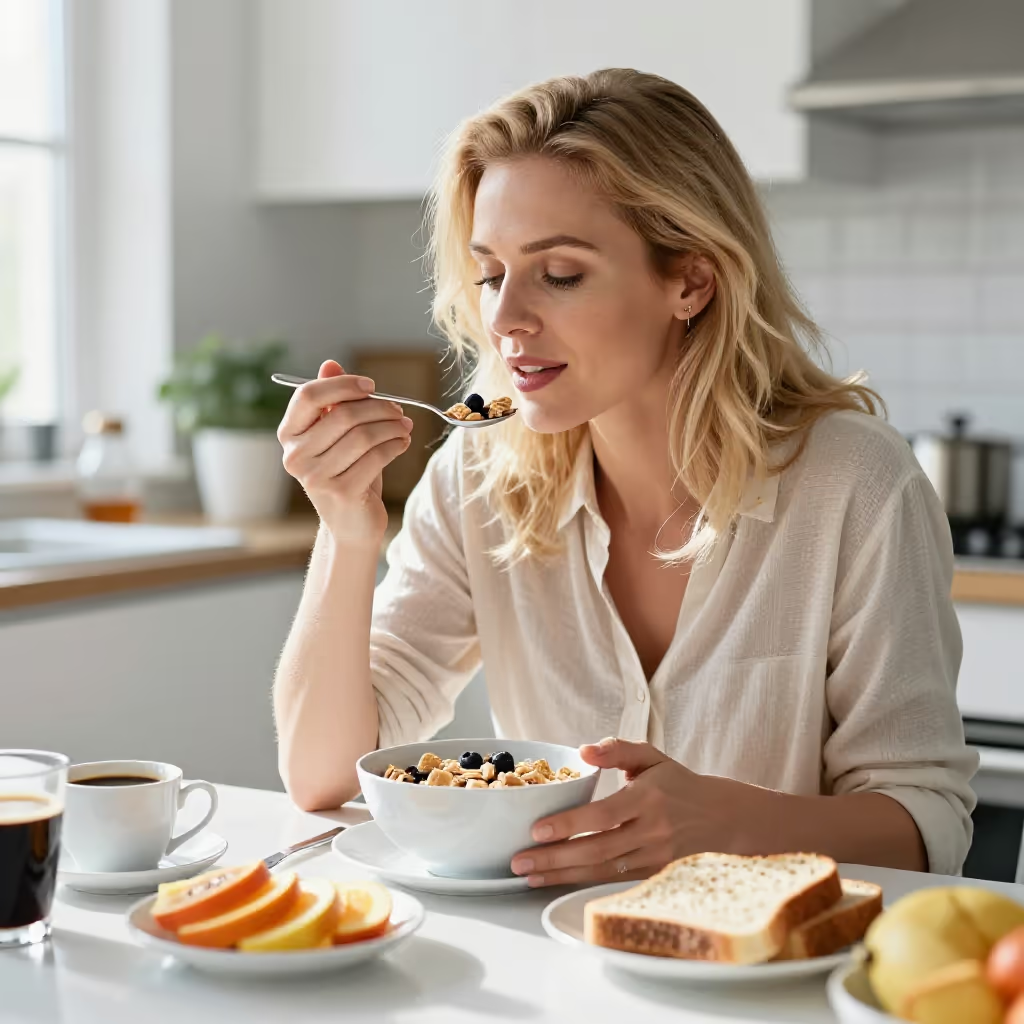
frühstücken
to have breakfast
To eat the first meal of the day, breakfast.
EXAMPLE
Ich frühstücke meistens nur einen Kaffee und ein Brötchen.
I usually just have coffee and a roll for breakfast.
to have breakfast
Loading your saved state.
to have breakfast
To eat the first meal of the day, breakfast.
Ich frühstücke meistens nur einen Kaffee und ein Brötchen.
I usually just have coffee and a roll for breakfast.
The verb 'frühstücken' (to have breakfast) is derived directly from the noun 'das Frühstück' (breakfast). This noun consists of 'früh' (early) and 'das Stück' (piece) — literally an 'early piece' of food in the morning.
Am Sonntag nehmen wir uns immer Zeit, um ausgiebig zu frühstücken.
On Sundays, we always take time to have a leisurely breakfast.
'Frühstücken' (to have breakfast) can be used both without and with an accusative object. Without an object, it describes the action in general; with an object, it states what you eat.
Wir frühstücken heute auf dem Balkon.
We're having breakfast on the balcony today.
The perfect tense of 'frühstücken' (to have breakfast) is always formed with the auxiliary verb 'haben' (to have). The past participle is 'gefrühstückt'.
Hast du heute Morgen schon gefrühstückt?
Have you already had breakfast this morning?
The verb is often combined with adverbs that describe the type of breakfast. Common examples are 'ausgiebig frühstücken' (to have a big/leisurely breakfast), 'spät frühstücken' (to have breakfast late), or 'gemeinsam frühstücken' (to have breakfast together).
Im Urlaub wollen wir jeden Tag spät frühstücken.
On vacation, we want to have breakfast late every day.
to eat
Essen is the general word for taking in solid food. Frühstücken, by contrast, specifically refers to the first meal of the day and can be used without naming any food. When only eating food is meant, essen is appropriate; for the first meal in the morning, frühstücken is more precise.

Ich frühstücke morgens mit einer Scheibe Brot.
I have breakfast with a slice of bread in the morning.
Ich esse morgens eine Scheibe Brot.
I eat a slice of bread in the morning.