


sich fügen
to submit
To submit to a situation, fate, or another person's will and no longer offer resistance.
EXAMPLE
Er musste sich seinem Schicksal fügen und die Niederlage akzeptieren.
He had to submit to his fate and accept the defeat.
to submit / join
Loading your saved state.
to submit
To submit to a situation, fate, or another person's will and no longer offer resistance.
Er musste sich seinem Schicksal fügen und die Niederlage akzeptieren.
He had to submit to his fate and accept the defeat.
to join
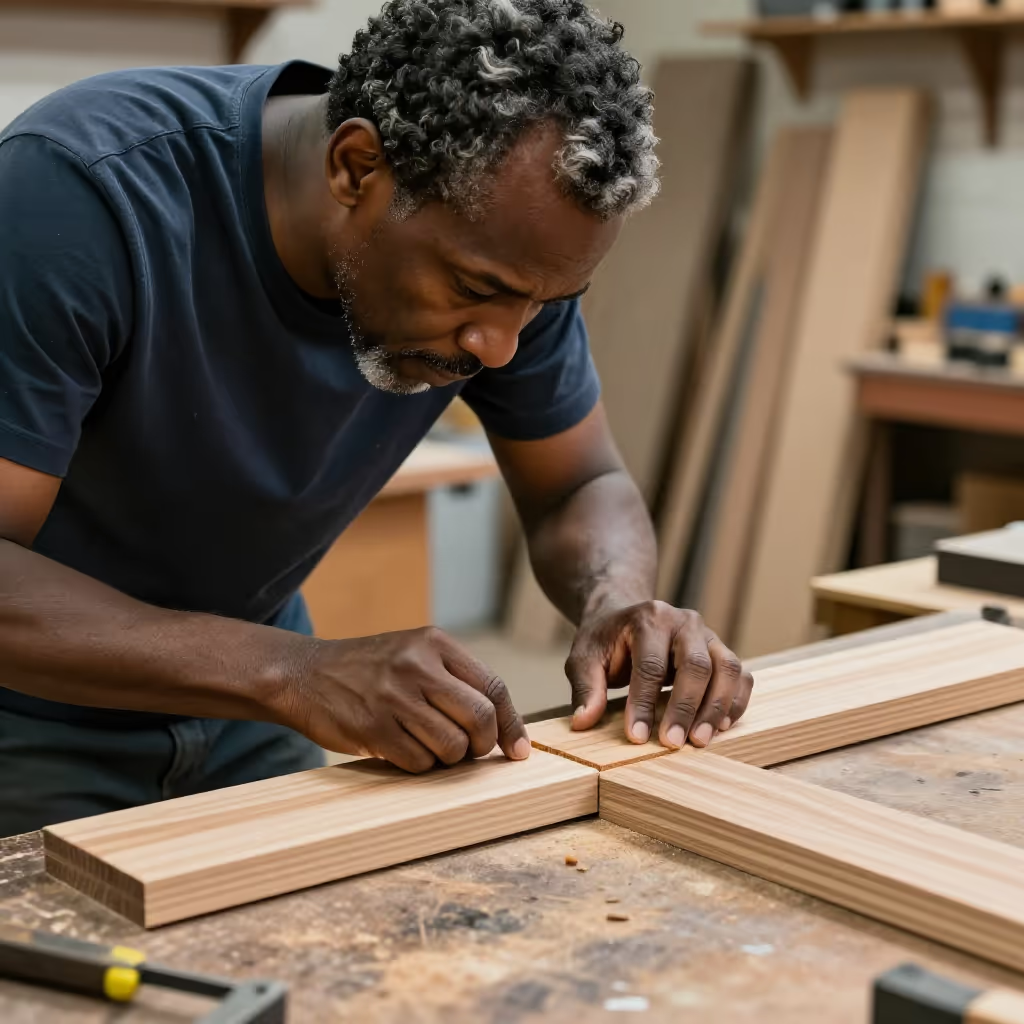
To fit parts or elements together or connect them with one another.
Der Tischler fügte die Holzteile präzise zu einem Rahmen zusammen.
The carpenter joined the wooden parts precisely into a frame.

it so happened
An elevated expression used to say that something happened by chance or fate.
Es fügte sich, dass wir uns auf der Reise zufällig wieder trafen.
It so happened that we met again by chance on the trip.
The verb 'fügen' (to join/submit) is related to the noun 'die Fuge' (the gap or joint between two parts). The basic idea is always that something is made to fit or is connected, whether materially or figuratively.
Der Handwerker fügte die Holzteile sorgfältig zusammen.
The craftsman carefully joined the wooden parts together.
The different meanings are easy to recognize from the sentence structure: The reflexive form 'sich fügen' means 'to submit'. The impersonal form 'es fügte sich, dass...' means 'it so happened that...'. The simple form 'fügen' means 'to put parts together'.
Er fügte sich in sein Schicksal.
He submitted to his fate.
In the meaning 'sich unterordnen' (to subordinate oneself/to submit), 'sich fügen' is used reflexively. The thing one submits to (e.g., a fate, an order) is in the dative.
Die Mitarbeiter mussten sich der Entscheidung des Chefs fügen.
The employees had to submit to the boss's decision.
The formulation 'es fügte sich, dass...' (it so happened that...) is a fixed expression. It introduces a subordinate clause with 'dass' and describes a chance or fateful event. This expression belongs to an elevated style of language.
Es fügte sich, dass genau an diesem Tag ein Experte für das Problem anwesend war.
It so happened that an expert on the problem was present on that very day.
to connect / to bandage
Both words can describe putting parts together. verbinden focuses more on the connection created, while fügen emphasizes assembling the parts so that they fit together to form a whole. Use fügen especially when the exact fit or the assembly is important.
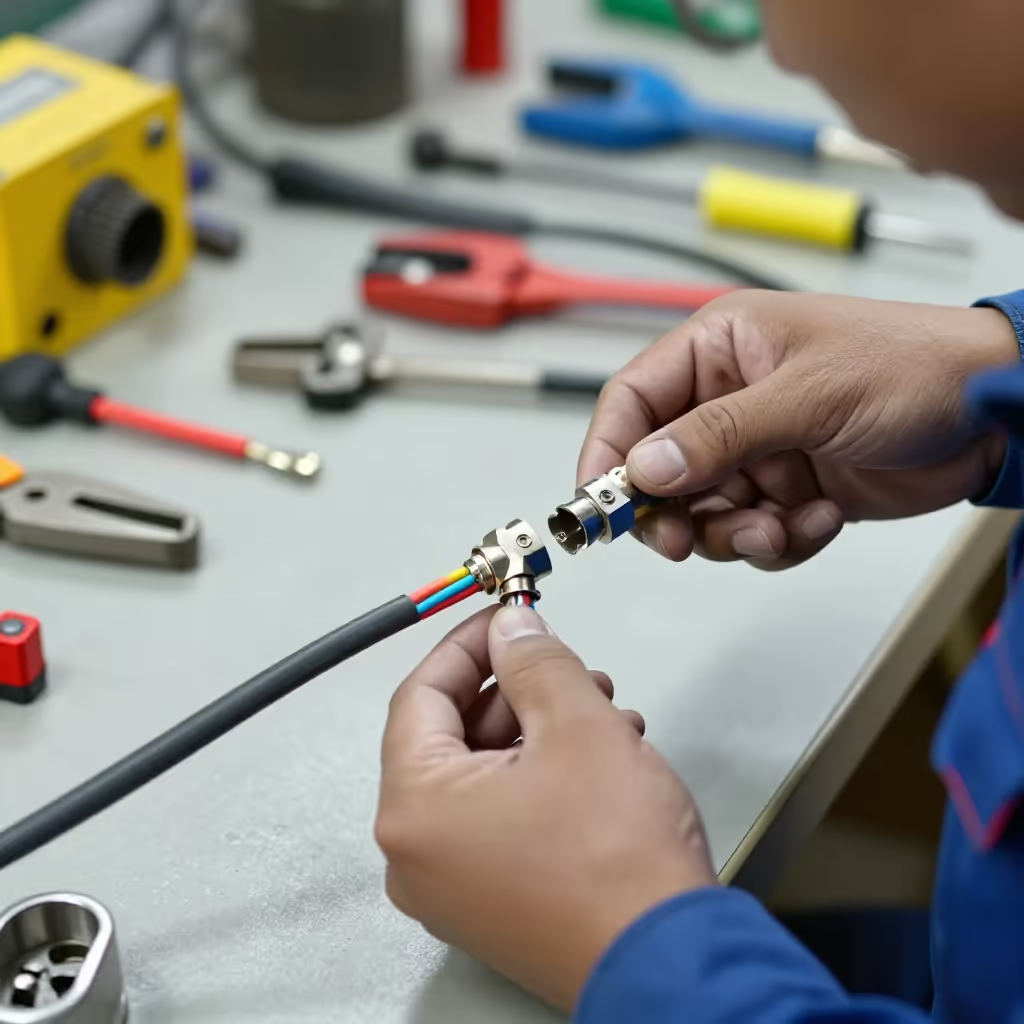
Der Handwerker fügt die beiden Holzteile passgenau zu einem Rahmen.
The craftsperson fits the two wooden pieces together precisely to form a frame.
Der Handwerker verbindet die beiden Holzteile mit Schrauben.
The craftsperson connects the two wooden pieces with screws.