

verbinden
to connect
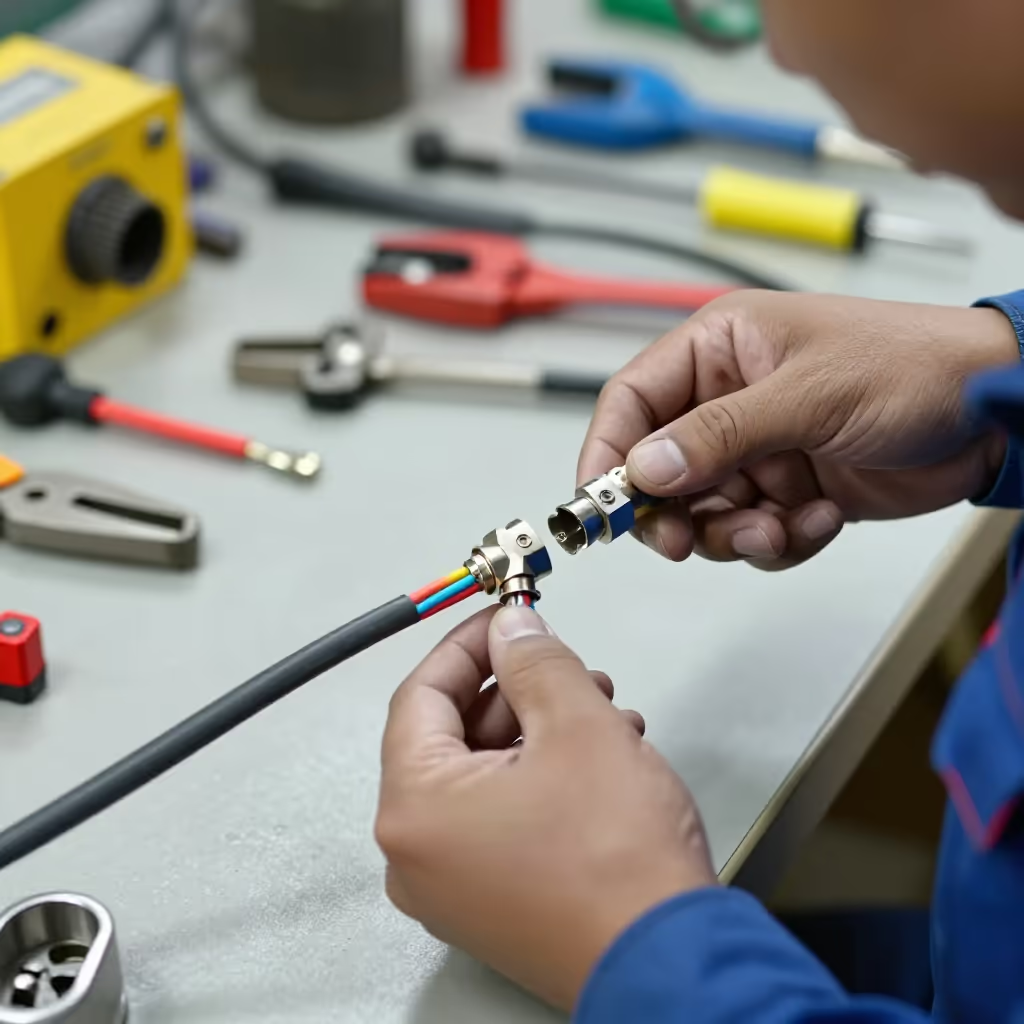
To physically or technically link or join two or more things together.
EXAMPLE
Der Elektriker muss die beiden Kabel korrekt miteinander verbinden.
The electrician has to connect the two cables correctly.
to connect / to bandage
Loading your saved state.
to connect
To physically or technically link or join two or more things together.
Der Elektriker muss die beiden Kabel korrekt miteinander verbinden.
The electrician has to connect the two cables correctly.

to connect
To establish a telephone or digital connection to someone.
Könnten Sie mich bitte mit der Personalabteilung verbinden?
Could you please connect me to the HR department?

to associate with
To create a mental or emotional link between people, things, or ideas; to associate something with something.
Mit diesem Lied verbinde ich viele schöne Erinnerungen an meine Jugend.
I associate this song with many beautiful memories of my youth.

to bandage
To treat a wound with a bandage or cloth in order to protect or heal it.
Der Sanitäter hat ihm sofort den Arm verbunden.
The paramedic bandaged his arm immediately.

to combine
To unite two or more qualities, elements, or concepts in one thing or person.
Das neue Design versucht, Eleganz mit Funktionalität zu verbinden.
The new design tries to combine elegance with functionality.
to unite
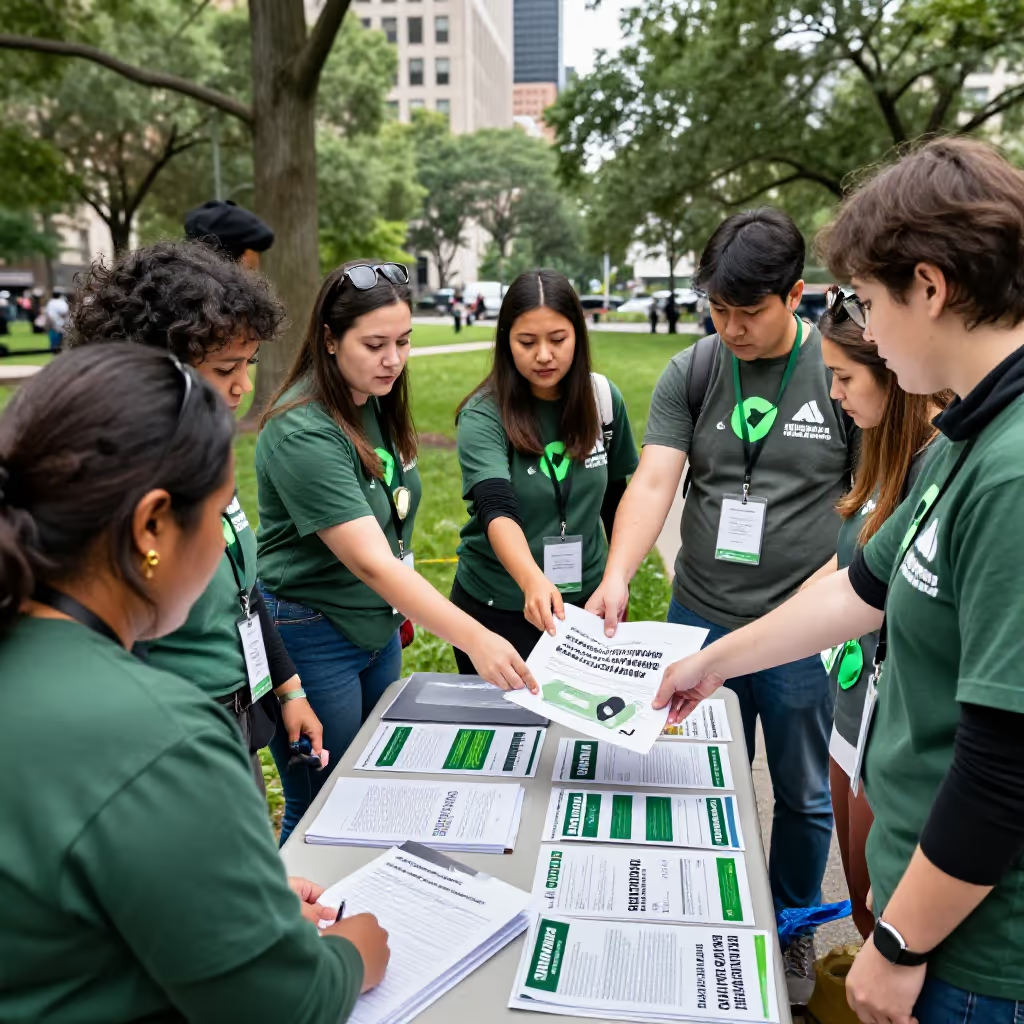
To join together with other people or groups in order to pursue a shared goal.
Die kleinen Unternehmen haben sich verbunden, um gegen die große Konkurrenz zu bestehen.
The small companies united in order to stand up to the major competition.
'Verbinden' (to connect / to bandage) is an inseparable verb. The prefix 'ver-' remains firmly attached to the verb stem 'binden' (to bind) in all tenses and sentence positions.
Ich verbinde mein Handy mit dem WLAN.
I connect my phone to the Wi-Fi.
The verb 'verbinden' (to connect / to bandage) is the basis for important nouns like 'die Verbindung' (connection) and 'der Verband' (bandage; association). The different meanings of the verb are reflected in these nouns.
Die Verbindung zum Server ist fehlgeschlagen.
The connection to the server failed.
In many meanings (physical, telephone-related, mental), 'verbinden' (to connect) follows the pattern 'etwas/jemanden mit etwas/jemandem verbinden' (to connect something/someone with something/someone). The preposition 'mit' (with) is crucial here.
Diese Brücke verbindet die Insel mit dem Festland.
This bridge connects the island with the mainland.
In a telephone context, the question 'Können Sie mich bitte mit [Person/Abteilung] verbinden?' (Could you please connect me to [person/department]?) is a very polite and common phrasing to ask to be transferred.
Einen Moment, ich verbinde Sie mit der zuständigen Kollegin.
One moment, I will connect you to the colleague responsible.
In a medical context, 'verbinden' (to bandage) means treating a wound with a bandage. The object of the sentence is the wound or the injured body part.
Die Krankenschwester hat ihm die Wunde professionell verbunden.
The nurse bandaged his wound professionally.
The reflexive form 'sich verbinden' (to unite / to join together) means that people or groups join together to form a coalition or alliance. It emphasizes the shared action.
Die beiden Firmen haben sich verbunden, um ein neues Produkt zu entwickeln.
The two companies united to develop a new product.
to unite / combine
Both words work when several qualities or functions come together in one thing. Verbinden focuses more on linking the elements to one another, while vereinen highlights their shared presence in a single whole. Use verbinden for the connection and vereinen for the comprehensive result.

Das neue Gerät verbindet eine Kamera und ein Mikrofon in einem Gehäuse.
The new device combines a camera and a microphone in one housing.
Das neue Gerät vereint Kamera, Mikrofon und Lautsprecher in einem kompakten System.
The new device combines a camera, microphone, and speaker in one compact system.