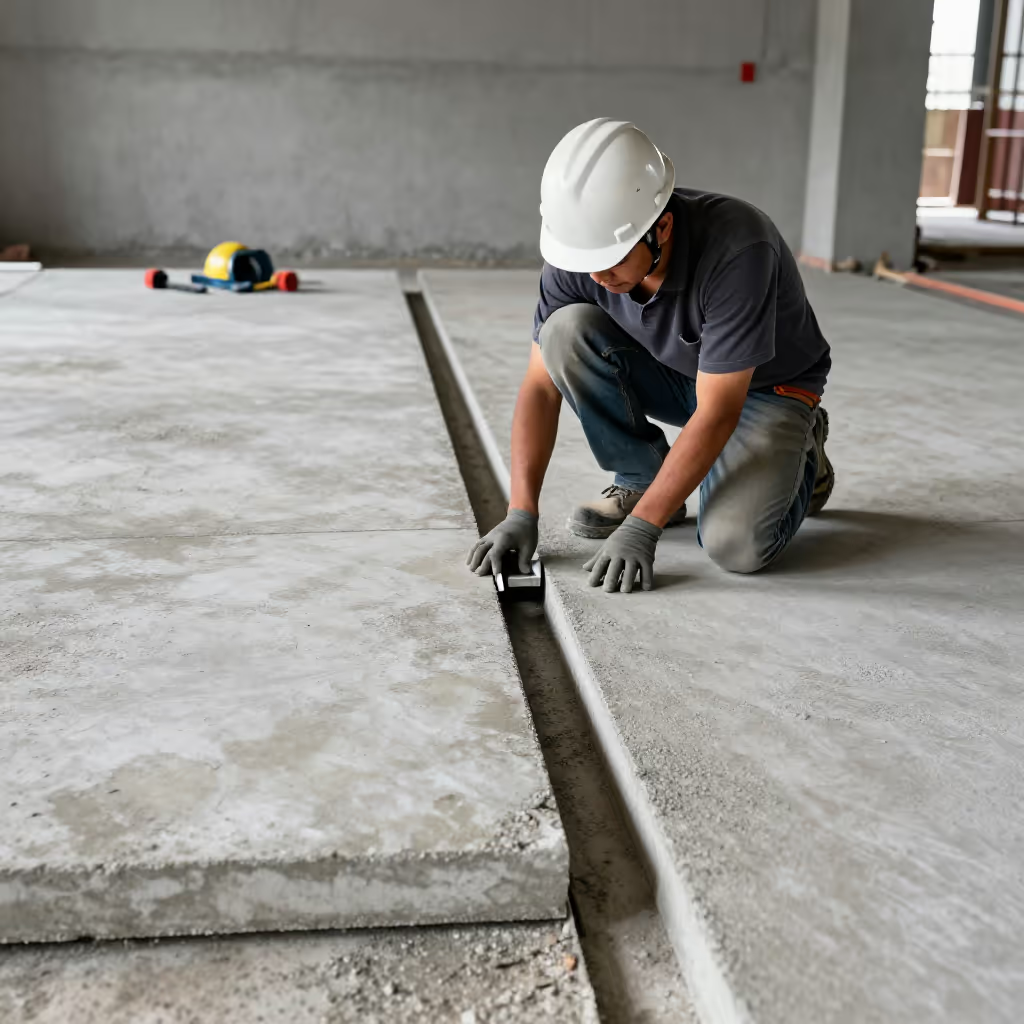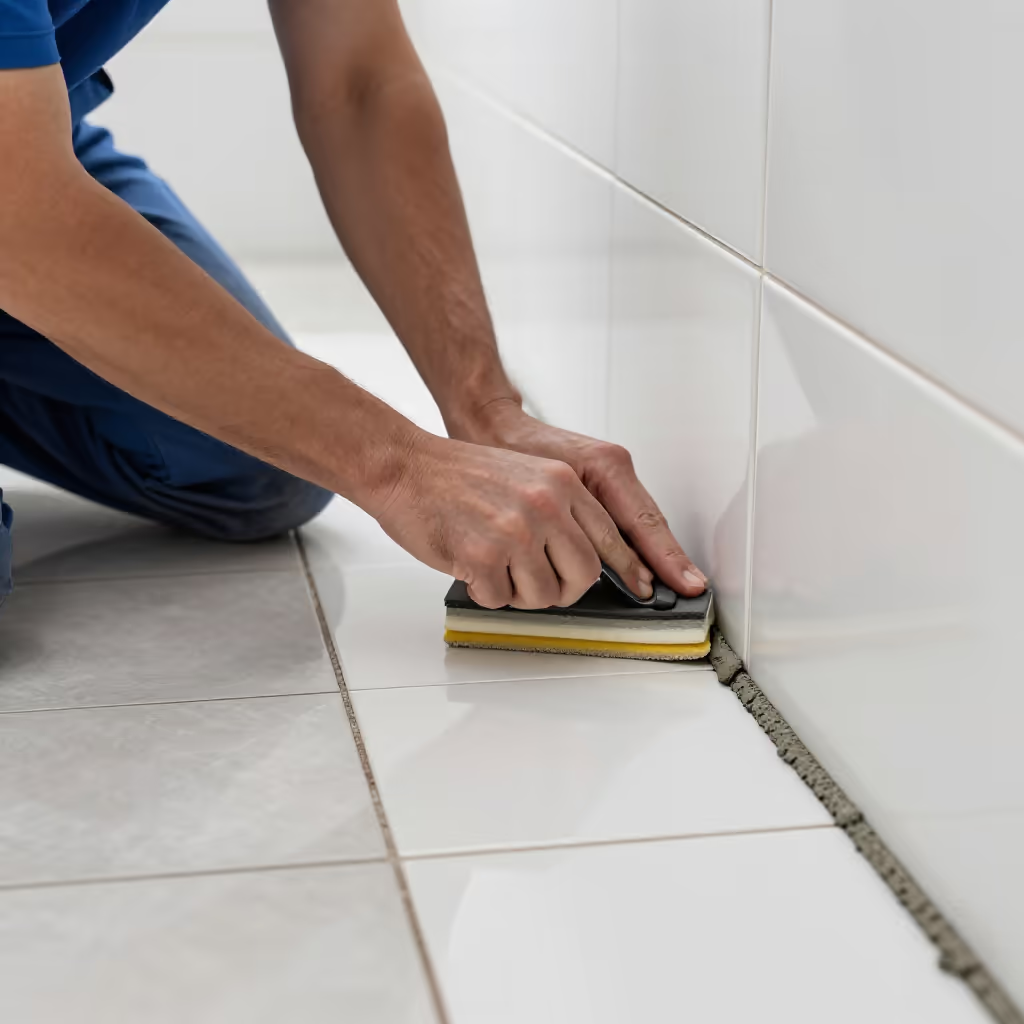
The narrow gap between two building components, such as tiles, bricks, or floorboards, which is often filled with mortar or a sealant.
example
Der Handwerker hat die Fugen im Badezimmer neu gemacht.
The craftsman redid the joints in the bathroom.

Usage tips
Context clue
You can easily recognize the meaning of 'Fuge' from the context. In connection with construction, trades, or words like 'Fliesen' (tiles) and 'Badezimmer' (bathroom), it refers to the gap. In the context of music, composers, or instruments, it refers to the musical form.
EXAMPLE
Die Fugen zwischen den Steinen müssen erneuert werden.
The joints between the stones need to be renewed.
Typical collocations (construction)
When it refers to the gap, typical verbs are 'Fugen füllen' (to fill joints), 'reinigen' (to clean), or 'erneuern' (to renew). The word is often used in the plural.
EXAMPLE
Nach dem Fliesenlegen müssen die Fugen noch gefüllt werden.
After laying the tiles, the joints still need to be filled.
Typical collocations (music)
In a musical context, typical combinations are 'eine Fuge komponieren' (to compose a fugue), 'eine Fuge spielen' (to play a fugue), or referring to a person as a 'Meister der Fuge' (master of the fugue).
EXAMPLE
Der Pianist spielte eine komplexe Fuge von Bach.
The pianist played a complex fugue by Bach.
Fixed expression
The idiom 'aus den Fugen geraten' (to fall apart) is a fixed unit. It means that an order collapses. The noun is always plural here ('Fugen'), and the verb is 'geraten'.
EXAMPLE
Nach der unerwarteten Nachricht schien sein ganzes Leben aus den Fugen zu geraten.
After the unexpected news, his whole life seemed to be falling apart.
Compare with
near_synonym · confusable
Fuge vs Lücke
gap
'die Lücke' and 'die Fuge' can both refer to a space in between. 'Lücke' is more general: it is an open spot where something should actually be continuous or closed. 'Fuge' is used especially in building or renovation, for example between tiles, stones, or wooden boards. A 'Fuge' is often narrow and planned, and sometimes it is filled with material. Learners may confuse the words because both refer to a space between things. As a practical rule: between tiles, you usually say 'Fuge'; for a missing spot in general, you say 'Lücke'.
Fuge
Nach dem Duschen putzt Lena die Fugen zwischen den Fliesen.
After showering, Lena cleans the joints between the tiles.
Lücke
In der Mauer ist eine Lücke, durch die man den Garten sehen kann.
There is a gap in the wall through which you can see the garden.