
A collection of works, rules, or principles that are considered authoritative, exemplary, and generally recognized in a particular field, such as literature, art, or science.
example
Goethes „Faust“ gehört unbestritten zum literarischen Kanon.
Goethe's 'Faust' indisputably belongs to the literary canon.
Usage tips
Context clues
The meaning of 'Kanon' (canon) depends heavily on the context. If people are talking about literature or art, it refers to a recognized collection of works. In a musical context, it refers to a song. In a religious discussion, it refers to holy scriptures or rules.
EXAMPLE
Je nach Thema – Kunst, Musik oder Religion – bedeutet „Kanon“ etwas anderes.
Depending on the topic—art, music, or religion—'Kanon' means something different.
False friend
Pay attention to the spelling and the article. 'Der Kanon' (the canon) is not the same as the English word 'cannon' (a weapon), even though the pronunciation is similar. The German equivalent for the weapon would be 'die Kanone' (the cannon).
EXAMPLE
Der literarische Kanon hat nichts mit einer Waffe zu tun.
The literary canon has nothing to do with a weapon.
Typical collocations
In the meaning 'collection of works', the word is often combined with adjectives such as 'literarisch' (literary), 'kulturell' (cultural), or 'wissenschaftlich' (scientific). A fixed expression is 'zum Kanon gehören' (to belong to the canon).
EXAMPLE
Dieses Buch gehört mittlerweile zum Kanon der modernen deutschen Literatur.
This book has by now become part of the canon of modern German literature.
Use in music
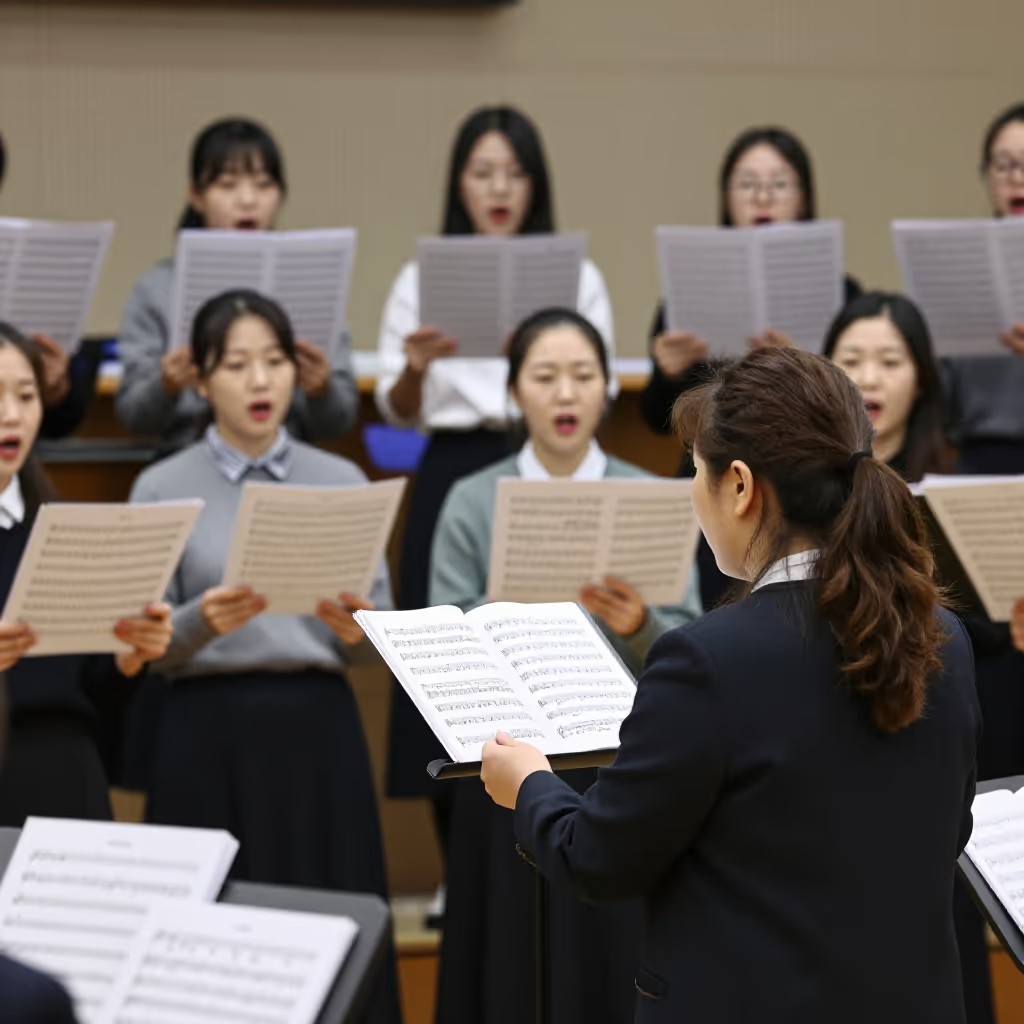
The musical meaning can be recognized from verbs like 'singen' (to sing) or nouns like 'Chor' (choir) and 'Stimme' (voice). The most common expression is 'im Kanon singen' (to sing in a canon), where the singers begin one after another with the same melody.
EXAMPLE
Die Kinder lernten im Musikunterricht, einen Kanon zu singen.
The children learned to sing a canon in music class.
Religious context
When 'Kanon' (canon) is used in a religious context, it refers to a binding collection of texts or rules. This is often made clear by words such as 'biblisch' (biblical), 'kirchlich' (ecclesiastical/church), or the name of a religion.
EXAMPLE
Die Theologin erforscht die Entstehung des biblischen Kanons.
The theologian researches the formation of the biblical canon.
Compare with
near_synonym · confusable
Kanon vs Sammlung
collection
'die Sammlung' and 'der Kanon' can both mean a group of works, for example books, pieces of music, or works of art. The important difference is this: a collection is simply put together, for example based on interest, topic, or ownership. A canon, on the other hand, is a selection that is considered especially important or exemplary in a field. Learners may confuse the words because in both cases several works belong together. If it is only about bringing things together, 'Sammlung' fits. If it is about recognized importance and exemplary status, 'Kanon' is more precise.
Kanon
Im Literaturkurs sprechen wir über Werke, die zum deutschen Kanon gehören.
In the literature course, we discuss works that belong to the German canon.
Sammlung
In der Bibliothek gibt es eine kleine Sammlung moderner Gedichte.
The library has a small collection of modern poems.