

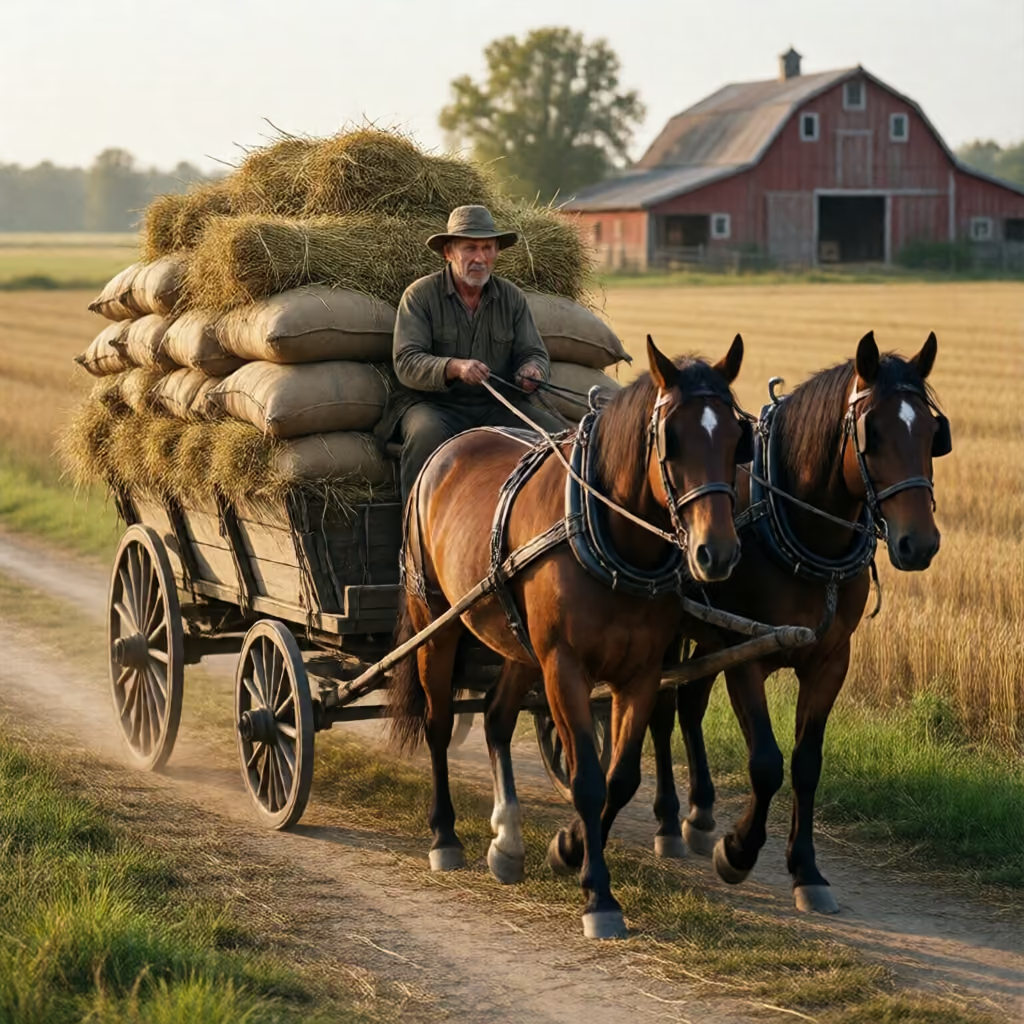
das Fuhrwerk
wagon
A vehicle pulled by draft animals, usually horses, and used to transport people or goods.
EXAMPLE
Das Fuhrwerk brachte die Ernte vom Feld zum Hof.
The wagon brought the harvest from the field to the farm.
wagon
das Fuhrwerk, die Fuhrwerke
Loading your saved state.
wagon
A vehicle pulled by draft animals, usually horses, and used to transport people or goods.
Das Fuhrwerk brachte die Ernte vom Feld zum Hof.
The wagon brought the harvest from the field to the farm.
| gender | neuter das |
|---|---|
| plural | die Fuhrwerke |
| genitive | des Fuhrwerkes |
| singular | plural | |
|---|---|---|
| nominative | das Fuhrwerk | die Fuhrwerke |
| accusative | das Fuhrwerk | die Fuhrwerke |
| dative | dem Fuhrwerk | den Fuhrwerken |
| genitive | des Fuhrwerkes des Fuhrwerks | der Fuhrwerke |
The article changes with the case; it is shown in colour.
'Fuhrwerk' (wagon) consists of 'Fuhr', which is related to the verb 'fahren' (to drive or travel), and 'Werk' (work). The word's structure points to a vehicle used for travel and transport.
Das Fuhrwerk stand hinter der Scheune und wartete auf die Beladung.
The wagon stood behind the barn, waiting to be loaded.
Today, 'Fuhrwerk' (wagon) is mainly found in historical accounts, literary texts, or depictions of traditional rural life. The word usually refers to an older form of transport.
Im historischen Roman fuhr der Händler mit seinem Fuhrwerk durch das Dorf.
In the historical novel, the merchant drove his wagon through the village.
Common phrases include 'ein Fuhrwerk ziehen' (to pull a wagon), 'ein Fuhrwerk beladen' (to load a wagon), and 'mit dem Fuhrwerk fahren' (to travel by wagon). The verb describes either the vehicle's movement or its use for transport.
Die Männer beluden das Fuhrwerk mit Säcken und Fässern.
The men loaded the wagon with sacks and barrels.