

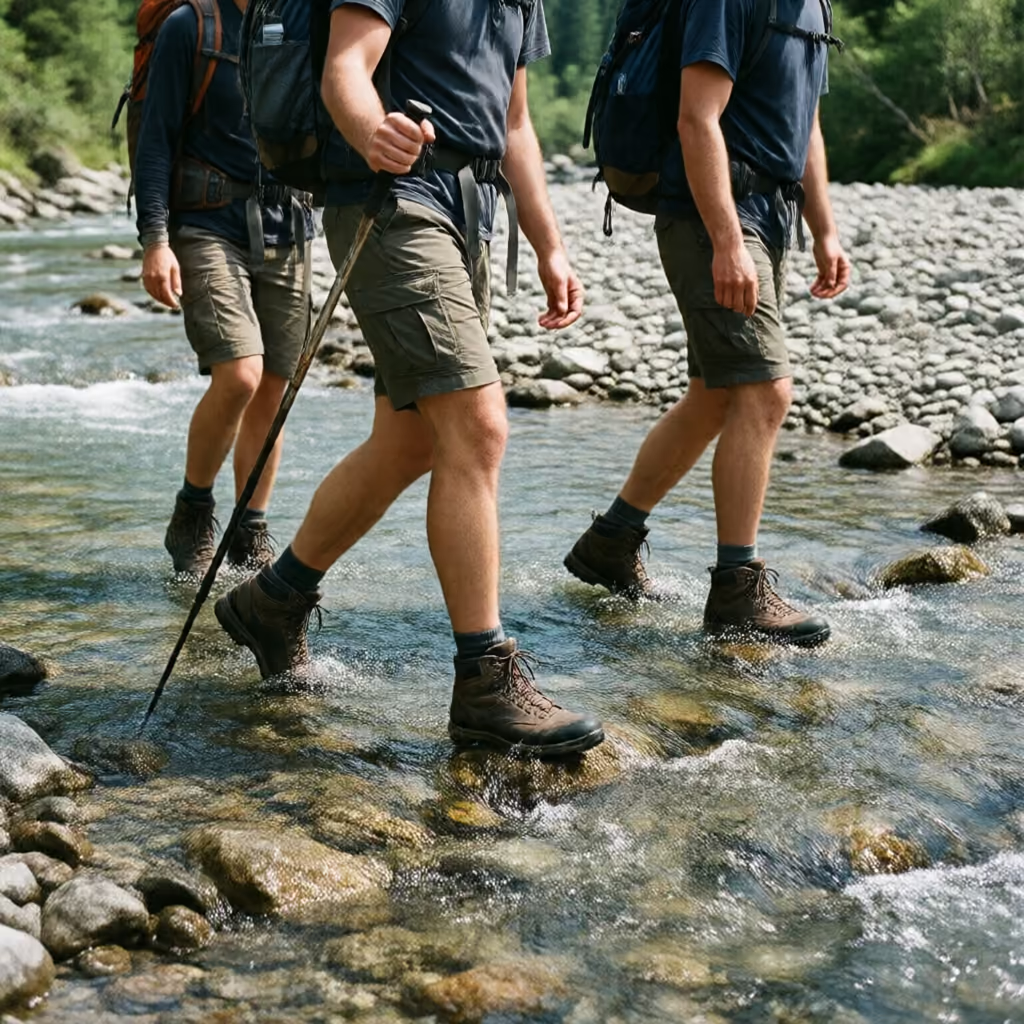
die Furt
ford
A shallow place in a river or stream where people can reach the other side on foot, with animals, or in vehicles.
EXAMPLE
Die Wanderer überquerten den Fluss an einer flachen Furt.
The hikers crossed the river at a shallow ford.
ford
die Furt, die Furten
Loading your saved state.
ford
A shallow place in a river or stream where people can reach the other side on foot, with animals, or in vehicles.
Die Wanderer überquerten den Fluss an einer flachen Furt.
The hikers crossed the river at a shallow ford.
| gender | feminine die |
|---|---|
| plural | die Furten |
| genitive | der Furt |
| singular | plural | |
|---|---|---|
| nominative | die Furt | die Furten |
| accusative | die Furt | die Furten |
| dative | der Furt | den Furten |
| genitive | der Furt | der Furten |
The article changes with the case; it is shown in colour.
'Furt' (ford) is often used with verbs of movement: You can 'eine Furt überqueren' (cross a ford), 'durch eine Furt waten' (wade through a ford), or 'durch eine Furt fahren' (drive through a ford). 'Eine Furt finden' (find a ford) is also a common collocation.
Die Reiter fanden eine sichere Furt und führten ihre Pferde hindurch.
The riders found a safe ford and led their horses through it.
For movement through the water, 'durch' (through) is often used with the accusative. The location can be indicated with 'an' (at) and the dative.
Die Kinder wateten durch die Furt.
The children waded through the ford.
Am Ufer an der Furt wartete bereits ein Wagen.
A vehicle was already waiting by the riverbank at the ford.
'Furt' (ford) is especially common in landscape descriptions, hiking texts, and historical narratives. Signal words such as 'Fluss' (river), 'Bach' (stream), 'Ufer' (riverbank), 'waten' (to wade), or 'Pferde' (horses) often indicate that this meaning is intended.
Auf der alten Karte war die Furt über den Bach deutlich eingezeichnet.
The ford across the stream was clearly marked on the old map.