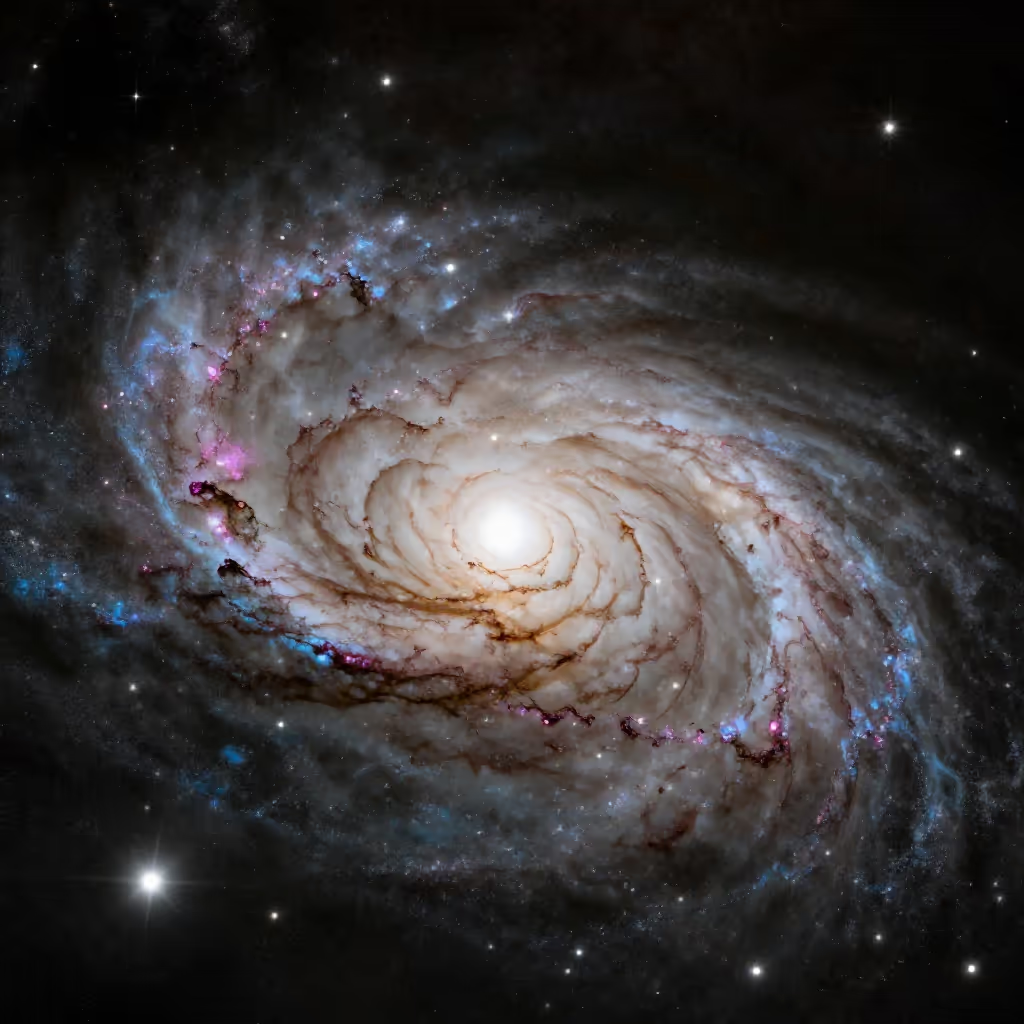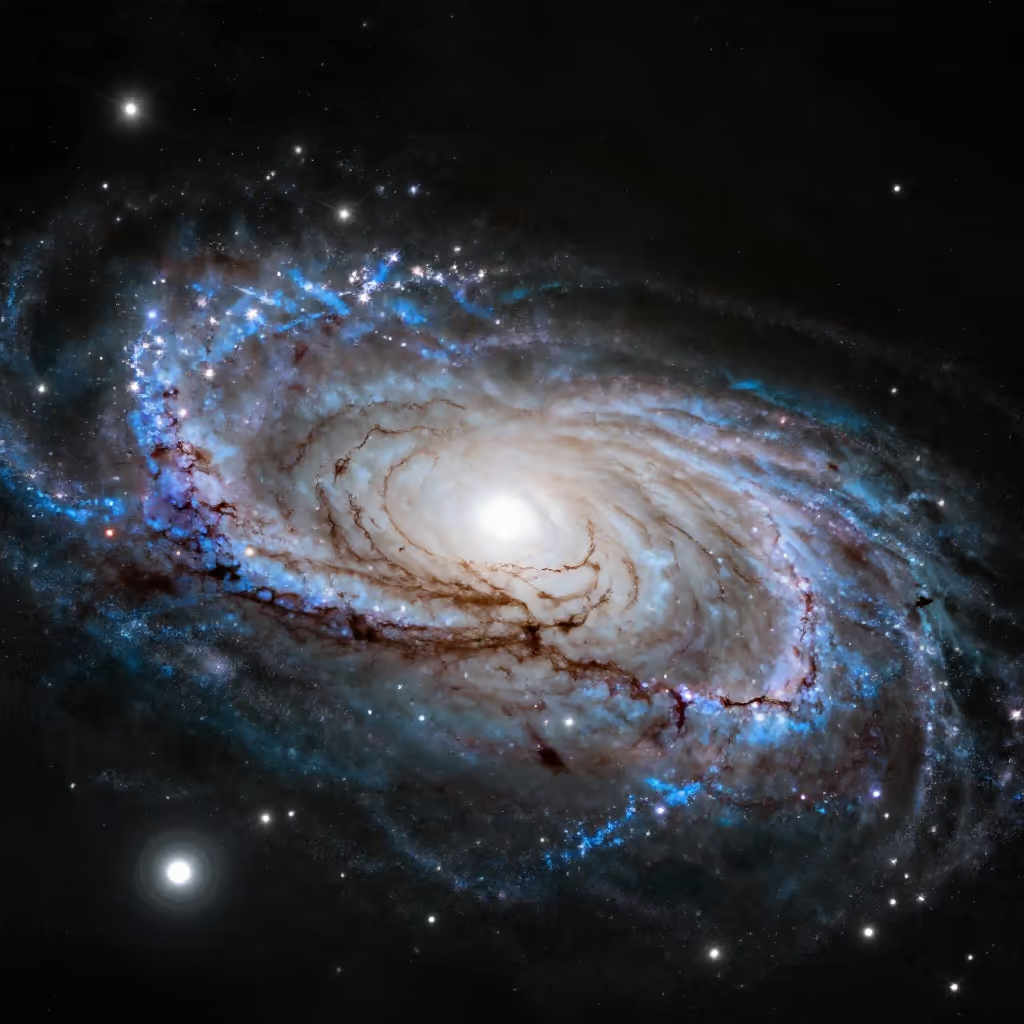
A huge system of stars, gas, dust, and dark matter bound together by gravity. In general usage, this often refers to our own Milky Way.
example
Die Andromeda-Galaxie ist die uns am nächsten gelegene große Galaxis.
The Andromeda Galaxy is the large galaxy closest to us.
Usage tips
Word origin
The word comes from the Ancient Greek 'galaxías', meaning 'milky.' This origin also explains the German name for our own galaxy: 'die Milchstraße' (the Milky Way).
EXAMPLE
Astronomen erforschen die Entstehung von Sternen in unserer Galaxis.
Astronomers study the formation of stars in our galaxy.
Figurative meaning
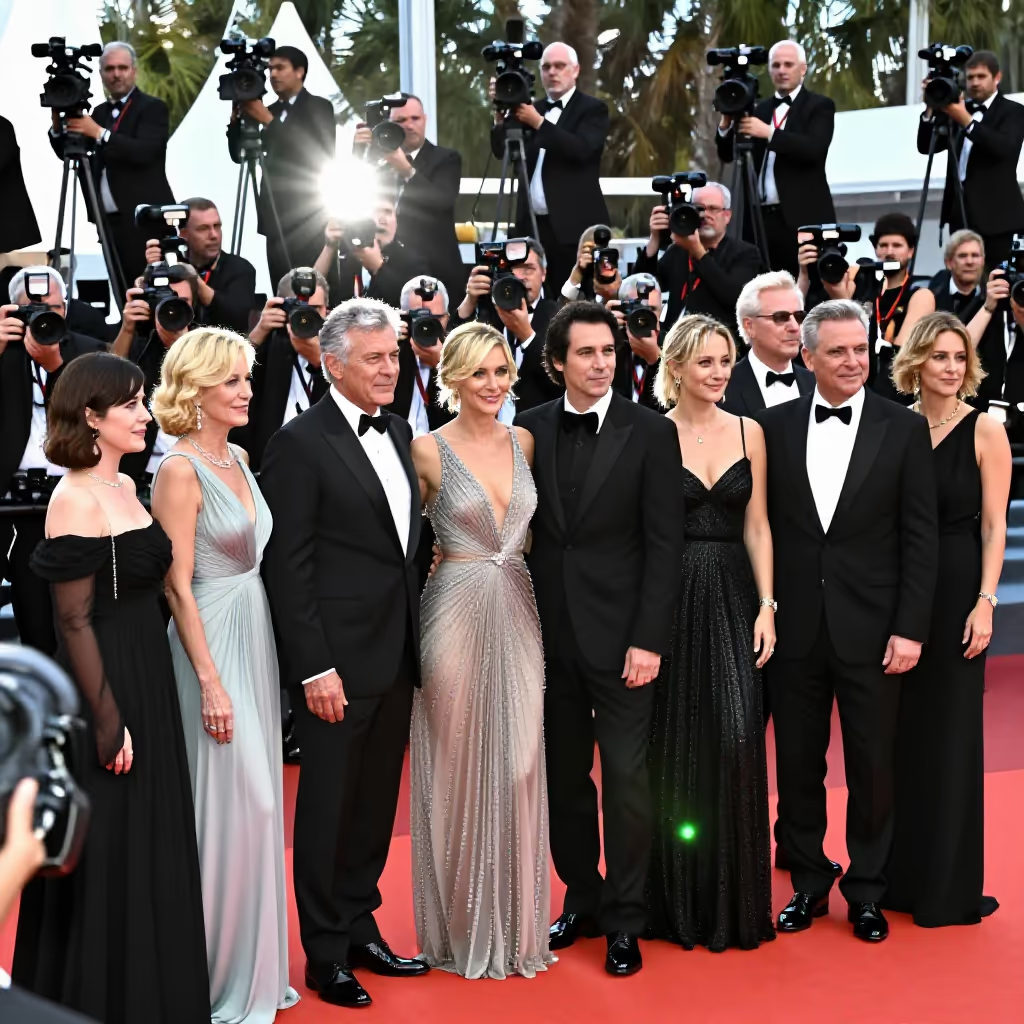
The figurative meaning uses the image of a sky full of stars. A 'Galaxis von Stars' (galaxy of stars) is therefore an impressively large gathering of famous personalities in one place.
EXAMPLE
Bei der Preisverleihung traf sich eine ganze Galaxis von Filmstars.
A whole galaxy of film stars came together at the award ceremony.
Typical collocations
In the figurative meaning, the phrase 'eine ganze Galaxis von ...' (a whole galaxy of ...) is often used to emphasize the large number and importance of the group. It is usually followed by a plural noun such as 'Stars' (stars), 'Experten' (experts), or 'Künstlern' (artists).
EXAMPLE
Für die Konferenz wurde eine Galaxis von internationalen Experten eingeladen.
A galaxy of international experts was invited to the conference.
Compare with
confusable
Galaxis vs Universum
universe
'das Universum' and 'die Galaxis' both belong to the field of astronomy, but they differ in size. 'das Universum' is the totality of everything in outer space. 'Eine Galaxis' is a huge system of stars, gas, and dust within the universe. Our own galaxy is also called the Milky Way. The words can be confusing because both refer to very large spaces. Memory aid: A galaxy is located in the universe, but the universe consists of very many galaxies.
Galaxis
Unsere Galaxis enthält Milliarden von Sternen.
Our galaxy contains billions of stars.
Universum
Mila interessiert sich dafür, wie alt das Universum ist.