

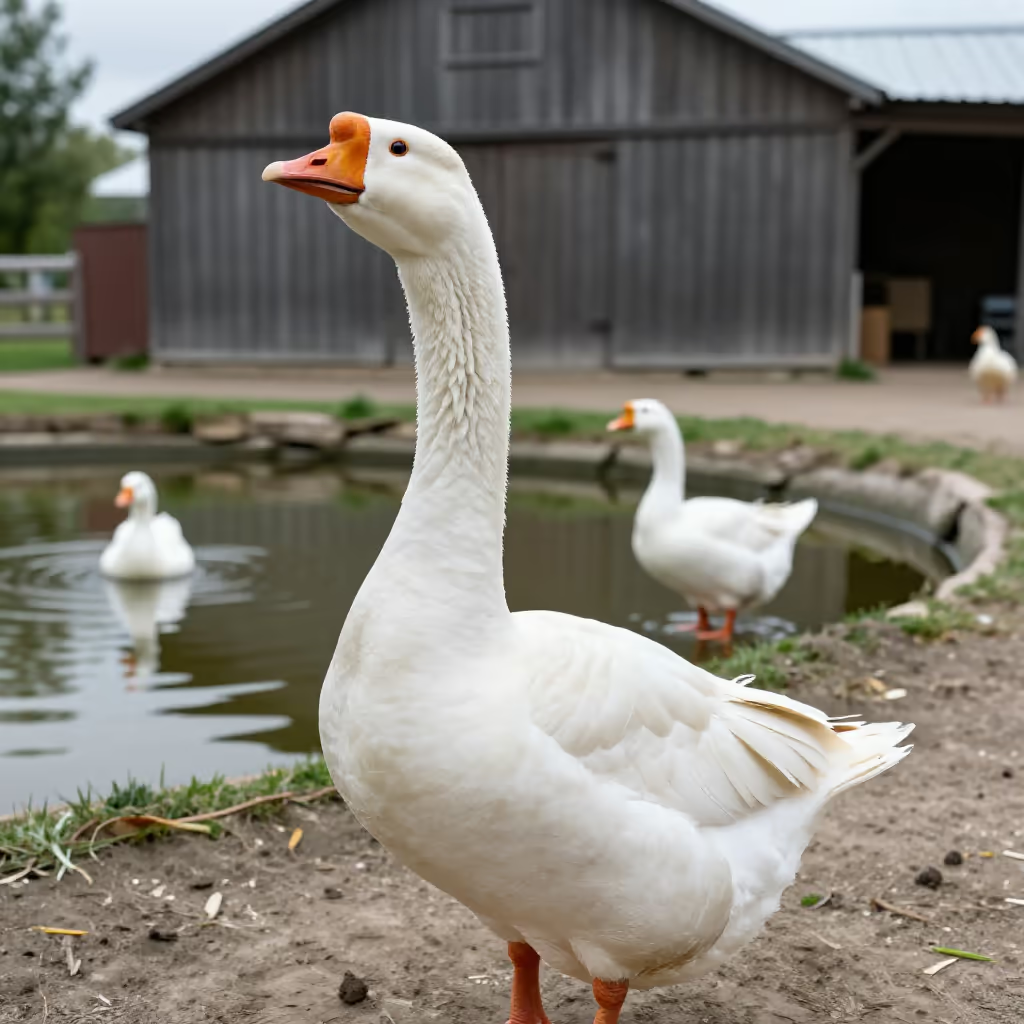
die Gans
goose
A large water bird with a long neck that is often kept as livestock.
EXAMPLE
Eine Schar Gänse landete laut schnatternd auf der Wiese am See.
A flock of geese landed on the meadow by the lake, honking loudly.
goose
Loading your saved state.
goose
A large water bird with a long neck that is often kept as livestock.
Eine Schar Gänse landete laut schnatternd auf der Wiese am See.
A flock of geese landed on the meadow by the lake, honking loudly.

goose
The meat of a goose prepared as a dish, especially as a traditional roast.
Zu Weihnachten gibt es bei uns immer Gans mit Rotkohl und Klößen.
At Christmas, we always have goose with red cabbage and dumplings.

silly goose
A colloquial, derogatory term for a stupid or naive female person.
Glaub doch nicht alles, was er sagt, du dumme Gans!
Don't believe everything he says, you silly goose!
The context makes clear whether the animal or the food is meant. Verbs like 'fliegen' (to fly) or 'schnattern' (to honk/chatter) point to the animal, while 'essen' (to eat), 'braten' (to roast), or 'zubereiten' (to prepare) refer to the dish.
Am Seeufer konnten wir wilde Gänse beobachten.
We were able to watch wild geese on the lakeshore.
When 'Gans' means the dish, it is often used without an article, especially in the phrase 'es gibt Gans' (there is goose / goose is being served) or as part of a compound word like 'Gänsebraten' (roast goose).
Auf der Speisekarte stand Gänsebraten mit Klößen.
Roast goose with dumplings was on the menu.
The term 'Gans' for a woman is strongly colloquial and derogatory. It should be used only with great caution, as it is perceived as an insult.
Er nannte sie eine dumme Gans, was sie sehr verletzte.
He called her a silly goose, which hurt her very much.
As an insult, 'Gans' is almost always combined with a negative adjective such as 'dumm' (stupid), 'blöd' (silly/stupid), or 'naiv' (naive).
„Du naive Gans, siehst du nicht, dass er dich anlügt?“, dachte sie.
'You naive goose, don't you see that he's lying to you?' she thought.
cow
Kuh and Gans can be used as colloquial insults for a woman. Gans tends to emphasize foolishness, naivety, or silliness, while Kuh usually expresses stupidity, clumsiness, or unpleasantness in a harsher and more general way. Gans is therefore more suitable for a silly, naive person.

Diese Gans glaubte tatsächlich, dass der leere Karton ein Geschenk sei.
This silly goose actually believed that the empty box was a gift.
Diese Kuh hat die Kiste fallen lassen und dabei alle anderen angerempelt.
This cow dropped the crate and bumped into everyone else in the process.