

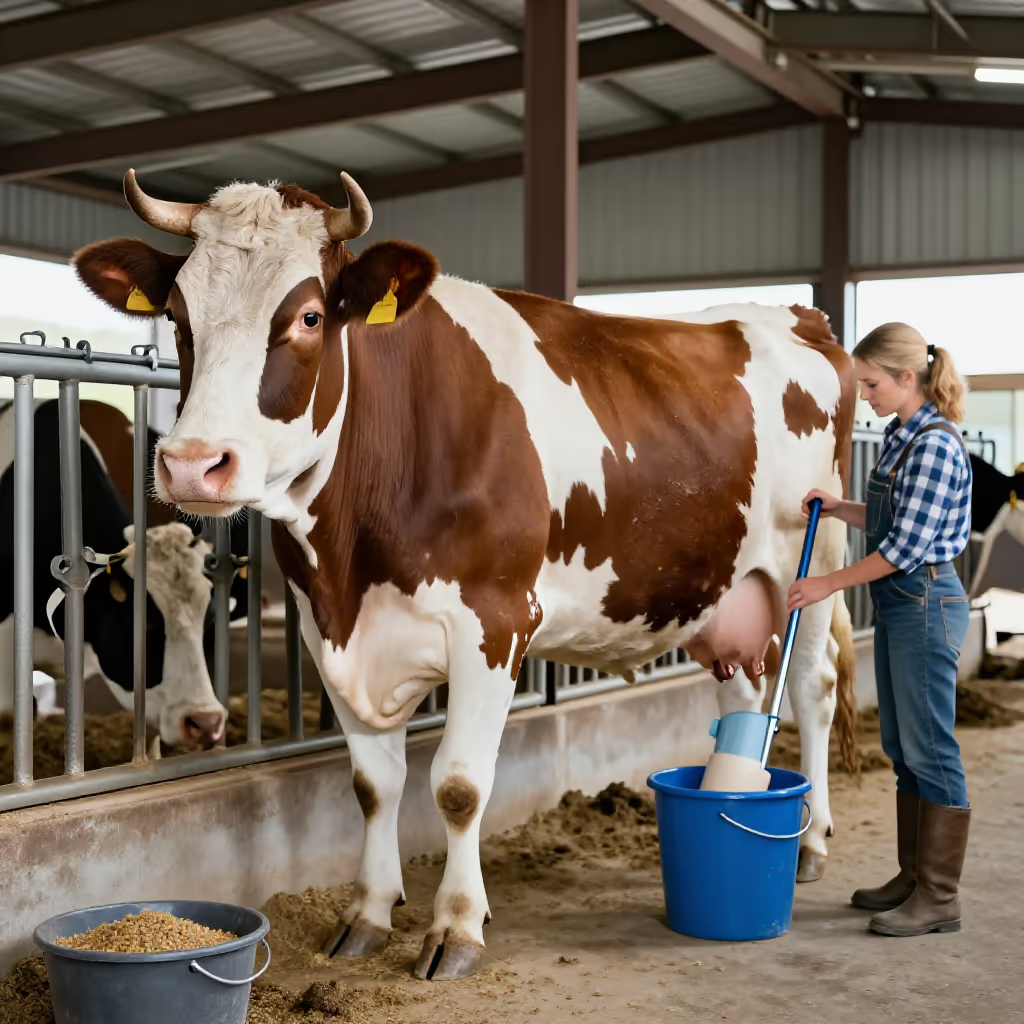
die Kuh
cow
The adult female bovine animal, kept especially for producing milk.
EXAMPLE
Auf der Weide grasten friedlich mehrere Kühe.
Several cows were grazing peacefully in the pasture.
cow
Loading your saved state.
cow
The adult female bovine animal, kept especially for producing milk.
Auf der Weide grasten friedlich mehrere Kühe.
Several cows were grazing peacefully in the pasture.

cow
A derogatory insult for a woman who is perceived as stupid, clumsy, or unpleasant.
Im Streit nannte er sie eine blöde Kuh.
During the argument, he called her a stupid cow.

to save the day
An idiom meaning to solve a difficult problem or defuse a delicate situation.
Wir müssen schnell eine Lösung finden und die Kuh vom Eis holen, bevor der Kunde sich beschwert.
We need to find a solution quickly and save the day before the customer complains.
You can tell from context whether 'Kuh' (cow) means the animal or an insult. If people are talking about agriculture, farms, or milk, the animal is meant. In an argument or emotional situation, it is probably an insult.
Die Kühe auf der Weide sehen sehr gesund aus.
The cows in the pasture look very healthy.
As an insult for a woman, 'Kuh' (cow) is very derogatory, offensive, and colloquial. It is often intensified with negative adjectives, such as 'blöde Kuh' (stupid cow) or 'dumme Kuh' (dumb cow).
Hör auf, mich eine blöde Kuh zu nennen!
Stop calling me a stupid cow!
The idiom 'die Kuh vom Eis holen' (literally: to get the cow off the ice) is a fixed unit. It is used metaphorically and means to successfully deal with a very difficult or dangerous situation.
Der Projektmanager muss jetzt irgendwie die Kuh vom Eis holen, nachdem der Hauptsponsor abgesprungen ist.
The project manager now somehow has to save the day after the main sponsor pulled out.
goat
Kuh and Ziege can be colloquial, derogatory terms for an unpleasant woman. Ziege tends to emphasize bitchy or stubborn behavior, while Kuh suggests crude stupidity, clumsiness, or general unpleasantness. Choose Ziege for a difficult attitude and Kuh for a harsher, more general insult.

Diese Kuh hat den ganzen Einkauf umgestoßen und sich nicht einmal entschuldigt.
This cow knocked over all the groceries and didn't even apologize.
Diese Ziege wird sofort wütend, wenn jemand ihr widerspricht.
This nasty woman gets angry immediately when anyone contradicts her.