

die Garde
guard
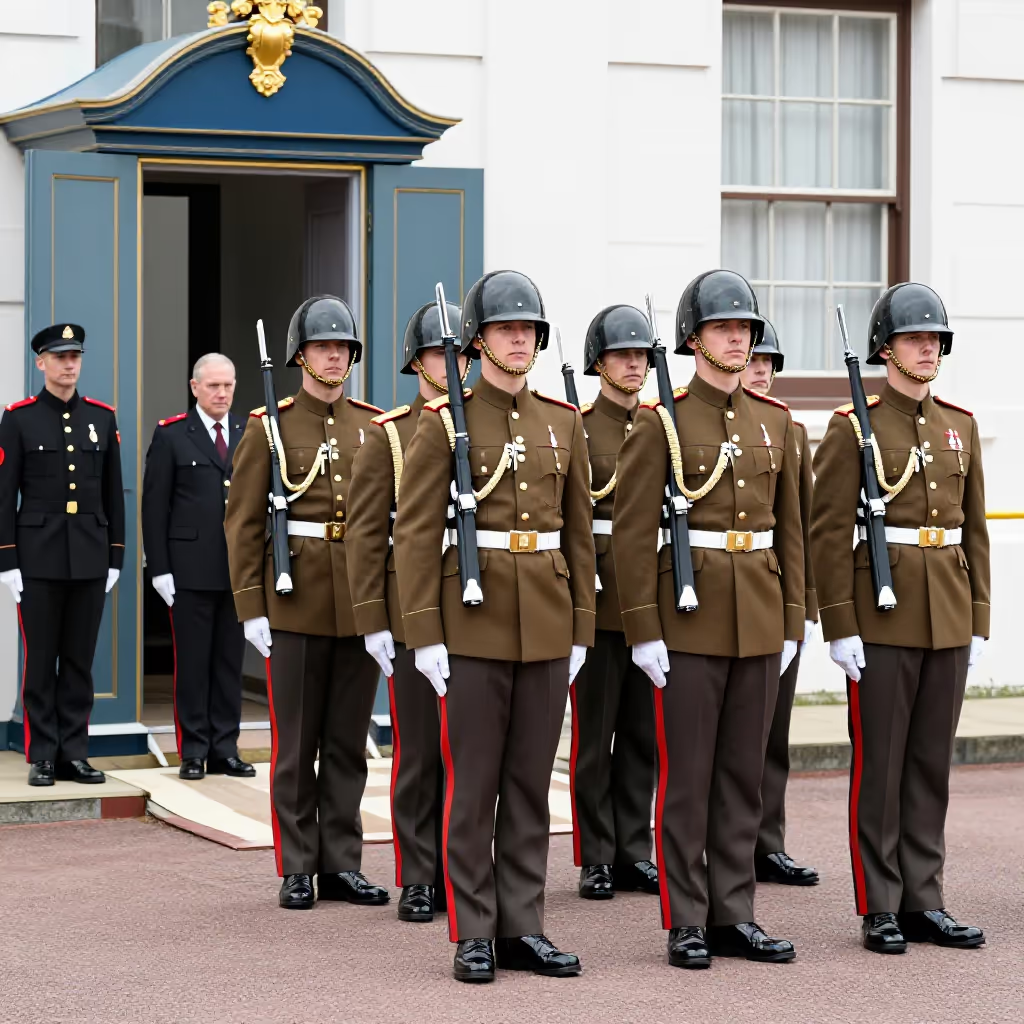
A selected, often especially representative military unit that frequently serves to protect a ruler or perform ceremonial duties.
Die königliche Garde marschierte vor dem Palast auf.
The royal guard marched in front of the palace.

guard
Loading your saved state.
guard
A selected, often especially representative military unit that frequently serves to protect a ruler or perform ceremonial duties.
Die königliche Garde marschierte vor dem Palast auf.
The royal guard marched in front of the palace.

'Die Garde' (the guard) always refers to a group of people or a unit, never to a single person. A single person standing guard is 'die Wache' (the guard/watch) or 'der Wächter' (the guard/keeper).
Die Garde bestand aus zwanzig Soldaten.
The guard consisted of twenty soldiers.
In a military context, 'Garde' (guard) is often combined with verbs like 'marschieren' (to march), 'aufziehen' (to parade/mount the guard), or 'Wache stehen' (to stand guard). Typical adjectives are 'königlich' (royal) or 'päpstlich' (papal).
Touristen beobachten gern, wie die königliche Garde aufzieht.
Tourists like to watch the royal guard parade.
The figurative meaning is almost always recognizable from the fixed expression 'die alte Garde' (the old guard). It describes an established, often conservative group of people in a particular field such as politics or art.
Die alte Garde der Partei stimmte gegen den Vorschlag.
The party's old guard voted against the proposal.
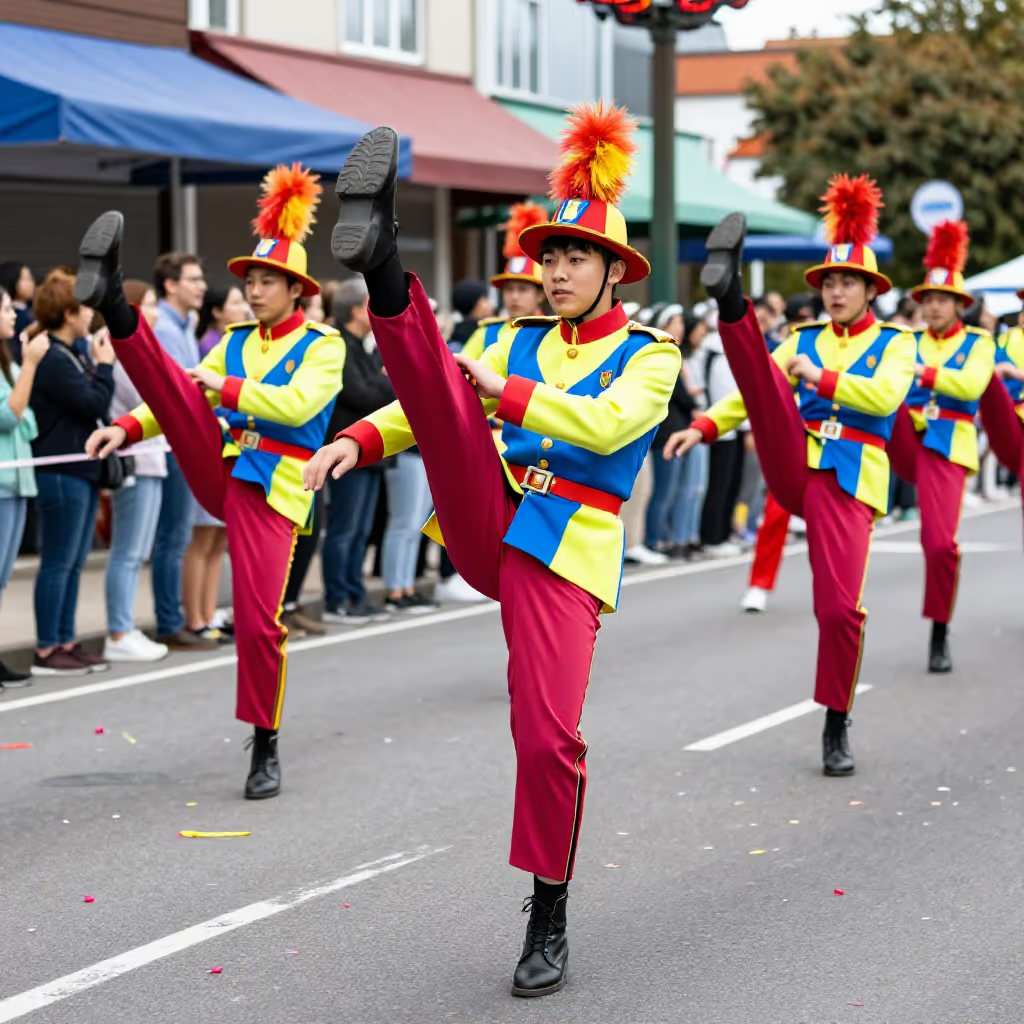
This meaning is specific to German Carnival (also called 'Fasching' or 'Fastnacht'). Here, a 'Garde' (dance guard) is a uniformed group that performs traditional dances.
Meine Tochter tanzt in der Garde des lokalen Karnevalsvereins.
My daughter dances in the local Carnival club's dance guard.
elite
'die Elite' and 'die Garde' can both refer to a special group of people. 'die Elite' emphasizes that these people are considered the best, most powerful, or most influential in a field. In its figurative sense, 'die Garde' refers more to a fixed, often long-standing group that has been important in a field for a long time. You hear 'die alte Garde' (the old guard) especially often. Learners may confuse the words because both sound like a selected group. In practical terms: 'Elite' fits when the focus is on achievement, power, or influence; 'Garde' fits more for an established group with tradition.

Im Verein entscheidet oft noch die alte Garde über wichtige Fragen.
In the club, the old guard often still decides important questions.
Zur Konferenz reist die Elite der internationalen Forschung an.
The elite of international research is traveling to the conference.