

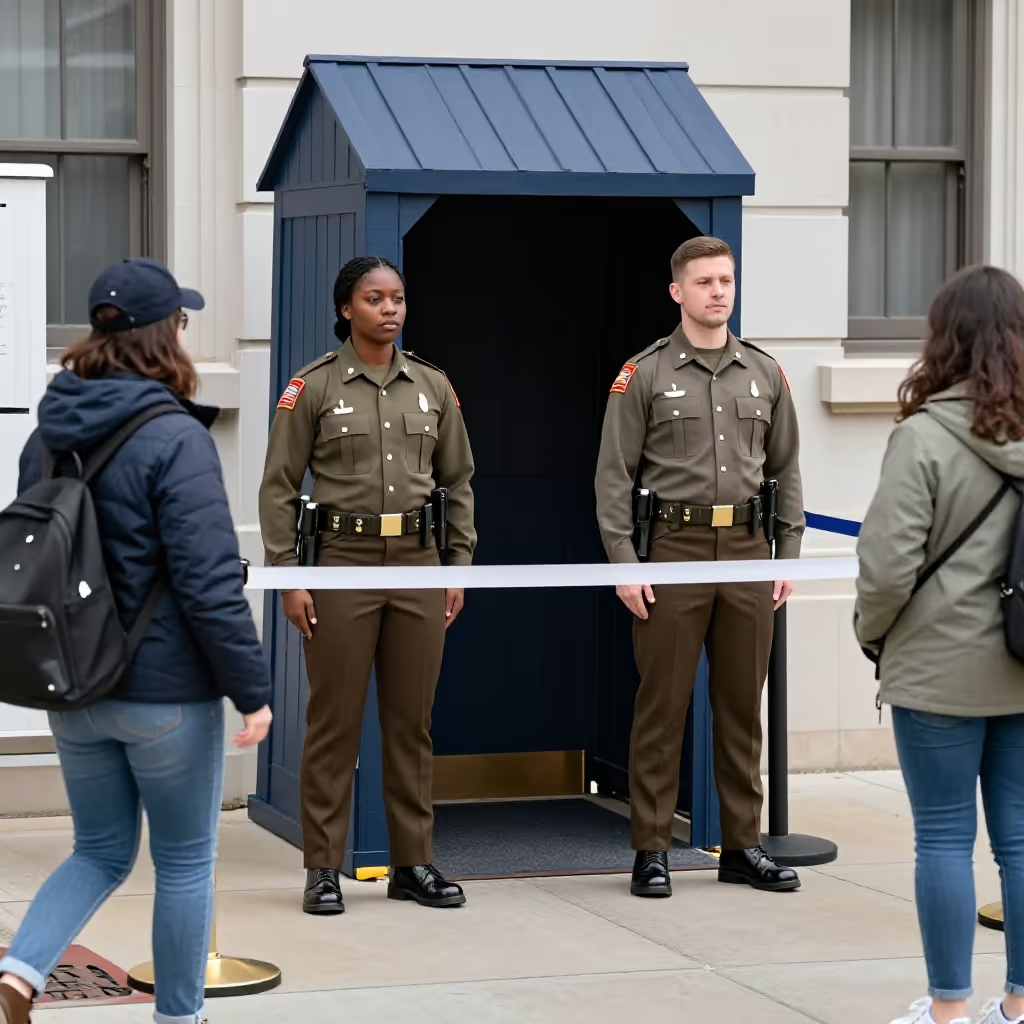
die Wache
guard
A person or group of people (e.g., soldiers, police officers) whose job is to guard and protect a place or someone.
EXAMPLE
Die Wache am Eingang kontrollierte die Ausweise.
The guard at the entrance checked the IDs.
guard / station
Loading your saved state.
guard
A person or group of people (e.g., soldiers, police officers) whose job is to guard and protect a place or someone.
Die Wache am Eingang kontrollierte die Ausweise.
The guard at the entrance checked the IDs.
guard duty
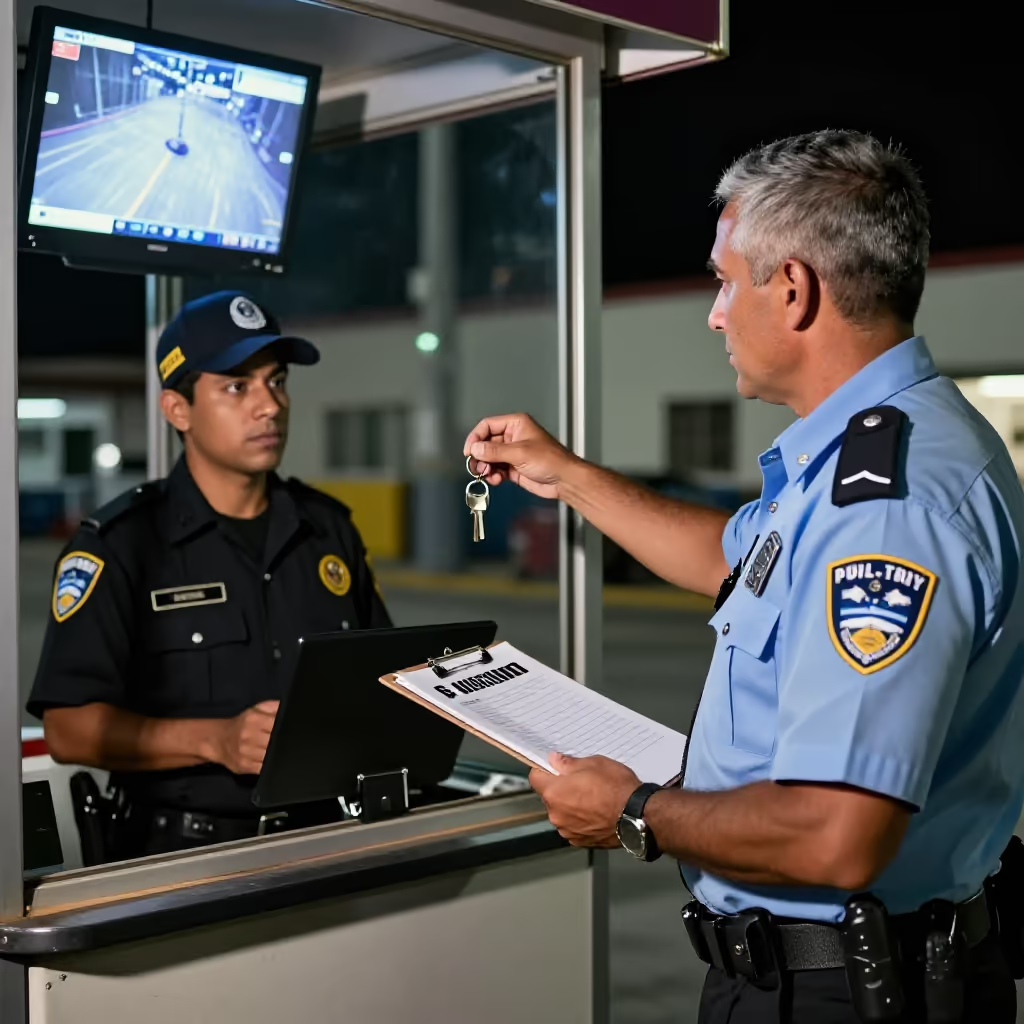
The duty of guarding; the period of time during which someone stands guard.
Mein Bruder hat heute Nacht von Mitternacht bis vier Uhr morgens Wache.
My brother is on guard duty tonight from midnight until four in the morning.
station
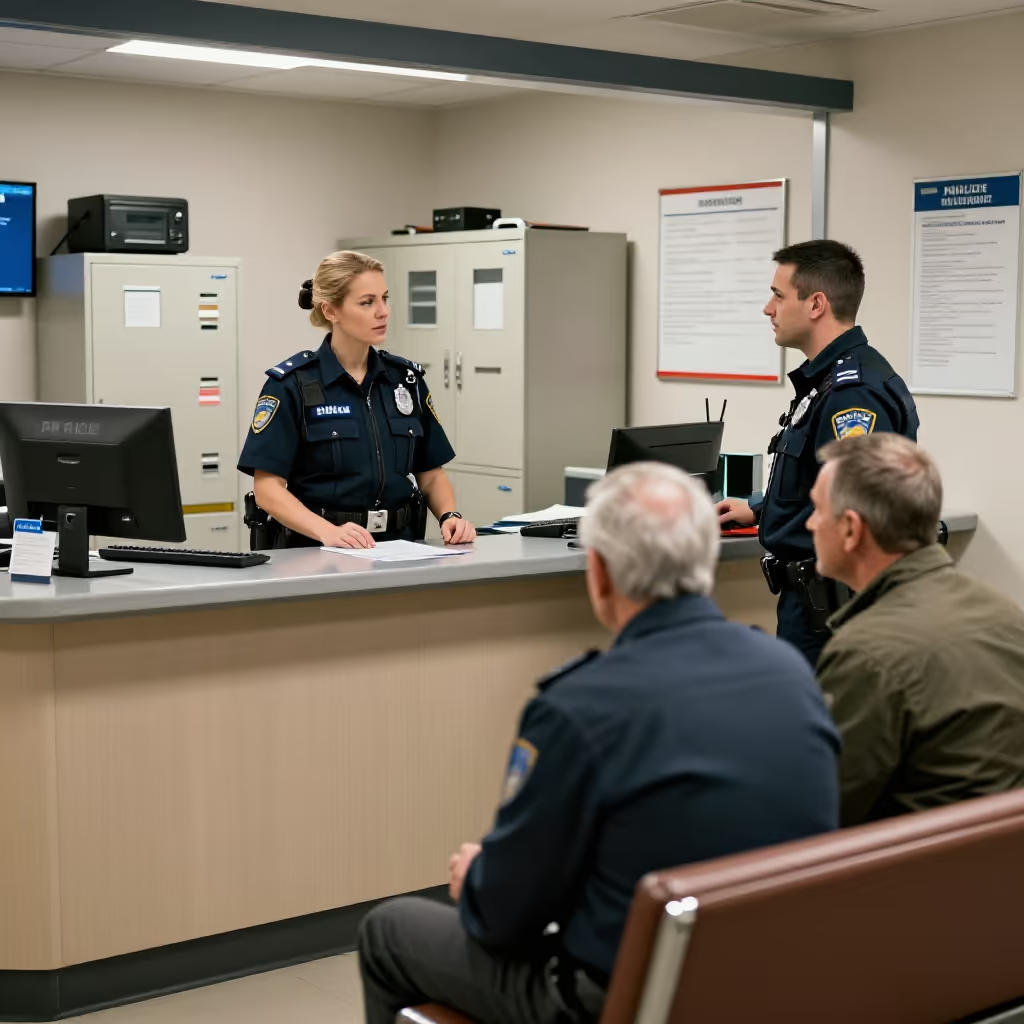
The building or room where the guard team stays; a police station.
Der Zeuge machte seine Aussage auf der Wache.
The witness gave his statement at the station.
'Die Wache' (the guard / station) is closely related to the verb 'wachen' (to stay awake, to watch) and the adjective 'wach' (awake). All of these words relate to the idea of alertness and protection.
Der Hund wacht die ganze Nacht vor der Tür.
The dog keeps watch in front of the door all night.
You can recognize the meaning of 'Wache' from context: if it refers to a person, they often stand at a place ('die Wache am Tor' — the guard at the gate). If it refers to the activity, the verb 'halten' or 'haben' is usually used ('Wache halten' — to stand guard). If it means the building, location prepositions are used ('auf der Wache' — at the station).
Die Wache kontrollierte jeden, der das Gebäude betrat.
The guard checked everyone who entered the building.
To express the activity of guarding, the fixed expression 'Wache halten' (to stand guard) or 'Wache haben' (to be on guard duty) is almost always used. The noun appears here without an article.
Wer hält heute Nacht Wache?
Who is standing guard tonight?
When 'die Wache' means a building (e.g., a police station), pay attention to the prepositions: 'auf der Wache sein' (to be at the station) describes the location, while 'zur Wache gehen' (to go to the station) indicates direction.
Er musste seinen verlorenen Geldbeutel auf der Wache abholen.
He had to pick up his lost wallet at the station.
police
Polizei and Wache can both refer to the building that houses a police station. „Polizei“ actually refers to the institution and denotes the building only from context, whereas „Wache“ explicitly names the place of duty but can also refer to other guard stations.
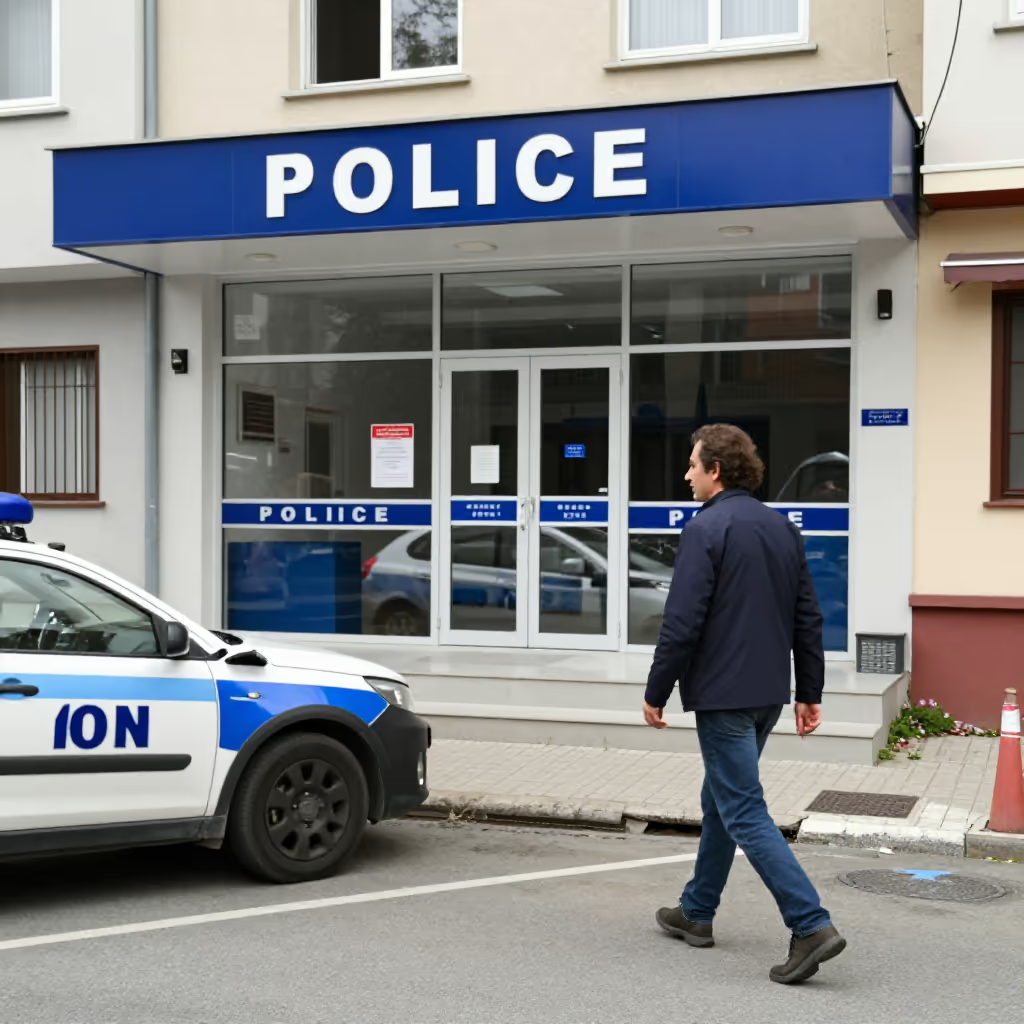
Ich gehe kurz zur Wache, um den Diebstahl zu melden.
I’m just going to the station to report the theft.
Ich gehe kurz zur Polizei, um den Diebstahl zu melden.
I’m just going to the police station to report the theft.