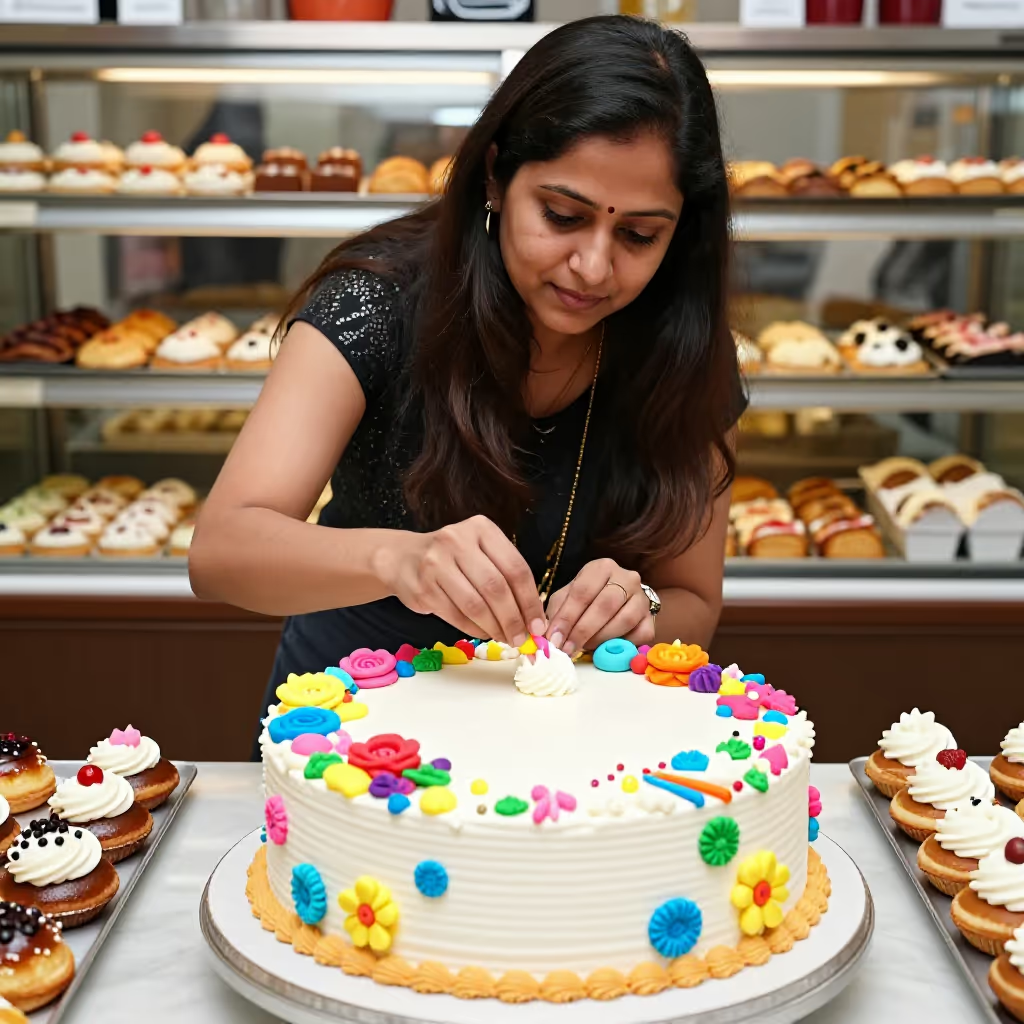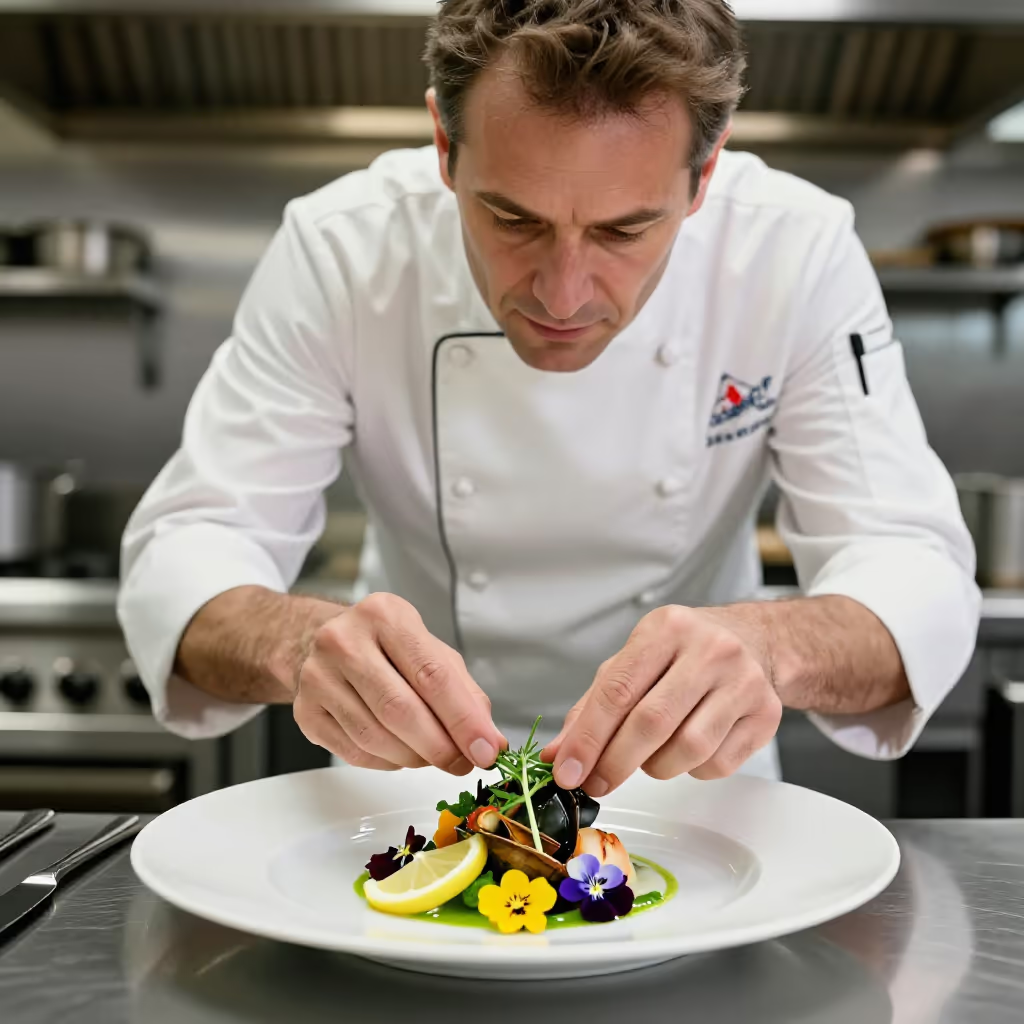
To decorate a dish or drink with small, edible ingredients in order to make it more visually appealing.
example
Sie garnierte den Salat mit frischen Kräutern und gerösteten Kernen.
She garnished the salad with fresh herbs and toasted seeds.

Usage tips
Verbs ending in -ieren
The ending '-ieren' often shows that a verb comes from another language, usually French. The verb 'garnieren' (to garnish) comes from the French 'garnir' (to equip, decorate).
EXAMPLE
Der Koch garniert die Suppe, bevor er sie serviert.
The chef garnishes the soup before serving it.
Sentence structure with 'mit'
The verb 'garnieren' (to garnish) is almost always used with the preposition 'mit' (with). The structure is: someone garnishes something (accusative) with something (dative).
EXAMPLE
Man kann den Kuchen mit frischen Beeren garnieren.
You can garnish the cake with fresh berries.
Typical collocations
In the context of food, 'garnieren' (to garnish) is often used with dishes such as 'Salat' (salad), 'Suppe' (soup), 'Dessert' (dessert), or 'Cocktail' (cocktail). The decoration is usually something edible, such as 'Kräuter' (herbs), 'Früchte' (fruit), or 'eine Zitronenscheibe' (a lemon slice).
EXAMPLE
Der Barkeeper garnierte den Cocktail mit einer Scheibe Orange.
The bartender garnished the cocktail with a slice of orange.
Context clue
The meaning depends on the object. If it is food or drink, the literal meaning 'verzieren' (to decorate) is meant. If it is something abstract like a 'Geschichte' (story) or 'Rede' (speech), the figurative meaning 'ausschmücken' (to embellish) is meant.
EXAMPLE
Sie garnierte das Dessert mit Schokoladensoße.
She garnished the dessert with chocolate sauce.
Register
The figurative meaning, to embellish a narrative, is considered elevated and is less common. It often has a slightly negative or ironic undertone, as if unnecessary details are being added.
EXAMPLE
Er liebte es, seine einfachen Geschichten mit erfundenen Details zu garnieren.
He loved embellishing his simple stories with invented details.
Compare with
confusable
garnieren vs belegen
to book / prove / top
'belegen' and 'garnieren' can both be used with food, but they do not mean the same thing. 'belegen' means to top bread, a roll, or a similar food with ingredients, for example with cheese or sausage. 'garnieren' means to decorate a dish nicely, often with small ingredients such as herbs, fruit, or sauce. The words can be confused because in both cases something is put on the food. But the purpose is different: with 'belegen', the focus is on the topping; with 'garnieren', it is more about appearance and a final finishing touch.
garnieren
Vor dem Servieren garniert sie die Suppe mit Petersilie.
Before serving, she garnishes the soup with parsley.
belegen
Wir belegen die Brote für den Ausflug mit Salat und Schinken.
We top the sandwiches for the trip with lettuce and ham.