

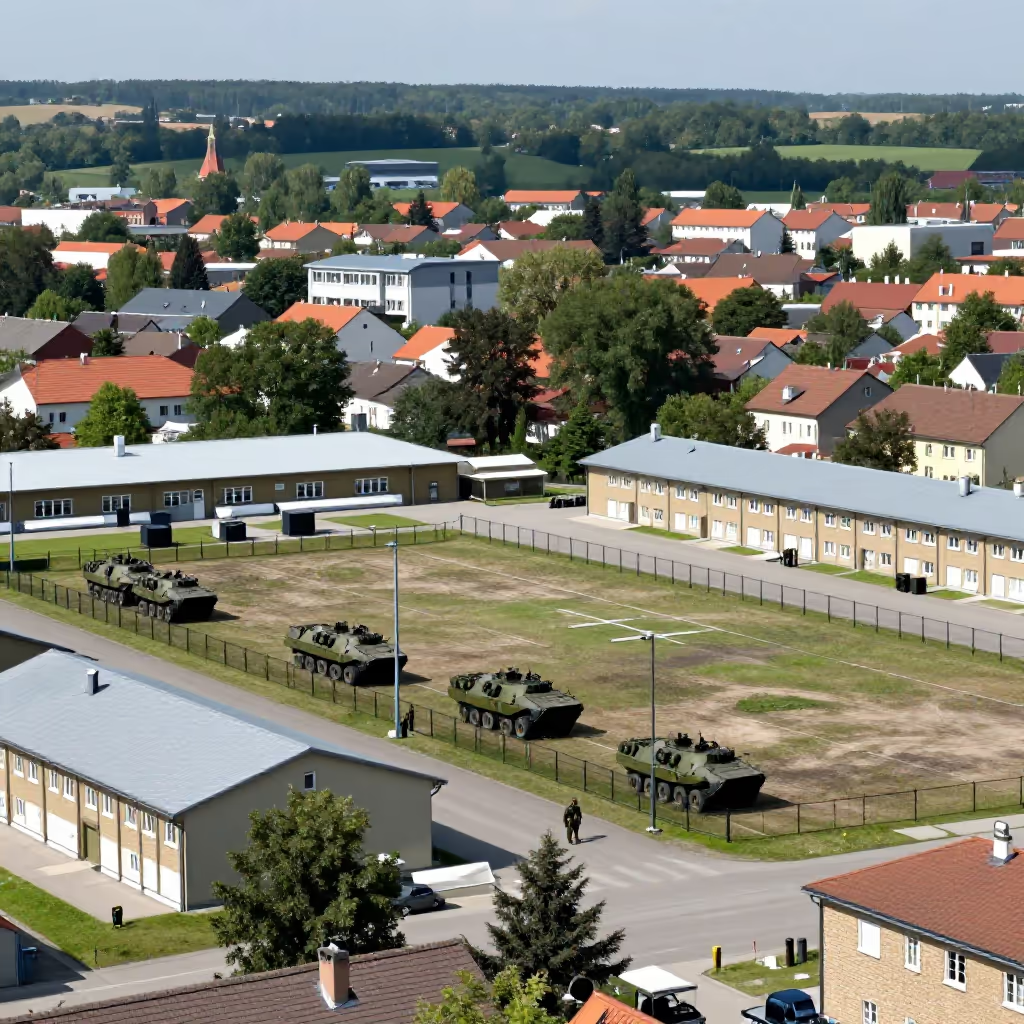
die Garnison
garrison town / base
The location or town where military troops are permanently stationed.
EXAMPLE
Potsdam war eine bedeutende preußische Garnison.
Potsdam was an important Prussian garrison town.
garrison
Loading your saved state.
garrison town / base
The location or town where military troops are permanently stationed.
Potsdam war eine bedeutende preußische Garnison.
Potsdam was an important Prussian garrison town.
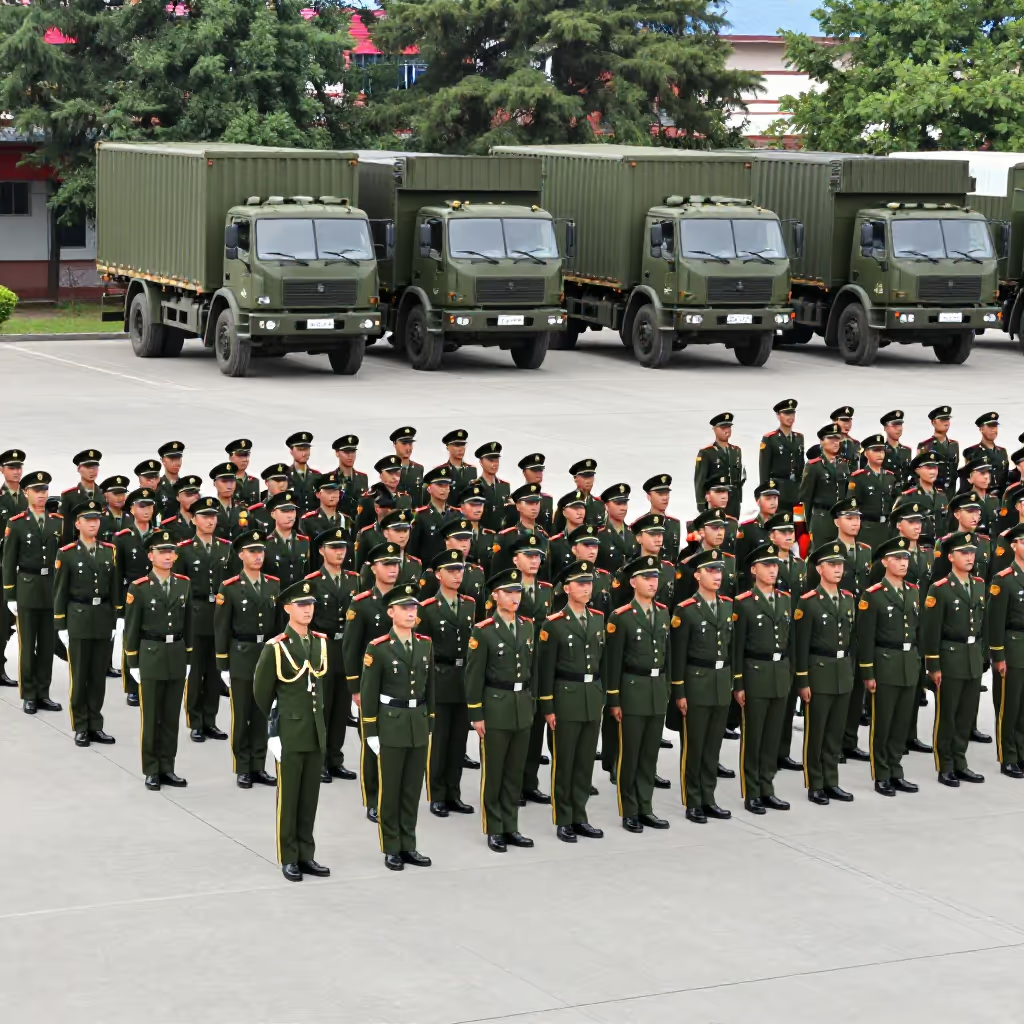
garrison
All the troops stationed at a particular place.
Im Falle eines Angriffs musste die gesamte Garnison die Festung verteidigen.
In the event of an attack, the entire garrison had to defend the fortress.
The word 'Garnison' (garrison) belongs to military terminology and is also used in historical contexts. It is rare in everyday language.
Die Stadt war früher eine wichtige Garnison für die Armee.
The town used to be an important garrison for the army.
Whether the place or the troops are meant can be recognized from the context. If the 'Garnison' (garrison) does something (e.g., fights), the troops are meant. If it is a place (e.g., in a town), the location is meant.
Die Garnison wurde in Alarmbereitschaft versetzt.
The garrison was put on alert.
In connection with the location, 'Garnison' (garrison) is often used with the verbs 'stationieren' (to station) or 'dienen' (to serve). You say that soldiers are stationed in a garrison or serve there.
Die Truppen sind in einer Kaserne am Rande der Garnison stationiert.
The troops are stationed in a barracks on the edge of the garrison town.
location / site
Standort and Garnison can both refer to a place where troops are permanently stationed. Standort is the general term for the location; Garnison specifically refers to a military stationing location or the town concerned. In a clearly military context, Garnison is therefore more precise.

Die Einheit kehrte nach dem Einsatz in ihre Garnison zurück.
The unit returned to its garrison after the deployment.
Die gute Verkehrsanbindung war entscheidend für den neuen Standort der Einheit.
The good transport links were crucial to the unit's new location.