

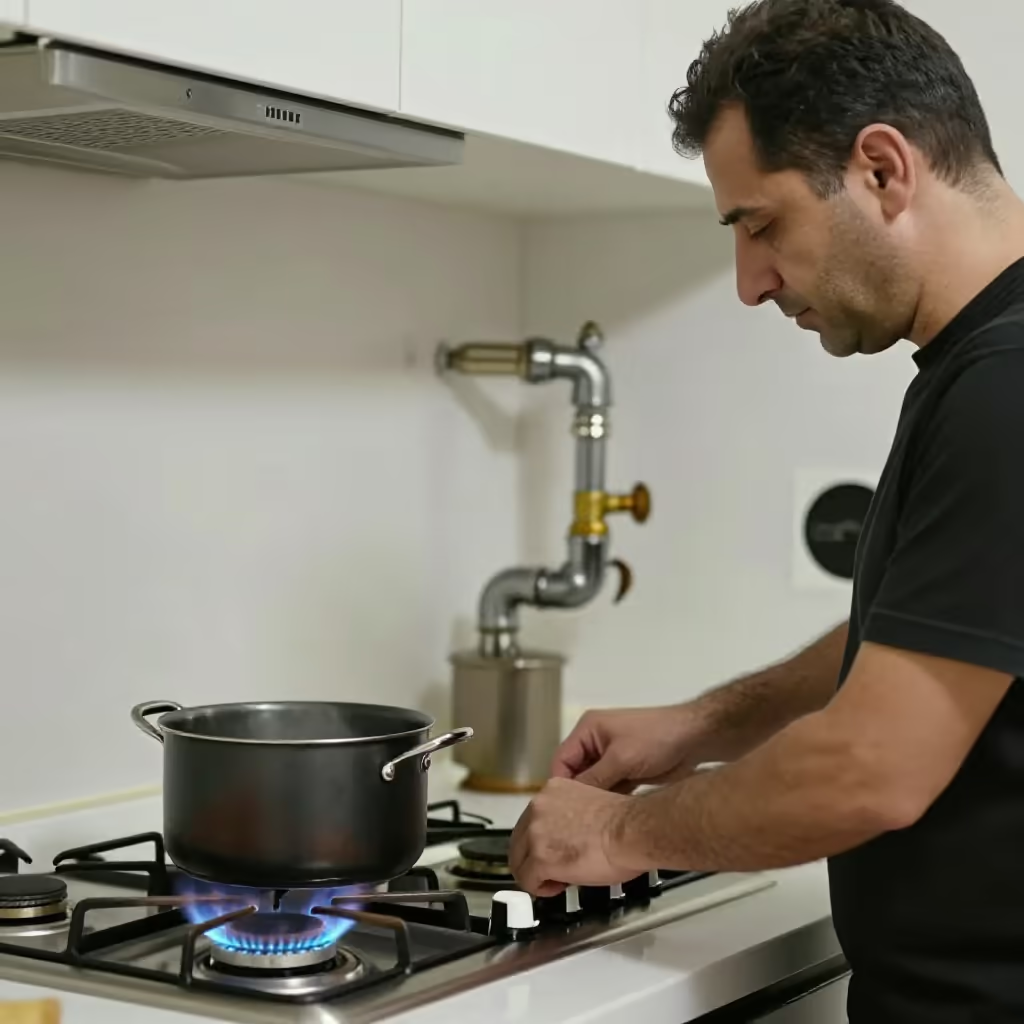
das Gas
gas
A flammable gaseous substance, especially natural gas, used for heating, cooking, or as fuel.
EXAMPLE
Die neue Wohnung hat eine Heizung, die mit Gas betrieben wird.
The new apartment has a heating system that runs on gas.
gas
Loading your saved state.
gas
A flammable gaseous substance, especially natural gas, used for heating, cooking, or as fuel.
Die neue Wohnung hat eine Heizung, die mit Gas betrieben wird.
The new apartment has a heating system that runs on gas.

gas
A substance in one of the three classical states of matter that, unlike liquids and solids, spreads out completely in the available space.
Luft ist ein Gemisch aus verschiedenen Gasen wie Stickstoff und Sauerstoff.
Air is a mixture of different gases such as nitrogen and oxygen.

to accelerate
Colloquial for accelerating a vehicle by pressing the gas pedal.
Auf der Autobahn kannst du ruhig mal Gas geben.
On the highway, you can go ahead and accelerate a bit.
gas
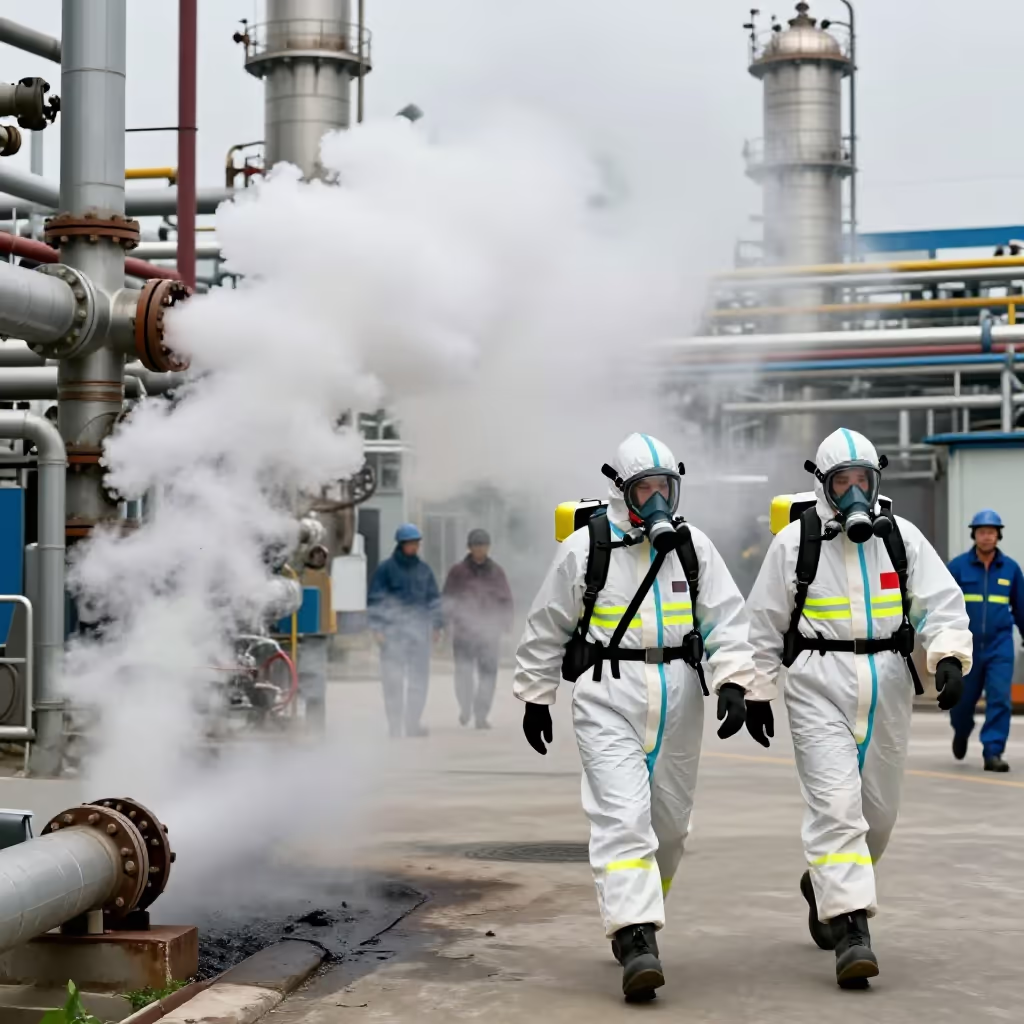
A toxic or harmful gaseous substance that is used, for example, as a weapon or is produced during chemical processes.
Bei dem Chemieunfall ist giftiges Gas ausgetreten.
Toxic gas escaped during the chemical accident.
Careful: 'das Gas' (gas) is not the same as the English 'gas' (gasoline). 'Gas' in Germany usually means natural gas for heating or cooking. What you put in a car is 'das Benzin' (gasoline/petrol).
Im Winter sind die Kosten für Gas immer am höchsten.
In winter, the costs for gas are always highest.
When 'Gas' (gas) means fuel for heating, it is almost always used in the singular as an uncountable noun. The plural 'die Gase' (gases) usually refers to different types of gases in chemistry or physics.
Wir müssen diesen Monat eine hohe Rechnung für Gas bezahlen.
We have to pay a high bill for gas this month.
In everyday life, 'Gas' (gas) is often used in fixed combinations related to heating and cooking, for example 'der Gasherd' (gas stove), 'die Gasheizung' (gas heating), or 'der Gaszähler' (gas meter).
Viele Köche bevorzugen einen Gasherd, weil man die Hitze besser regulieren kann.
Many cooks prefer a gas stove because you can regulate the heat better.
The expression 'Gas geben' (to accelerate / to step on it) means pressing the gas pedal in a car and speeding up. Colloquially, it is also used to say that someone should hurry up or make more effort.
Die Ampel ist grün, gib Gas!
The light is green, step on it!
steam
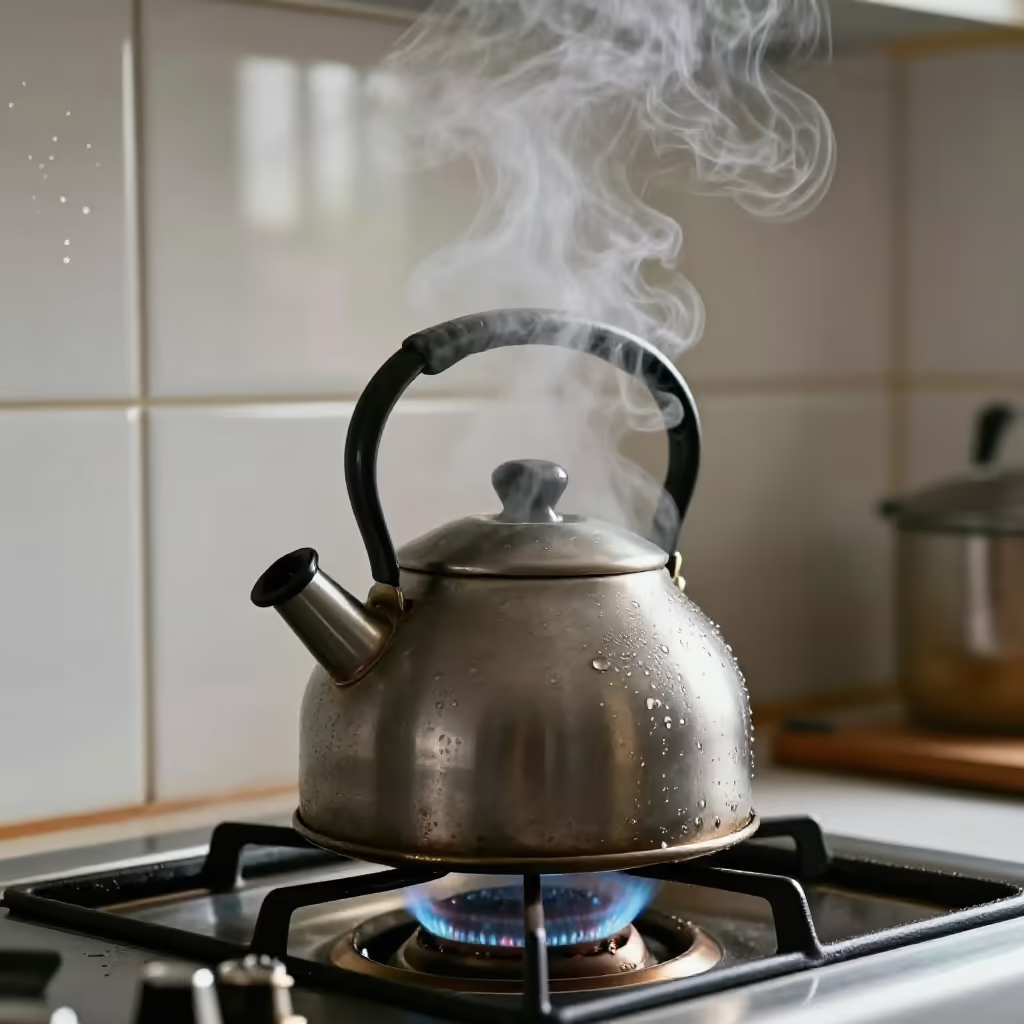
Both words refer to a substance in a gaseous state. In everyday language, „Dampf“ is used mainly for water in its gaseous state after being heated, while „Gas“ is a more general term for substances in this state. For hot water, „Dampf“ is therefore the more natural word.
Das Gas verteilt sich schnell im ganzen Raum.
The gas quickly spreads throughout the room.
Über dem Topf steigt heißer Dampf auf.
Hot steam rises from the pot.