

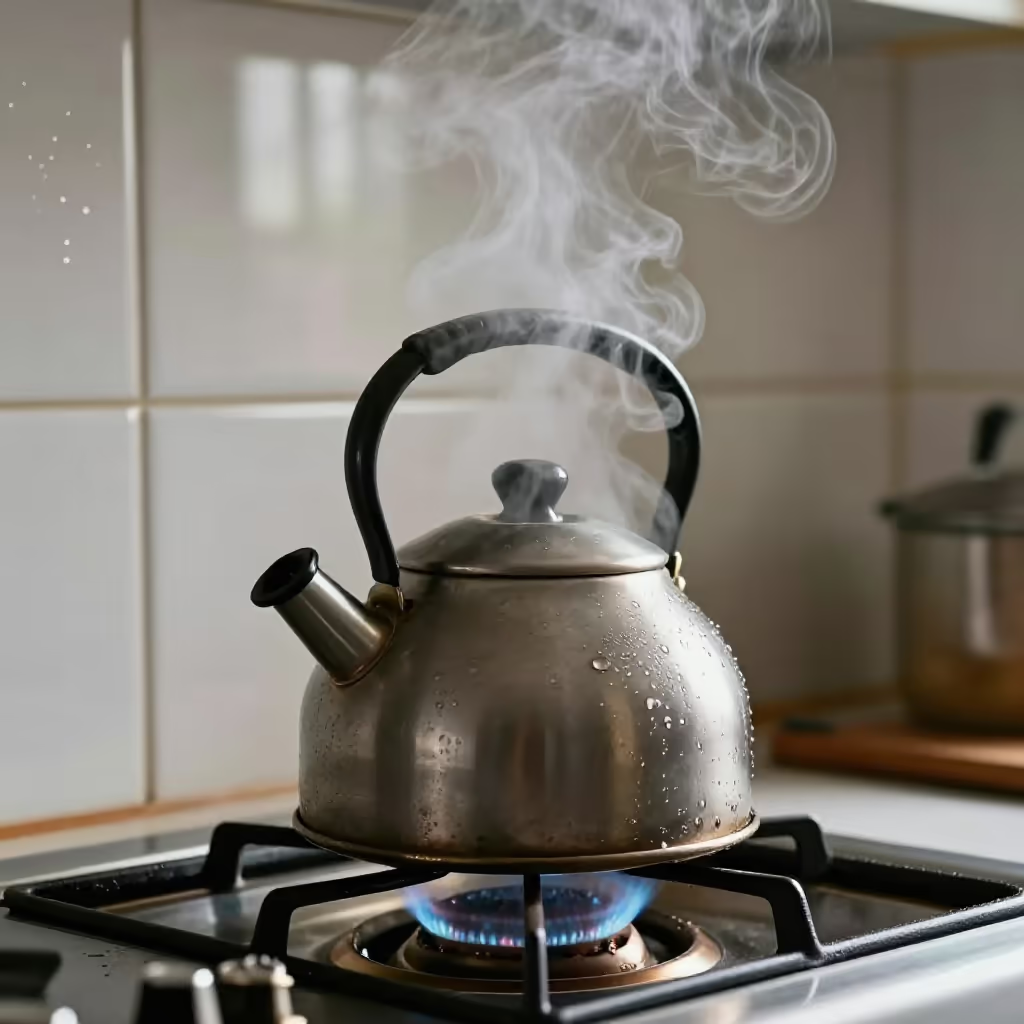
der Dampf
steam
The gaseous state of water that forms when it is heated; water vapor.
EXAMPLE
Vorsicht, der Dampf aus dem Kochtopf ist sehr heiß.
Careful, the steam from the cooking pot is very hot.
steam
Loading your saved state.
steam
The gaseous state of water that forms when it is heated; water vapor.
Vorsicht, der Dampf aus dem Kochtopf ist sehr heiß.
Careful, the steam from the cooking pot is very hot.

to let off steam
To release one's anger or built-up tension by venting or working it off.
Nach dem stressigen Tag musste er beim Sport erstmal richtig Dampf ablassen.
After the stressful day, he first had to really let off steam by doing sports.

energy
Colloquial for energy, strength, or drive.
Dem neuen Projekt fehlt es noch an Dampf, um richtig in Gang zu kommen.
The new project still lacks the energy to really get going.

to be under pressure
To be under great pressure, stress, or in a hurry.
Vor der wichtigen Präsentation stand das ganze Team unter Dampf.
Before the important presentation, the whole team was under pressure.
'Dampf' (steam) is the base word for many other words. These include the verb 'dampfen' (to steam) and compound nouns like 'Dampfgarer' (steam cooker) or 'Dampfschiff' (steamship), all of which have to do with the physical meaning.
Im Winter dampft der Atem in der kalten Luft.
In winter, your breath steams in the cold air.
The literal meaning of 'Dampf' (steam) refers to hot water, cooking, or machines. The figurative meanings almost always refer to human energy, emotions, or stress, which becomes clear from the verbs used, e.g. 'ablassen' (to release/let off), 'stehen unter' (to be under).
Der Dampf aus der Teekanne beschlägt die Fensterscheibe.
The steam from the teapot fogs up the windowpane.
The expression 'Dampf ablassen' (to let off steam) is a fixed combination. The person getting rid of their anger is the subject of the sentence. 'Dampf' is the accusative object here.
Er ging eine Runde laufen, um nach dem Streit Dampf abzulassen.
He went for a run to let off steam after the argument.
In the colloquial meaning 'Energie' (energy), 'Dampf' is often used with the verbs 'haben' (to have), 'machen' (to make/do), or 'fehlen' (to be lacking).
Mir fehlt heute einfach der Dampf, um noch Sport zu machen.
I simply don't have the energy today to do any more sports.
The expression 'unter Dampf stehen' (to be under pressure) always uses the preposition 'unter' with the dative. It describes that a person or group is under great pressure.
Wegen des Abgabetermins stehen wir alle mächtig unter Dampf.
Because of the deadline, we're all really under pressure.
energy
Energie neutrally refers to the available drive and stamina. Dampf can also colloquially mean energy, but it often emphasizes energetic effort and pressure. Energie is appropriate for a factual description; in a casual, motivating instruction, Dampf is more suitable.

Der Trainer ruft, dass die Mannschaft in der zweiten Halbzeit mehr Dampf machen soll.
The coach calls out that the team needs to step it up in the second half.
Die Mannschaft braucht in der zweiten Halbzeit mehr Energie.
The team needs more energy in the second half.