


der Gaumen
palate
The upper wall of the oral cavity, which separates the mouth from the nasal cavity.
EXAMPLE
Die heiße Suppe hat mir den Gaumen verbrannt.
The hot soup burned my palate.
palate
Loading your saved state.
palate
The upper wall of the oral cavity, which separates the mouth from the nasal cavity.
Die heiße Suppe hat mir den Gaumen verbrannt.
The hot soup burned my palate.
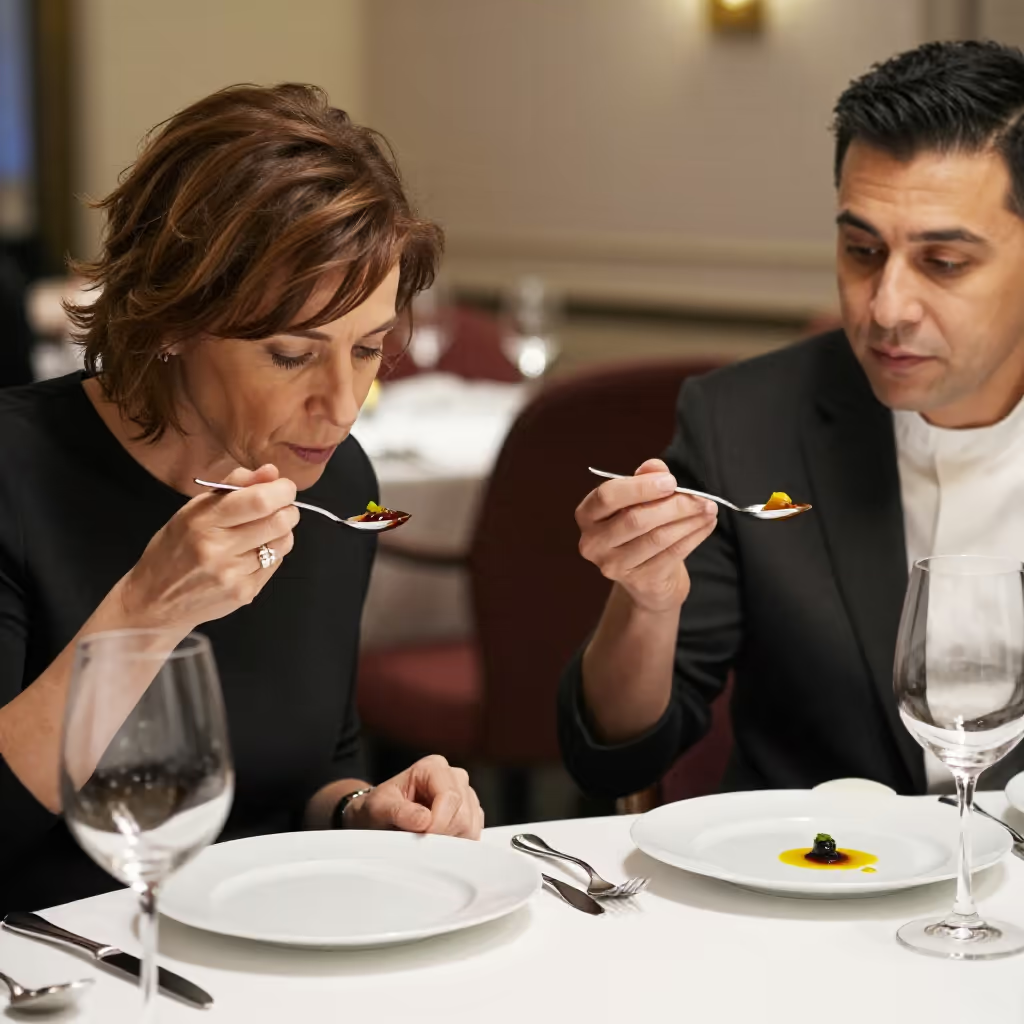
palate
In a figurative sense, the sense of taste, especially the ability to perceive and enjoy subtle differences in flavor in food and drinks.
Dieses Dessert ist ein wahrer Genuss für den Gaumen.
This dessert is a true delight for the palate.
You can recognize the meaning from the context. If it is about the body, medicine, or a physical sensation such as pain, it refers to the part of the mouth. If people are talking about enjoyment, food, and drink, it refers to the sense of taste.
Beim Sprechen berührt die Zunge den Gaumen.
When speaking, the tongue touches the palate.
In the anatomical meaning, 'Gaumen' (palate) is often connected with physical sensations or descriptions, for example 'sich den Gaumen verbrennen' (to burn one's palate) or in the terms 'harter Gaumen' (hard palate) and 'weicher Gaumen' (soft palate).
Sei vorsichtig, der Käse ist sehr heiß und du könntest dir den Gaumen verbrennen.
Be careful, the cheese is very hot and you could burn your palate.
In the figurative meaning of the sense of taste, 'Gaumen' (palate) is often used in positive expressions. Typical phrases are 'ein Genuss für den Gaumen' (a delight for the palate), 'eine Gaumenfreude' (a culinary delight), or 'einen feinen Gaumen haben' (to have a refined palate).
Für Feinschmecker ist dieses Menü ein besonderer Genuss für den Gaumen.
For gourmets, this menu is a special delight for the palate.
Using 'Gaumen' (palate) for the sense of taste belongs to a rather elevated, sometimes poetic style of language. You often read it in restaurant reviews, cookbooks, or food advertising.
Der Chefkoch kreiert immer wieder neue Überraschungen für den anspruchsvollen Gaumen.
The head chef keeps creating new surprises for the discerning palate.
taste
Both words can show that someone appreciates fine food. „Geschmack“ refers more generally to personal perception or judgment, while „Gaumen“ is figurative and emphasizes the ability to perceive and enjoy subtle differences. For particular expertise, „Gaumen“ therefore sounds stronger and more vivid.

Ihr Gaumen erkennt sofort die feinen Gewürze in der Suppe.
Her palate immediately detects the subtle spices in the soup.
Sein Geschmack bei feinen Speisen ist vielseitig und offen für Neues.
His taste in fine food is varied and open to new things.