

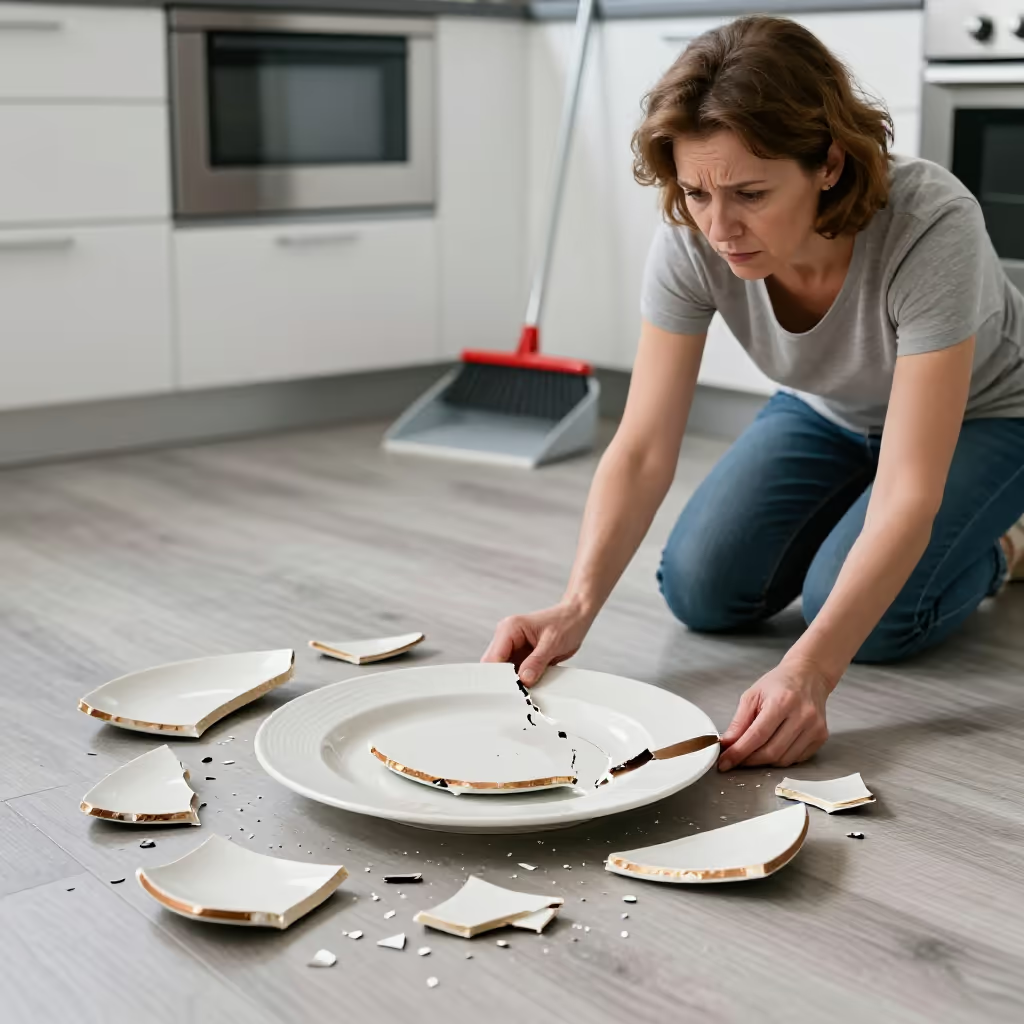
gebrochen
broken
Physically broken into two or more pieces or cracked.
EXAMPLE
Nach dem Sturz vom Fahrrad war sein Arm gebrochen.
After falling off his bike, his arm was broken.
broken
Loading your saved state.
broken
Physically broken into two or more pieces or cracked.
Nach dem Sturz vom Fahrrad war sein Arm gebrochen.
After falling off his bike, his arm was broken.

broken
In reference to language: spoken with mistakes and a strong accent.
Der Tourist fragte in gebrochenem Deutsch nach dem Weg zum Bahnhof.
The tourist asked for the way to the train station in broken German.

broken
Figuratively: deeply hurt emotionally or mentally, discouraged, or at the end of one's strength.
Nach dem schweren Schicksalsschlag war er ein gebrochener Mann.
After the severe blow of fate, he was a broken man.
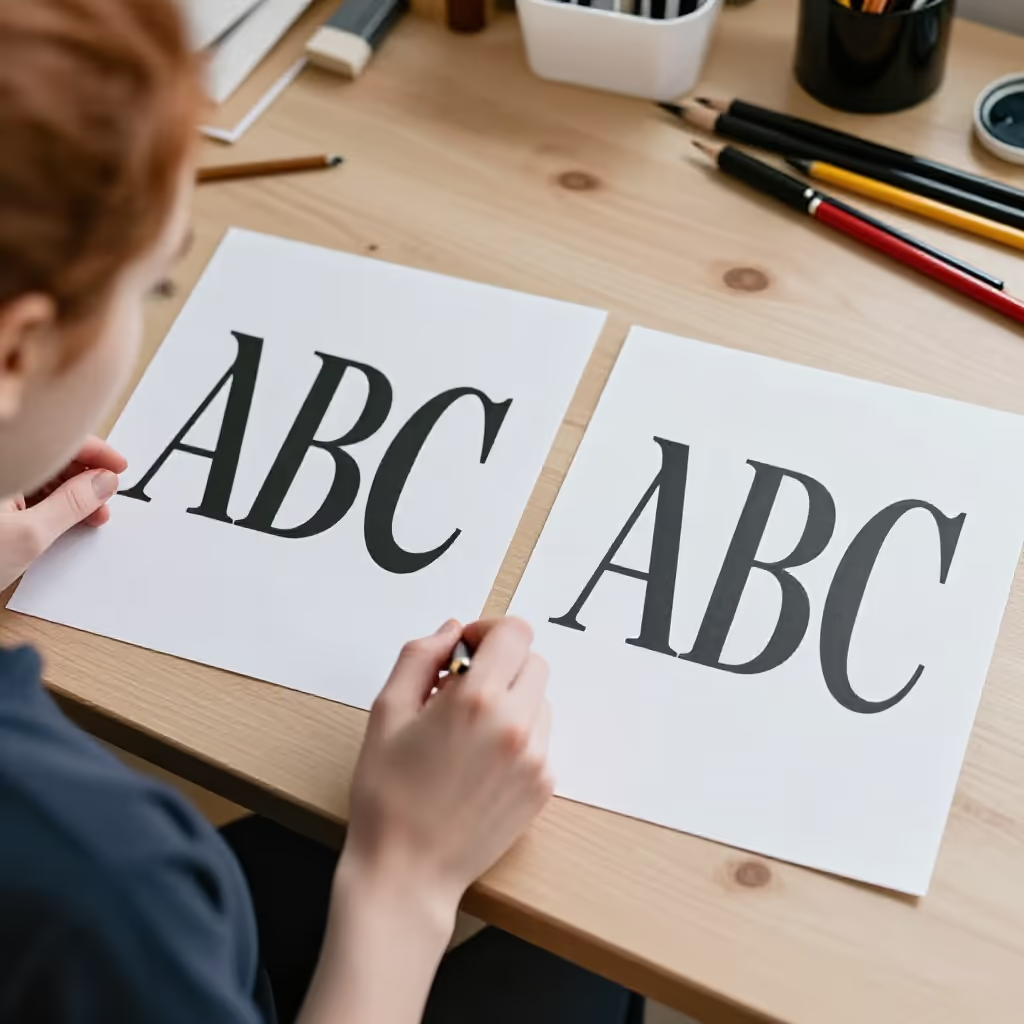
blackletter
Refers to a typeface, 'gebrochene Schrift' (blackletter script), e.g. Fraktur, whose letters have angular and interrupted lines, in contrast to the round forms of Antiqua.
Alte deutsche Bücher sind oft in gebrochener Schrift gedruckt.
Old German books are often printed in blackletter script.
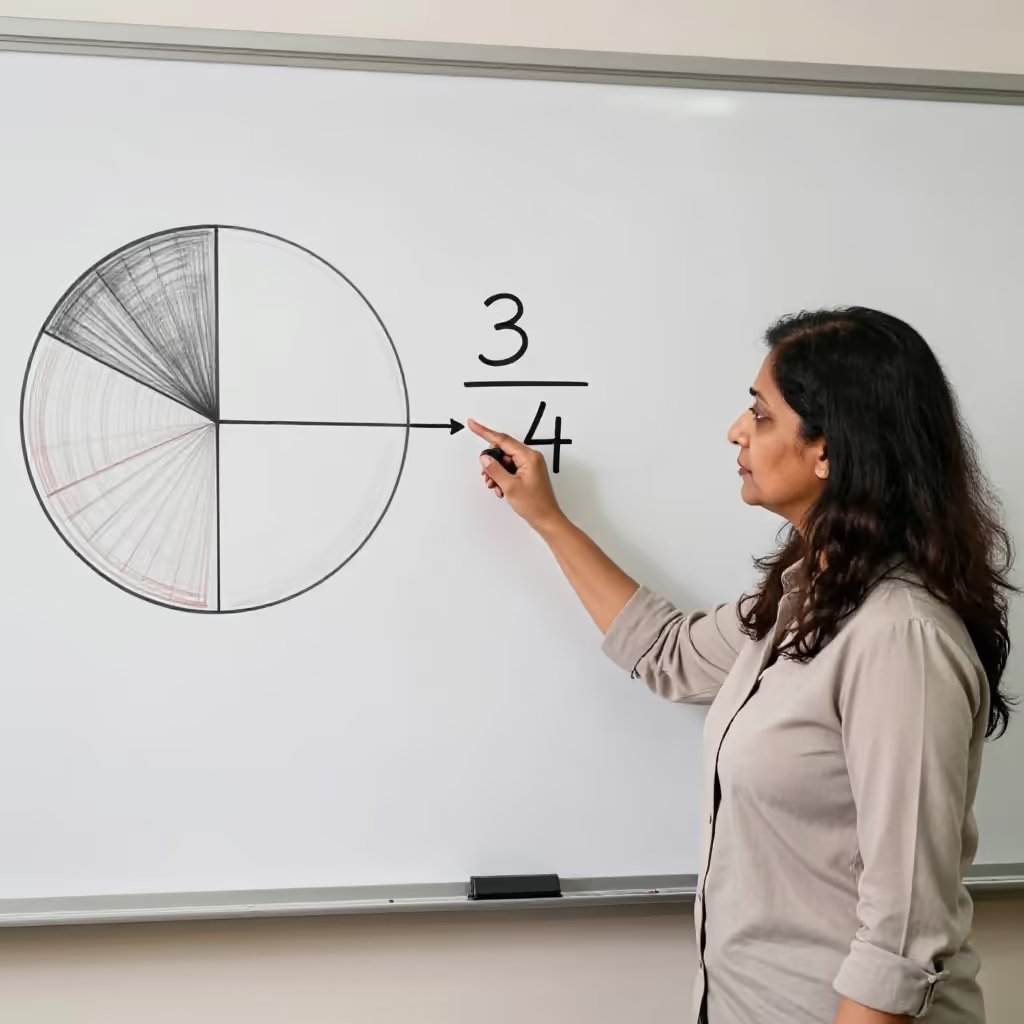
fractional
In mathematics: describes a number that is not a whole number, but part of a whole, i.e. a fraction.
Das Ergebnis der Division ist eine gebrochene Zahl.
The result of the division is a fractional number.
'Gebrochen' (broken) is the past participle of the verb 'brechen' (to break). All meanings of 'gebrochen' (broken) derive from the idea of breaking or interruption, whether with a bone, language, or a heart.
Vorsicht, das Glas kann leicht brechen.
Careful, the glass can break easily.
The noun described by 'gebrochen' (broken) determines the meaning. A 'gebrochener Arm' (broken arm) is physically damaged, 'gebrochenes Deutsch' (broken German) refers to language, and a 'gebrochenes Herz' (broken heart) refers to a feeling.
Er hat sich das Bein gebrochen.
He broke his leg.
When referring to language, 'gebrochen' (broken) is almost always combined with a language or the word 'Sprache' (language) itself. You say 'in gebrochenem Deutsch sprechen' (to speak in broken German) or 'sein Englisch ist gebrochen' (his English is broken).
Er konnte seine Geschichte nur in gebrochenem Deutsch erzählen.
He could only tell his story in broken German.
In the figurative sense, 'gebrochen' (broken) describes a state of deep grief or discouragement. Typical expressions are 'ein gebrochener Mann/eine gebrochene Frau' (a broken man/a broken woman) or 'ein gebrochenes Herz' (a broken heart).
Seit dem Tod ihrer Partnerin ist sie eine gebrochene Frau.
Since the death of her partner, she has been a broken woman.
The expression 'gebrochene Schrift' (blackletter script) is a technical term from typography and refers to certain historical typefaces such as Fraktur. It is used only in this specific context.
Die alte Urkunde war in gebrochener Schrift verfasst.
The old document was written in blackletter script.
broken / exhausted
Both words can describe a damaged object. „Kaputt“ has a broader meaning and fits many types of defects, while „gebrochen“ specifically means that something is broken into pieces or cracked. Use „kaputt“ for the general condition and „gebrochen“ when the break is the important point.

Nach dem Sturz war der Bildschirm gebrochen.
The screen was cracked after the fall.
Nach dem Sturz war der Bildschirm kaputt.
The screen was broken after the fall.