

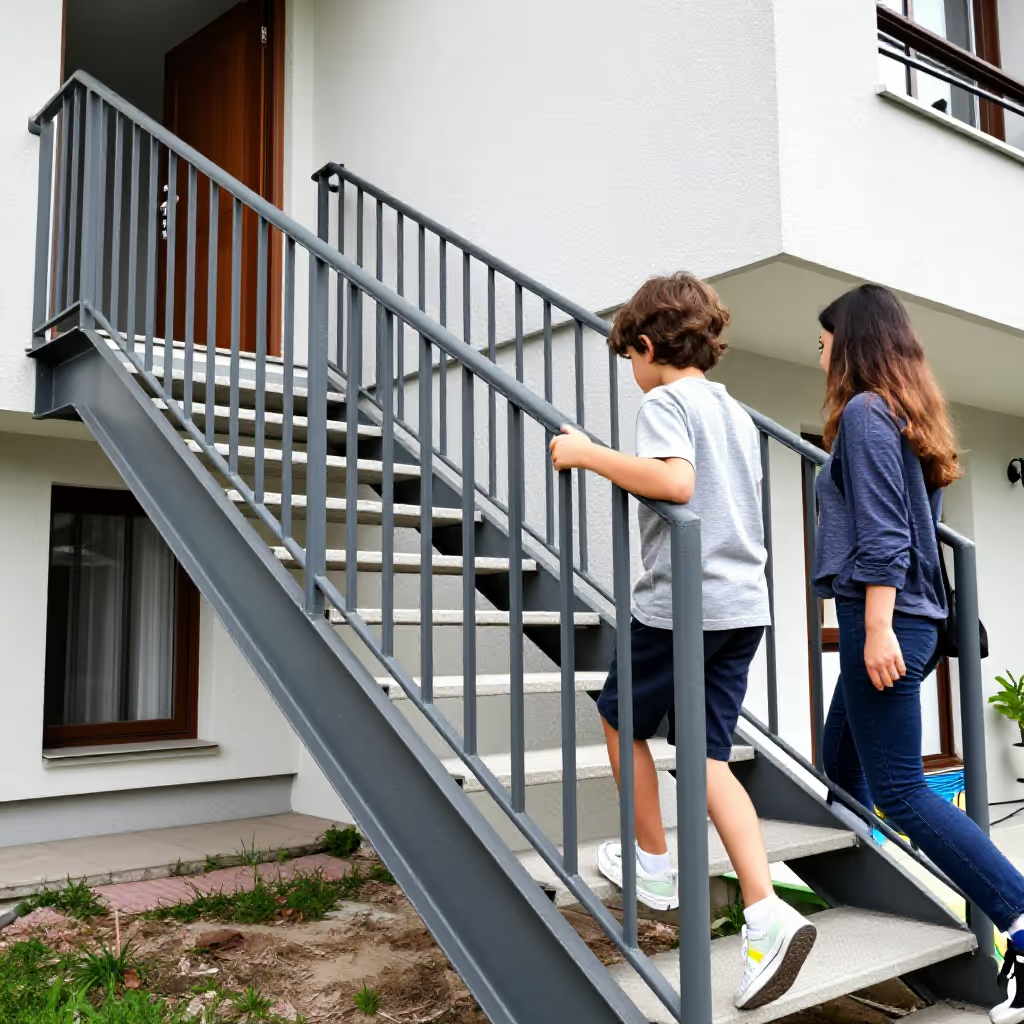
A protective barrier, usually made of rails and posts, installed on stairs, balconies, bridges, or other elevated places to prevent people from falling.
example
Halte dich bitte am Geländer fest, die Stufen sind sehr steil.
Please hold on to the railing; the steps are very steep.
Usage tips
Typical combination
The most common and important action connected with a 'Geländer' (railing) is holding on. The fixed phrase is 'sich am Geländer festhalten' (to hold on to the railing).
EXAMPLE
Die Treppe ist rutschig, halt dich besser am Geländer fest.
The stairs are slippery; you'd better hold on to the railing.
Important prepositions
To describe a position or action, 'am' (dative) is used. When describing movement over the railing, you use 'über' (accusative).
EXAMPLE
Er lehnte lässig am Geländer und schaute aufs Wasser.
He leaned casually against the railing and looked at the water.
Typical places
A 'Geländer' (railing) is typically found in places where there is a risk of falling. These include stairs, balconies, bridges, observation platforms, or ships.
EXAMPLE
Von der Brücke aus hat man einen tollen Blick, aber das Geländer ist sehr niedrig.
From the bridge, you have a great view, but the railing is very low.
Compare with
confusable
Geländer vs Zaun
fence
'der Zaun' and 'das Geländer' are both barriers, but they are found in different places and have different functions. A 'Zaun' usually marks off a property, garden, or area. A 'Geländer' is found on stairs, balconies, bridges, or other elevated places and protects people from falling. Learners may confuse the words because both can be made of bars or metal. In practical terms: around a property there is a 'Zaun'; on a staircase or balcony there is a 'Geländer'.
Geländer
Auf der alten Treppe hält sich Anna am Geländer fest.
On the old staircase, Anna holds on to the railing.
Zaun
Der Hund läuft im Garten hinter dem Zaun.
The dog is running in the garden behind the fence.