


A person whom the police believe could commit serious crimes in the future, especially politically motivated acts of violence. The term is used primarily in the context of counterterrorism.
example
Der bekannte Islamist wurde von den Behörden als Gefährder eingestuft und steht unter Beobachtung.
The known Islamist was classified by the authorities as a potential threat and is under surveillance.
Usage tips
Word formation
The word is derived from the verb 'gefährden' (to endanger). The ending '-er' turns the verb into a masculine person who performs this action — that is, someone who endangers others.
EXAMPLE
Wer andere gefährdet, ist ein Gefährder.
Someone who endangers others is a 'Gefährder' (potential threat).
Grammar trap
'Gefährder' belongs to the N-declension. This means it gets an '-n' at the end in the accusative, dative, and genitive singular. A common mistake is to forget this '-n'.
EXAMPLE
Die Polizei befragte den Gefährder zu seinen Plänen.
The police questioned the potential threat about his plans.
Register
In its main meaning, 'Gefährder' (potential threat) is a technical term from the language of the police and security authorities. It is used in official contexts and in the news.
EXAMPLE
Der Begriff „Gefährder“ wird oft in den Nachrichten im Zusammenhang mit Sicherheitspolitik verwendet.
The term 'Gefährder' (potential threat) is often used in the news in connection with security policy.
Typical collocations
In a police context, the word is often combined with certain verbs, for example 'als Gefährder einstufen' (to classify as a potential threat), 'als Gefährder gelten' (to be considered a potential threat), or 'einen Gefährder beobachten' (to monitor a potential threat).
EXAMPLE
Die Person wurde offiziell als Gefährder eingestuft.
The person was officially classified as a potential threat.
General meaning
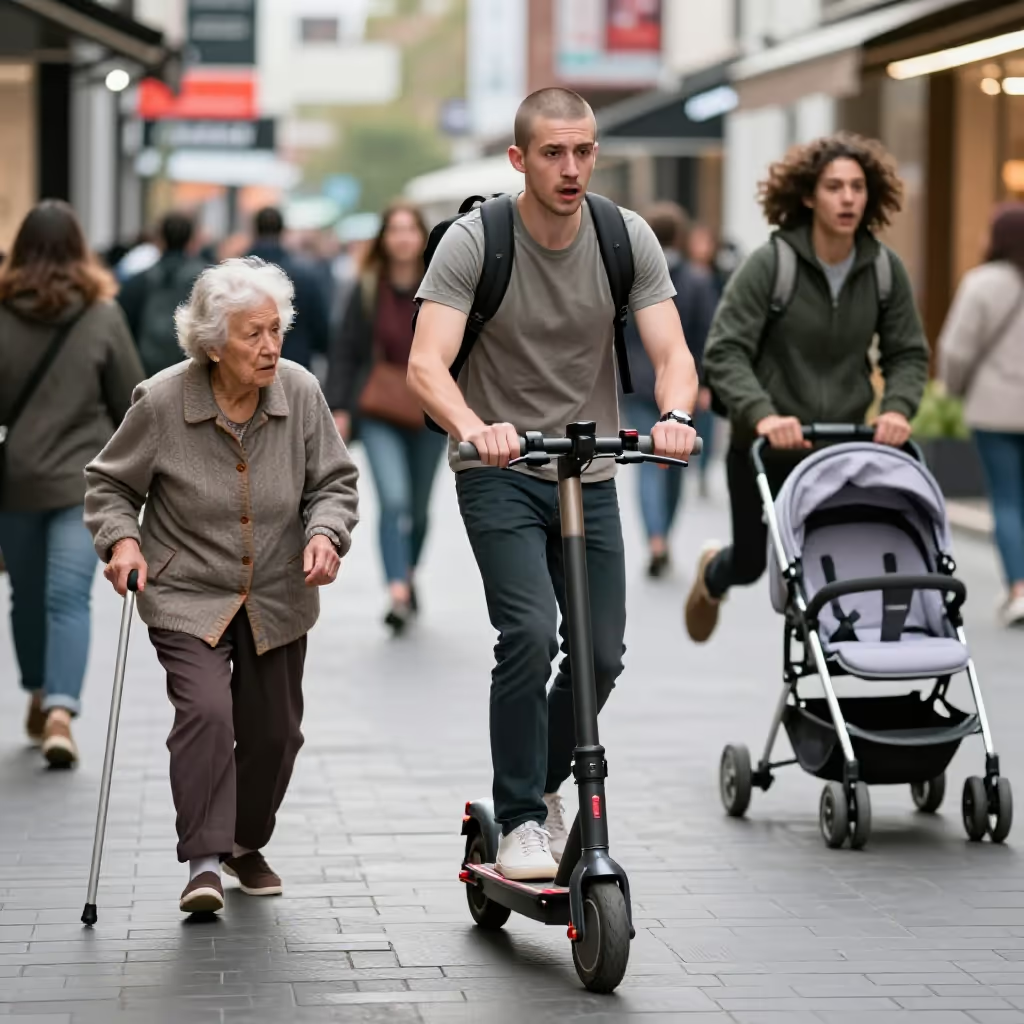
The more general meaning is less common, but it does occur. Here, road traffic is often the context, for example with reckless drivers.
EXAMPLE
Ein betrunkener Autofahrer ist ein Gefährder für alle anderen auf der Straße.
A drunk driver is a danger to everyone else on the road.
Compare with
confusable
Gefährder vs Täter
perpetrator / culprit
'der Täter' and 'der Gefährder' both often appear in the news, in police contexts, or in connection with crimes. The important difference is the timing: a Täter has already committed an act. A Gefährder has not necessarily committed a specific act yet, but the police consider him dangerous and believe he could commit serious crimes in the future. Learners may confuse the words because both sound negative and have to do with security. In practice: after an act, you speak of the Täter; before a possible act or when there is a suspected danger, you are more likely to use Gefährder.
Gefährder
Die Polizei beobachtet den Gefährder, weil sie einen Anschlag befürchtet.
The police are monitoring the potential threat because they fear an attack.
Täter
Nach dem Einbruch sucht die Polizei noch nach dem Täter.
After the burglary, the police are still looking for the perpetrator.