

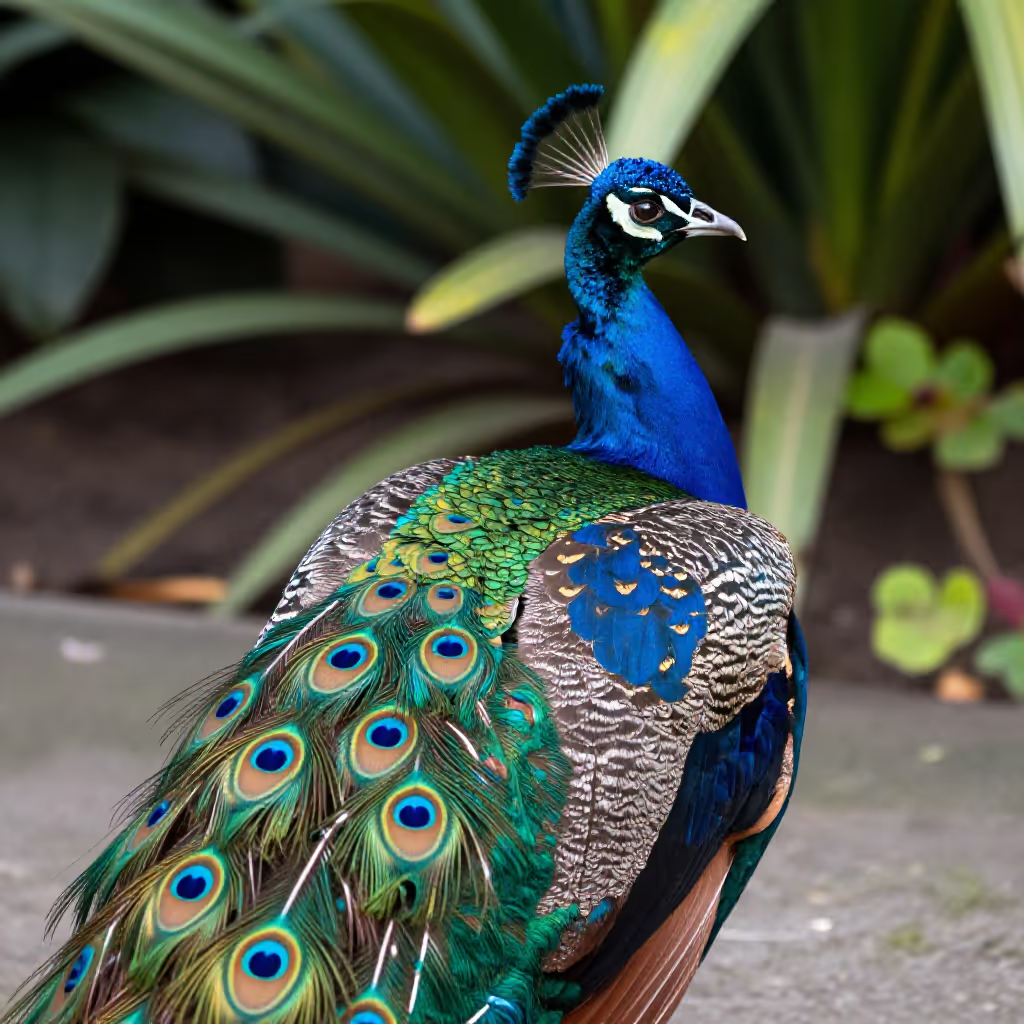
das Gefieder
plumage
The entirety of the feathers that cover a bird's body.
EXAMPLE
Der Papagei hat ein farbenprächtiges Gefieder.
The parrot has colorful plumage.
plumage
Loading your saved state.
plumage
The entirety of the feathers that cover a bird's body.
Der Papagei hat ein farbenprächtiges Gefieder.
The parrot has colorful plumage.
The word is a collective noun derived from 'die Feder' (the feather) with the prefix 'Ge-'. This structure is also found in other nouns such as 'das Gebirge' (mountain range, from 'der Berg' — the mountain) or 'das Gebüsch' (bushes, from 'der Busch' — the bush).
Das Gefieder des Eisvogels schimmert blau und orange in der Sonne.
The kingfisher's plumage shimmers blue and orange in the sun.
A bird's plumage is often described with adjectives that characterize its color or condition. Common examples are 'buntes' (colorful), 'schlichtes' (plain), 'dichtes' (dense), or 'glänzendes' (shiny) Gefieder.
Die Amsel hat ein schlichtes, schwarzes Gefieder.
The blackbird has plain, black plumage.
As a collective noun, 'Gefieder' (plumage) is used almost exclusively in the singular, even when it refers to many individual feathers. It describes the entirety of a bird's feathers.
Das dichte Gefieder schützt den Pinguin vor der extremen Kälte.
The dense plumage protects the penguin from the extreme cold.