

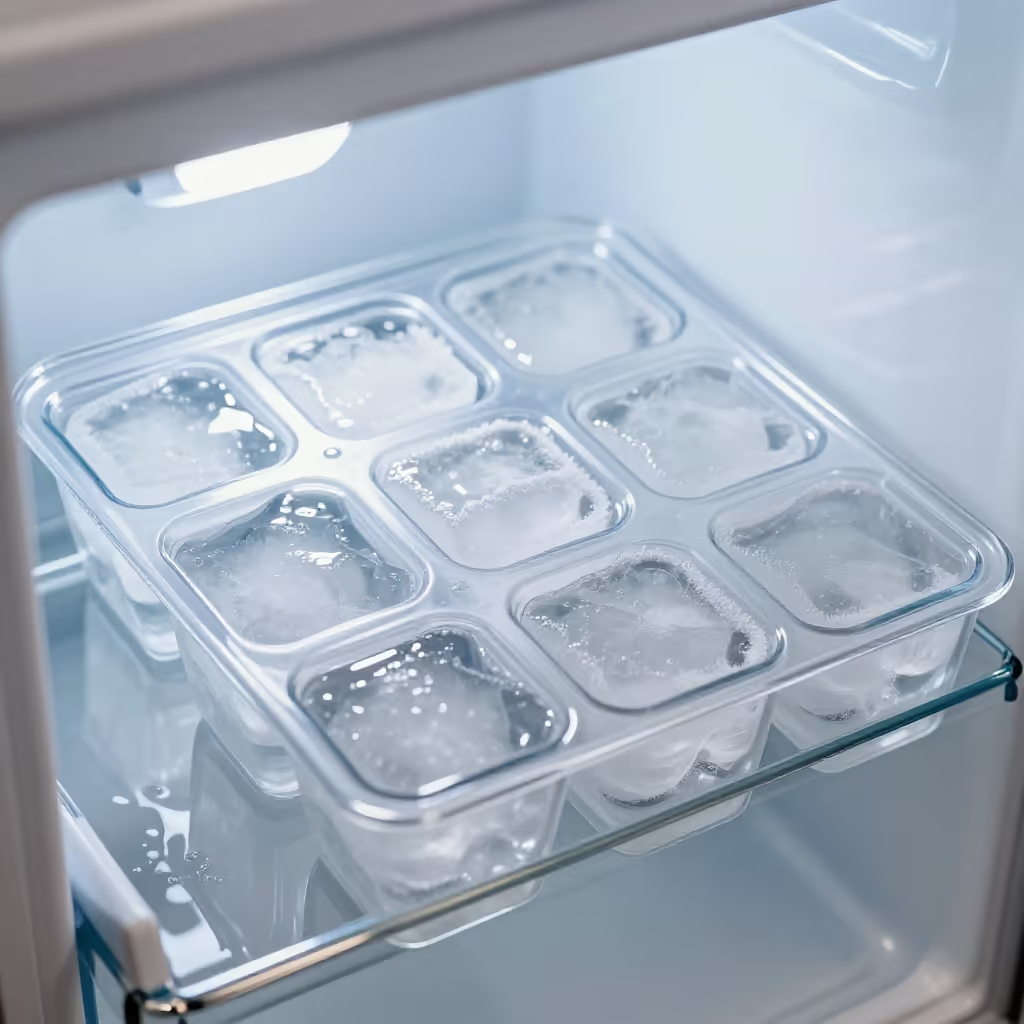
gefrieren
to freeze
To change from a liquid to a solid state due to cold; to turn into ice.
EXAMPLE
Bei null Grad Celsius beginnt Wasser zu gefrieren.
At zero degrees Celsius, water begins to freeze.
to freeze
Loading your saved state.
to freeze
To change from a liquid to a solid state due to cold; to turn into ice.
Bei null Grad Celsius beginnt Wasser zu gefrieren.
At zero degrees Celsius, water begins to freeze.

to be freezing
To feel intense cold; to be extremely cold.
Ohne Handschuhe sind mir die Finger fast gefroren.
Without gloves, my fingers were almost freezing.

to freeze
Figuratively, for a movement or facial expression suddenly becoming rigid due to shock, fear, or surprise.
Ihr Lächeln gefror, als sie die schlechte Nachricht hörte.
Her smile froze when she heard the bad news.
Since 'gefrieren' (to freeze) describes a change of state from liquid to solid, the perfect tense is always formed with the auxiliary verb 'sein' (to be).
Der See ist über Nacht komplett gefroren.
The lake froze completely overnight.
The prefix 'ge-' is inseparable. It remains firmly attached to the verb in all conjugations and sentence positions.
Ich hoffe nicht, dass die Heizung ausfällt und die Rohre gefrieren.
I hope the heating doesn't fail and the pipes freeze.
When a person is extremely cold, this is often expressed with a dative construction. The person is in the dative, while the freezing body part is the subject.
Zieh deine Handschuhe an, sonst gefrieren dir die Finger.
Put your gloves on, or your fingers will freeze.
In the figurative meaning of becoming rigid, 'gefrieren' (to freeze) often refers to facial expressions or feelings. Typical subjects are 'das Lächeln' (the smile), 'die Miene' (the expression), or 'das Blut in den Adern' (the blood in one's veins).
Als er die Gestalt im Dunkeln sah, gefror ihm das Blut in den Adern.
When he saw the figure in the dark, the blood froze in his veins.
to freeze
Einfrieren and gefrieren can both express the transition of a liquid into ice. Gefrieren neutrally describes becoming solid because of the cold, while einfrieren can present the process or the bringing about of this state more strongly as a completed process. Both words are possible; the context determines the emphasis.
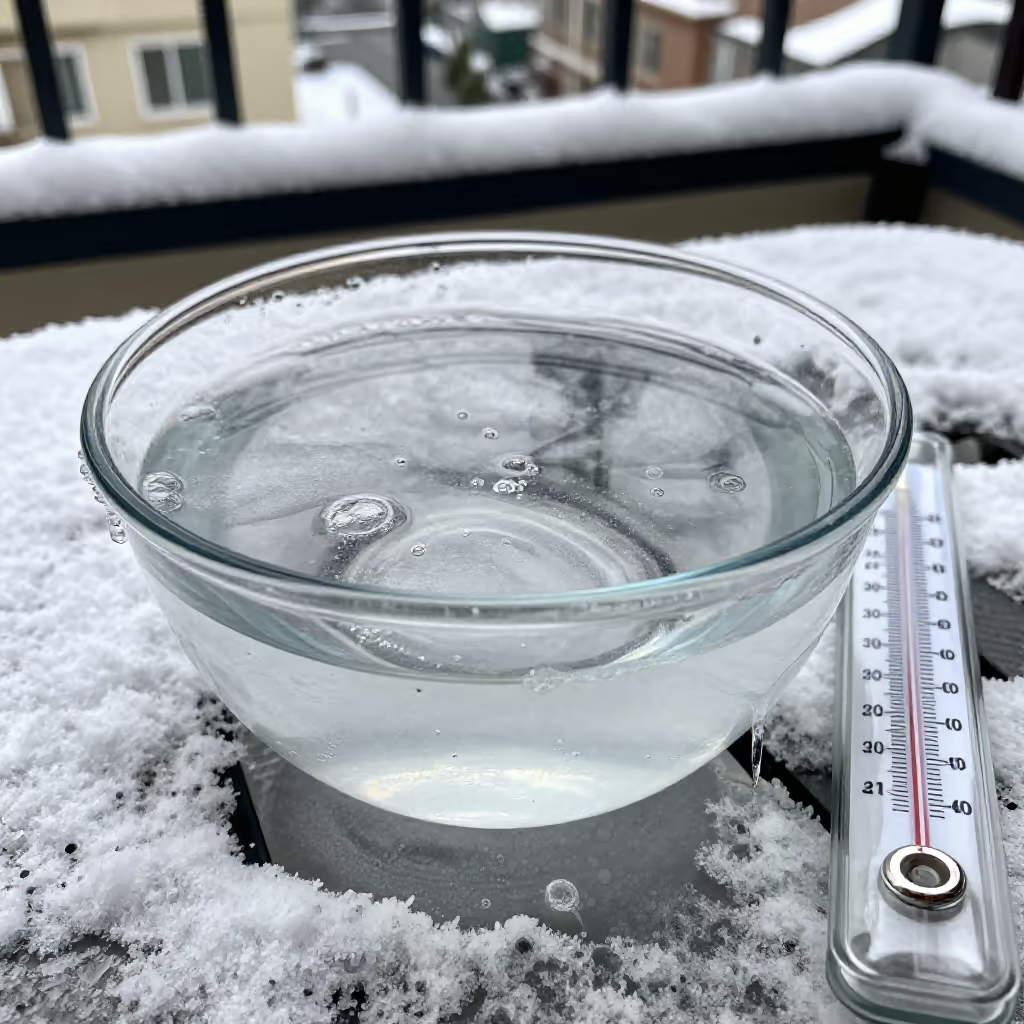
Das Wasser im Teich gefriert in der kalten Nacht langsam.
The water in the pond freezes slowly on the cold night.
Das Wasser ist im Gefrierfach über Nacht vollständig eingefroren.
The water in the freezer froze completely overnight.