

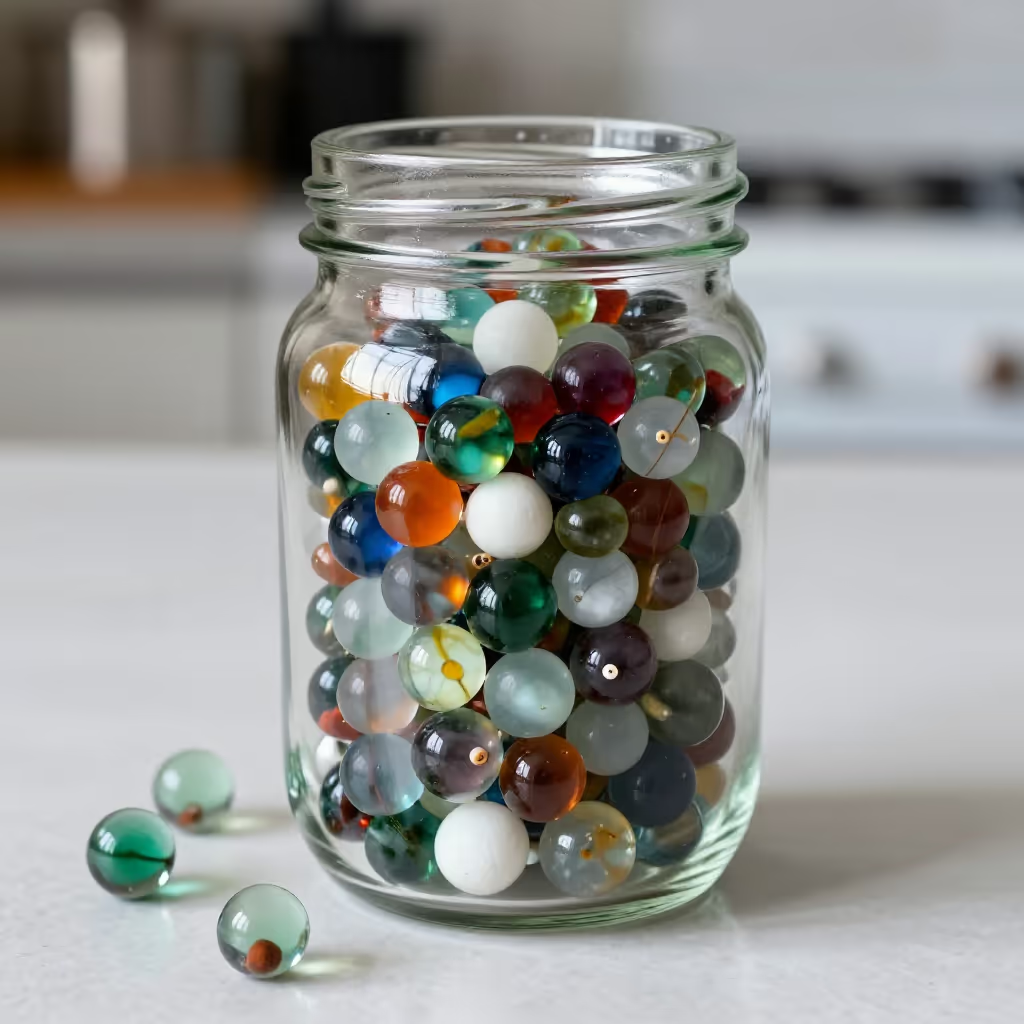
gefüllt
filled
Describing the state in which a container, room, or object is filled with something.
EXAMPLE
Die Vase war mit frischen Blumen gefüllt.
The vase was filled with fresh flowers.
filled / stuffed
Loading your saved state.
filled
Describing the state in which a container, room, or object is filled with something.
Die Vase war mit frischen Blumen gefüllt.
The vase was filled with fresh flowers.
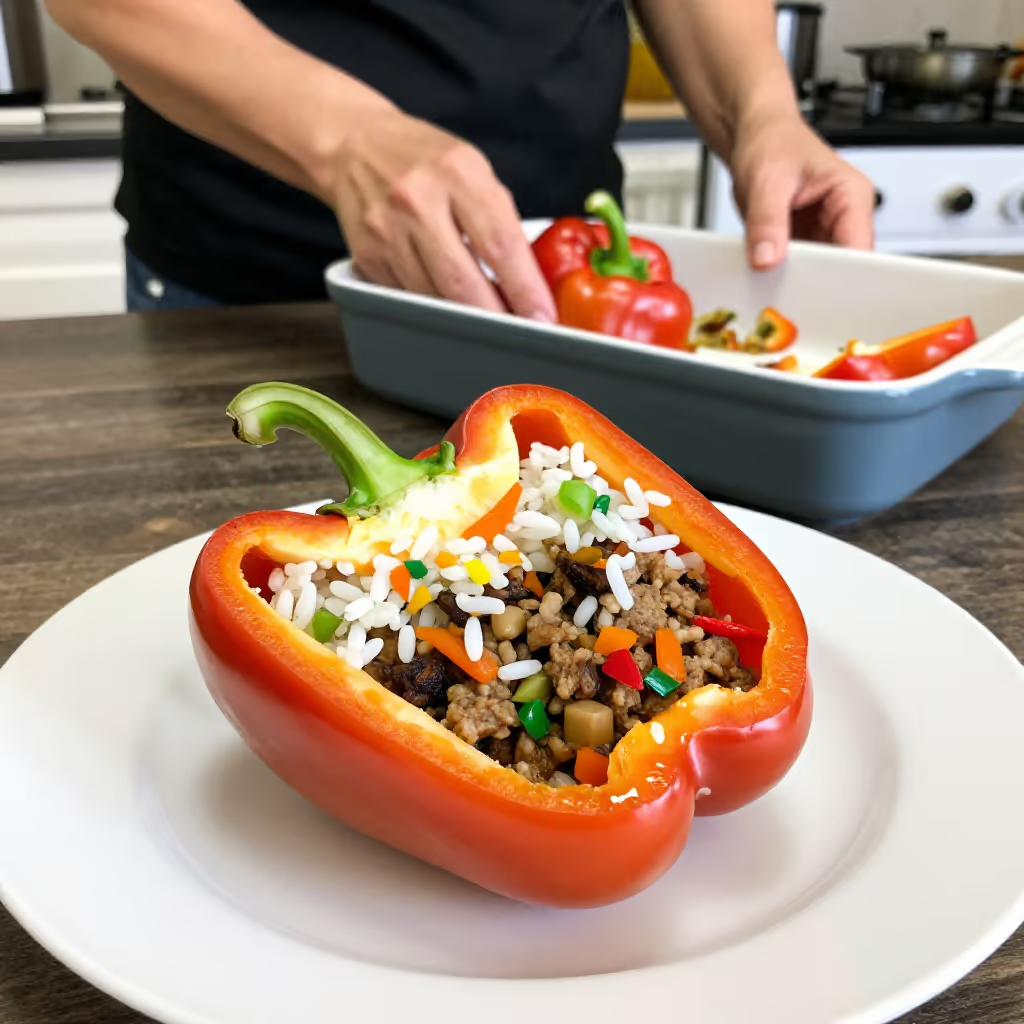
stuffed / filled
Describes a food that contains a filling of other ingredients inside.
Zum Nachtisch gab es gefüllte Pfannkuchen mit Marmelade.
For dessert there were filled pancakes with jam.

filled
In a figurative sense, to be filled with a feeling, atmosphere, or quality.
Der Raum war mit einer spürbaren Anspannung gefüllt.
The room was filled with a palpable tension.
'Gefüllt' (filled / stuffed) is the past participle of the verb 'füllen' (to fill). It is used as an adjective to describe a state that resulted from the action of filling.
Der Bäcker hat die Krapfen frisch gefüllt.
The baker freshly filled the doughnuts.
The adjective 'gefüllt' (filled) is almost always used with the preposition 'mit' (with) and the dative. This pattern applies to both concrete and figurative meanings.
Die Schachtel war mit alten Fotos gefüllt.
The box was filled with old photos.
In culinary contexts, 'gefüllt' (stuffed / filled) often comes directly before the name of the dish. It then describes a method of preparation. Typical examples are 'gefüllte Paprika' (stuffed peppers), 'gefüllte Weinblätter' (stuffed grape leaves), or 'gefüllte Schokolade' (filled chocolate).
Als Hauptspeise gibt es heute gefüllte Zucchini.
Today's main course is stuffed zucchini.
full
For a container, voll and gefüllt can describe the same state. Voll emphasizes that there is no room for anything else, while gefüllt highlights the contents or the process of filling. Use voll for the capacity and gefüllt when the contents are important.
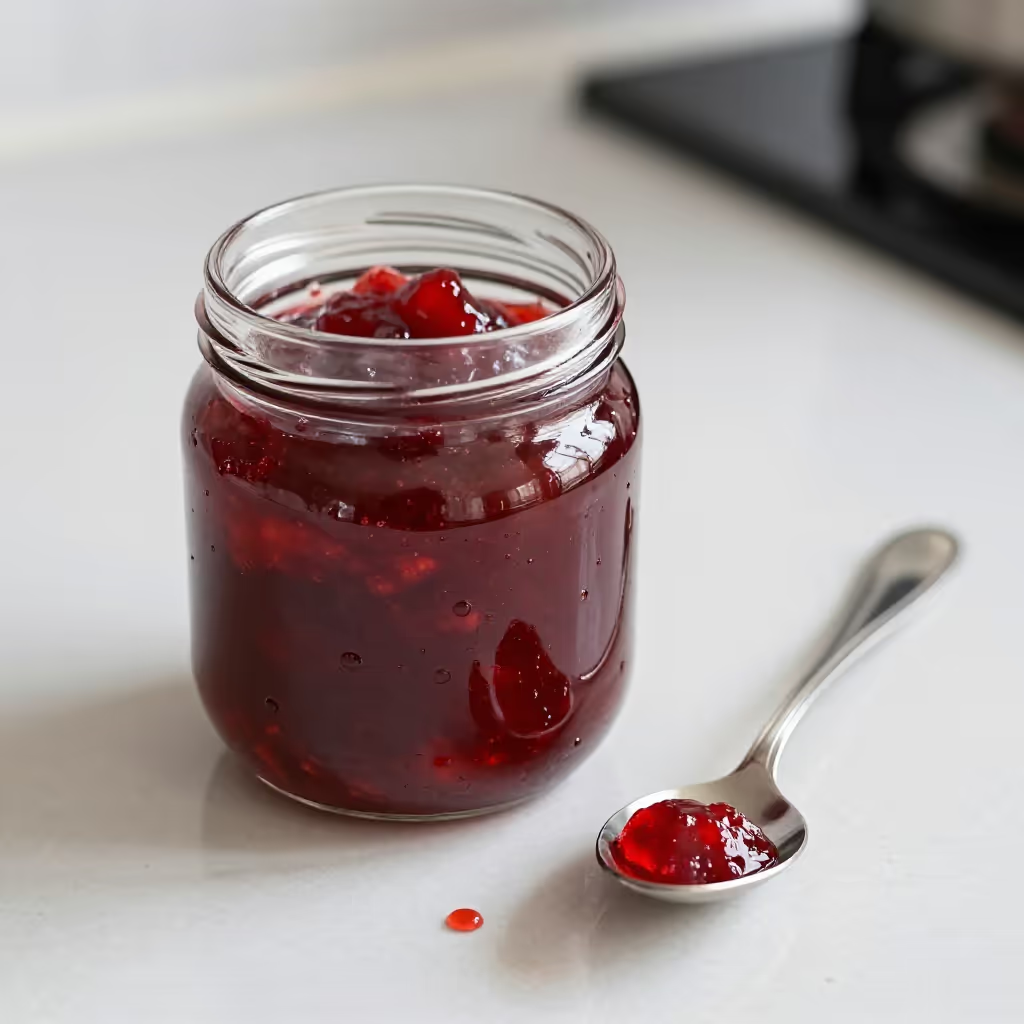
Das Glas ist mit frischem Wasser gefüllt, das wir gleich trinken.
The glass is filled with fresh water, which we are about to drink.
Das Glas ist bis zum Rand voll, sodass kein Tropfen mehr hineinpasst.
The glass is full to the brim, so not even a drop more will fit.