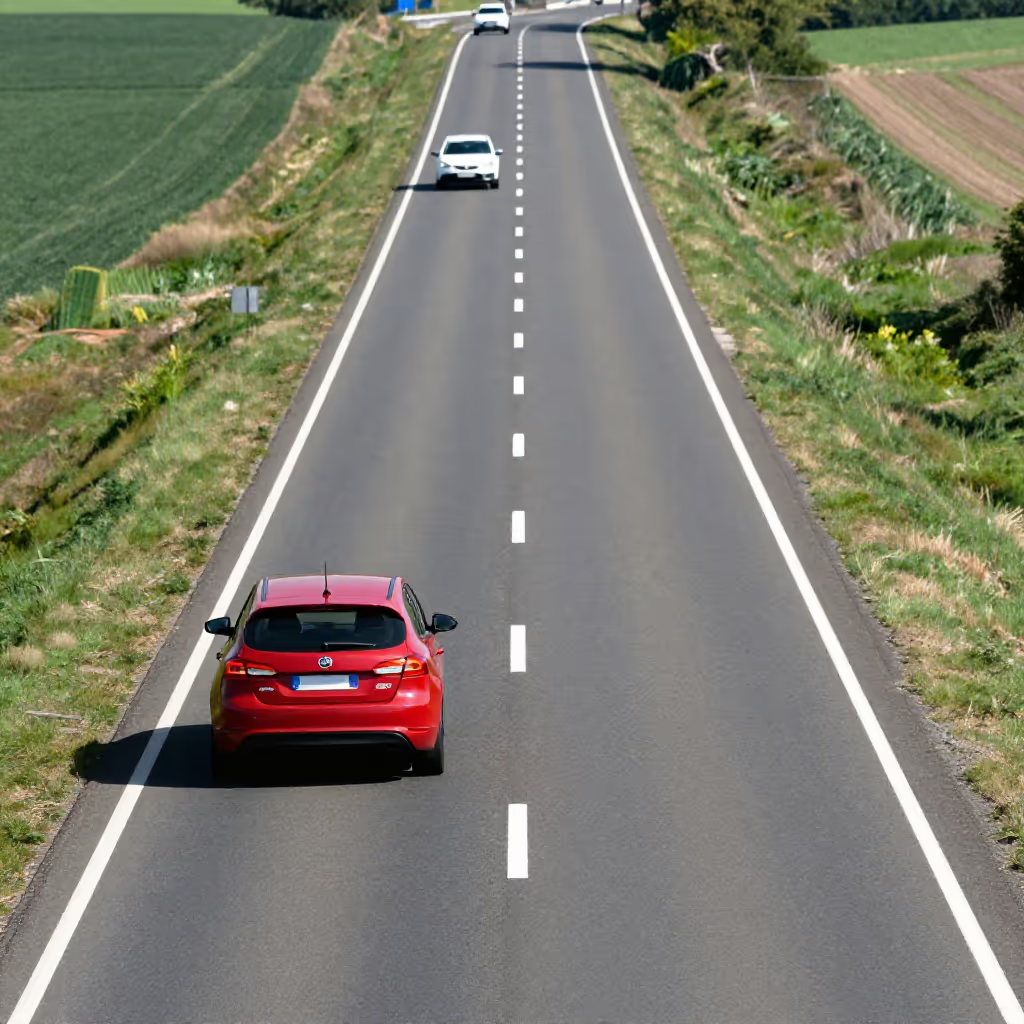
Achtung, ein Falschfahrer kommt Ihnen auf der Autobahn in der Gegenrichtung entgegen.
Warning, a wrong-way driver is coming toward you on the highway from the opposite direction.

Usage tips
Word composition
This word is made up of the preposition 'gegen' (against) and the noun 'die Richtung' (direction). So it literally means the opposite direction.
EXAMPLE
Der Radweg ist für beide Seiten, aber achte auf den Verkehr aus der Gegenrichtung.
The bike path is for both sides, but watch out for traffic from the opposite direction.
Use in traffic
In the context of traffic, 'Gegenrichtung' (opposite direction) is almost always used with the prepositions 'in' or 'aus' to describe the direction of travel. The term is especially common in traffic reports.
EXAMPLE
Ein LKW kam ihm in der engen Straße in der Gegenrichtung entgegen.
A truck came toward him from the opposite direction on the narrow street.
Figurative meaning
When talking about opinions, politics, or developments, 'Gegenrichtung' (opposite direction) describes an opposing trend or an opposing position. It is often combined with verbs such as 'darstellen' (to represent) or 'einschlagen' (to take).
EXAMPLE
Die Jugendkultur schlug bewusst eine Gegenrichtung zu den Werten ihrer Eltern ein.
The youth culture deliberately took an opposite direction to the values of their parents.
Compare with
antonym
Gegenrichtung vs Richtung
direction
'die Richtung' and 'die Gegenrichtung' stand in clear contrast. 'die Richtung' names the path or line in which something moves or develops. 'die Gegenrichtung' is exactly the opposite direction. This can be very concrete, as in traffic, but also figurative, as with opinions or developments. When two things are moving toward each other or developing in opposite ways, you speak of a direction and the opposite direction.
Gegenrichtung
Auf der anderen Straßenseite fährt die Straßenbahn in die Gegenrichtung.
On the other side of the street, the tram is going in the opposite direction.