


gemacht
artificial
Seeming artificial, affected, or not genuine.
EXAMPLE
Sein Lächeln wirkte gemacht und erreichte seine Augen nicht.
His smile seemed artificial and did not reach his eyes.
made
Loading your saved state.
artificial
Seeming artificial, affected, or not genuine.
Sein Lächeln wirkte gemacht und erreichte seine Augen nicht.
His smile seemed artificial and did not reach his eyes.

a made man/woman
A person who has achieved professional and financial success and is set for the rest of their life.
Nach dem Verkauf seiner erfolgreichen App war er mit 30 Jahren ein gemachter Mann.
After selling his successful app, he was a made man at the age of 30.
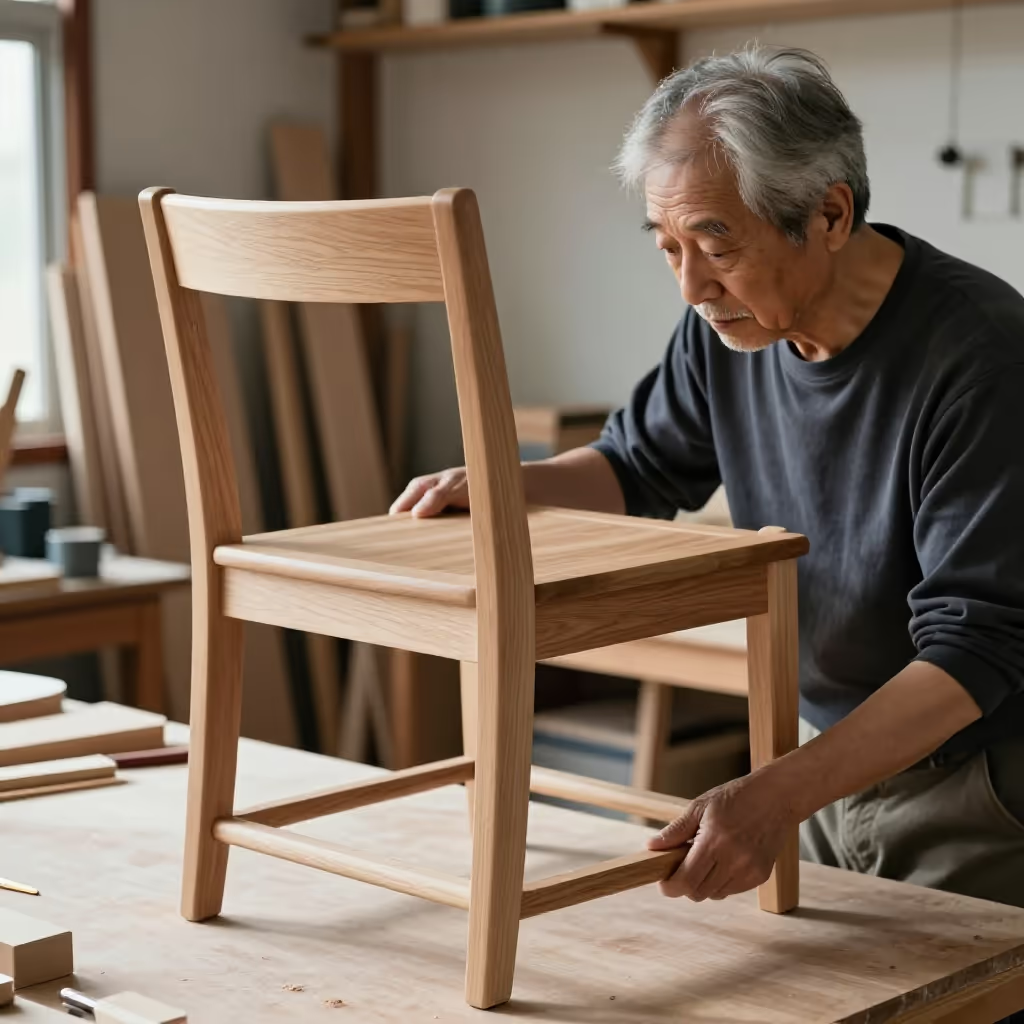
made
Describes how something was produced or carried out, often in combination with an adverb.
Das ist ein handwerklich sehr gut gemachter Tisch.
This is a very well-made table in terms of craftsmanship.
'Gemacht' (made) is the past participle of the verb 'machen' (to make/do). It is often used as an adjective to describe the result or manner of an action.
Diese Suppe ist wie selbst gemacht!
This soup is like homemade!
In this meaning, 'gemacht' (artificial) has a negative connotation and describes something as artificial or not genuine. It is often used for behavior or emotions that do not seem authentic.
Ihre Freundlichkeit wirkte aufgesetzt und gemacht.
Her friendliness seemed affected and artificial.
The idiom 'ein gemachter Mann' (a made man) or 'eine gemachte Frau' (a made woman) is a fixed expression. It describes a person who is so financially successful that they are provided for for the rest of their life.
Nach dem Lottogewinn war sie eine gemachte Frau.
After winning the lottery, she was a made woman.
In combination with an adverb, 'gemacht' (made) describes the quality or manner of execution. Typical patterns are 'gut gemacht' (well done/well made), 'schlecht gemacht' (badly done/badly made), or 'professionell gemacht' (professionally done/made).
Die Präsentation war sehr professionell gemacht.
The presentation was done very professionally.
artificial
Künstlich and gemacht can both describe something as fake or not spontaneous. Künstlich can also refer to something actually made by humans; in this comparison, gemacht mainly emphasizes a put-on impression. Therefore, gemacht is often a good choice for behavior that seems unnatural, while künstlich is suitable for a manufactured object.

Ihr Lächeln wirkte gemacht, weil sie sich sichtlich unwohl fühlte.
Her smile seemed affected because she was visibly uncomfortable.
Die künstliche Blume sieht echt aus, obwohl sie aus Kunststoff besteht.
The artificial flower looks real, even though it is made of plastic.