

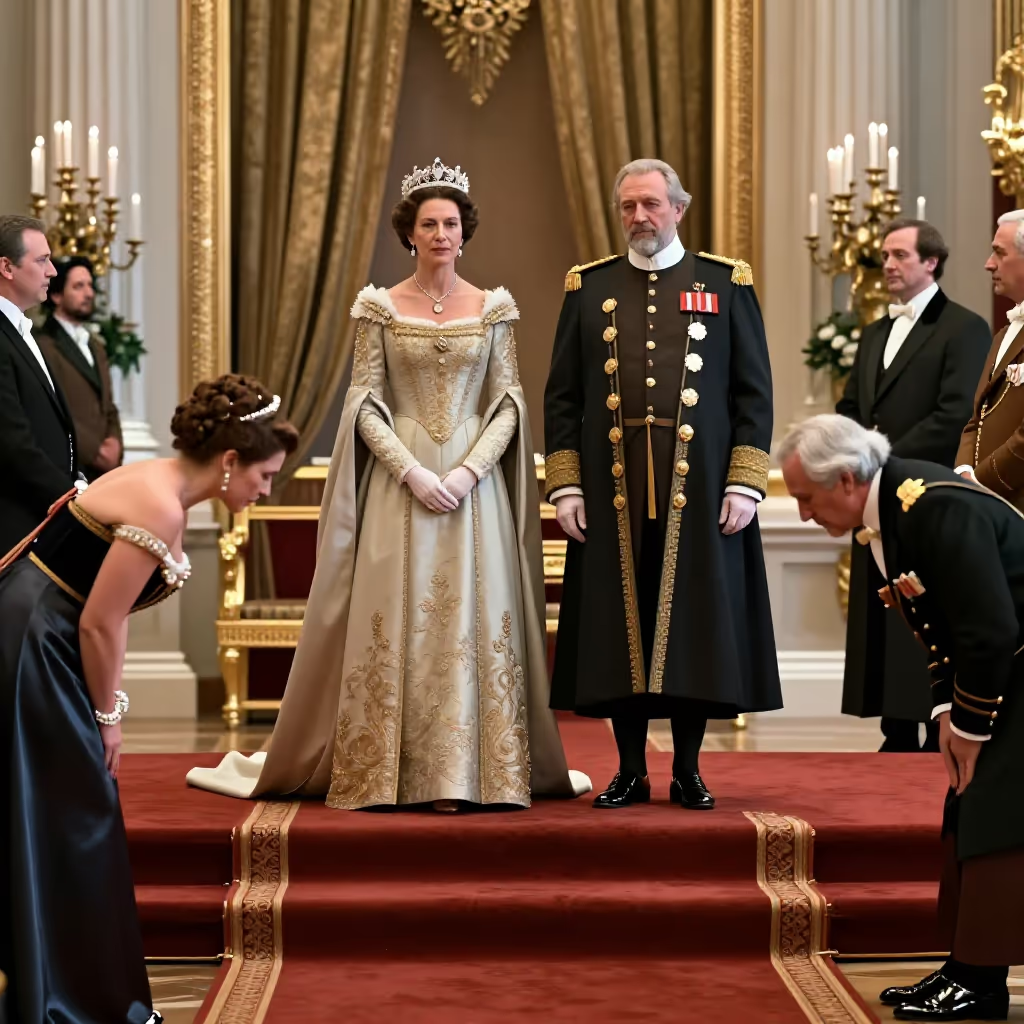
An outdated or very formal term for a wife, used today almost only in connection with nobility or in a historical context.
example
Der Fürst betrat den Saal in Begleitung seiner Gemahlin.
The prince entered the hall accompanied by his consort.

Usage tips
Register and style
This word is very formal and outdated. Today it is used almost only for the wives of nobles, in historical texts, or in fairy tales. In everyday language, using it sounds unnatural or ironic.
EXAMPLE
Der König und seine Gemahlin begrüßten die Gäste.
The king and his consort greeted the guests.
Word family
'Die Gemahlin' (the consort/wife) is the feminine form of 'der Gemahl' (husband). The ending '-in' is often used in German to form the feminine form of terms for people.
EXAMPLE
Der Präsident erschien mit seiner Gemahlin.
The president appeared with his wife.
Typical usage
The word 'Gemahlin' (consort/wife) often appears together with a possessive pronoun (seine, ihre) or a genitive that clarifies belonging.
EXAMPLE
Seine Gemahlin stammt aus einer adligen Familie.
His wife comes from a noble family.
Compare with
near_synonym · confusable
Gemahlin vs Frau
woman / wife
'die Frau' and 'die Gemahlin' can both mean a man's wife. 'Frau' is the normal everyday word for this: people say 'meine Frau' (my wife) or 'seine Frau' (his wife). 'Gemahlin' sounds very formal, old-fashioned, or historical and is more suited to kings, princes, or ceremonial texts. Learners may confuse the words because both can mean 'wife'. As a practical rule: in normal conversation, you almost always use 'Frau'; use 'Gemahlin' only in special, elevated, or historical contexts.
Gemahlin
Der König erschien mit seiner Gemahlin auf dem Balkon.
The king appeared on the balcony with his consort.
Frau
Mein Bruder bringt seine Frau morgen zum Essen mit.
My brother is bringing his wife to dinner tomorrow.