

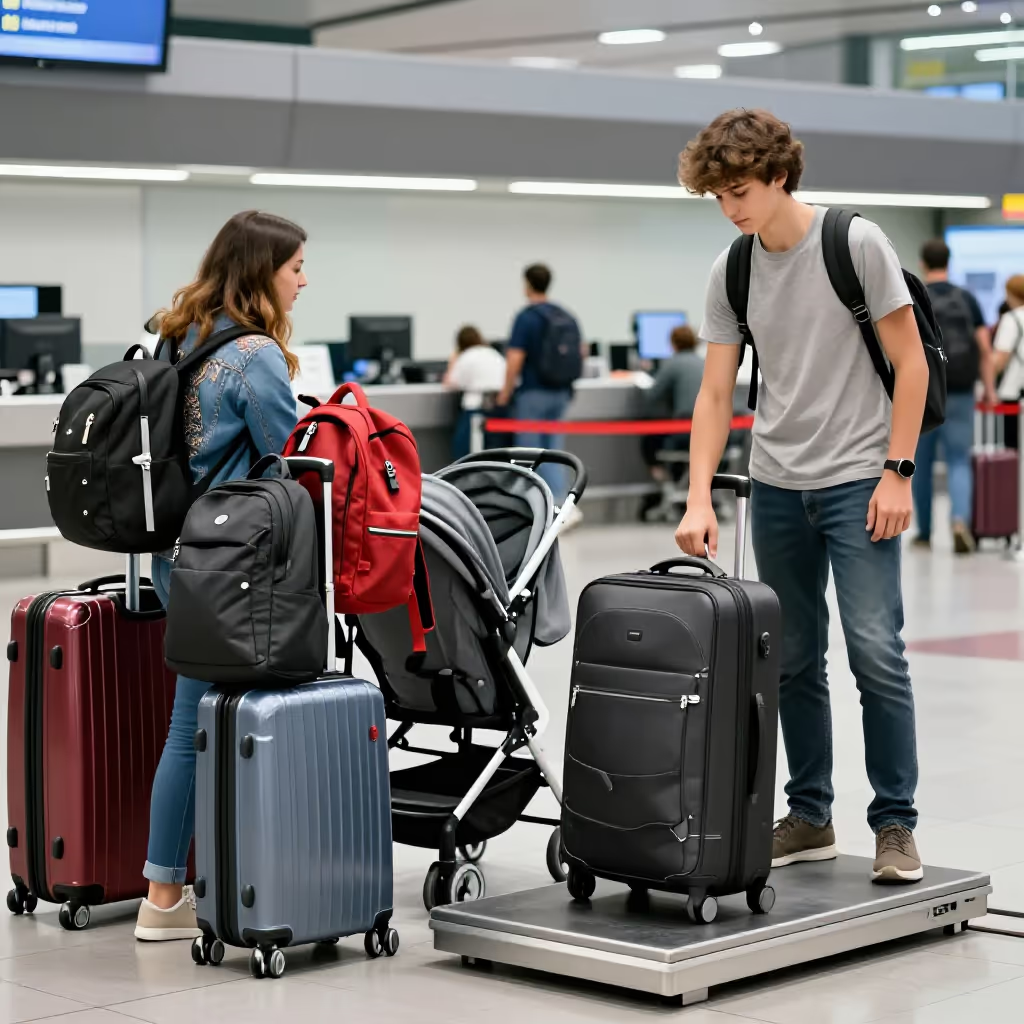
das Gepäck
luggage
All the bags, suitcases, and other containers that you take with you on a trip.
EXAMPLE
Wir haben unser Gepäck bereits am Flughafen aufgegeben.
We have already checked in our luggage at the airport.
luggage / baggage
Loading your saved state.
luggage
All the bags, suitcases, and other containers that you take with you on a trip.
Wir haben unser Gepäck bereits am Flughafen aufgegeben.
We have already checked in our luggage at the airport.

baggage
In a figurative sense, a burden of past negative experiences or unresolved problems that a person carries with them.
Jeder Mensch bringt sein eigenes emotionales Gepäck in eine neue Beziehung mit.
Everyone brings their own emotional baggage into a new relationship.
The prefix 'Ge-' often forms collective nouns. Similar to 'das Gebirge' (mountain range; many mountains), 'das Gepäck' (luggage) refers to the totality of items of baggage such as suitcases and bags.
Das Gepäck für drei Wochen Urlaub passt kaum ins Auto.
The luggage for a three-week vacation barely fits in the car.
'Gepäck' (luggage) is a collective noun and is almost always used in the singular, even when referring to several pieces of luggage. There is no plural form ('die Gepäcke').
Wie viel Gepäck darf ich mitnehmen?
How much luggage may I take with me?
In the travel context, 'Gepäck' (luggage) is often used with certain verbs: Gepäck aufgeben (to check in luggage, at the counter), Gepäck abholen (to collect luggage, at the baggage carousel), or Gepäck verlieren (to lose luggage).
Ich hoffe, dass mein Gepäck nicht verloren geht.
I hope my luggage doesn't get lost.
You can usually recognize the figurative meaning from adjectives like 'emotional' (emotional), 'persönlich' (personal), or 'seelisch' (psychological/emotional). Without such an adjective, the literal meaning (travel luggage) is almost always meant.
Er trägt schwer an seinem emotionalen Gepäck aus der Kindheit.
He is weighed down by his emotional baggage from childhood.
ballast / burden
Gepäck and Ballast can both refer to an inner burden that someone carries with them. Gepäck emphasizes personal experiences or unresolved problems from the past, while Ballast focuses more on their obstructive and unnecessary effect. Choose Gepäck when referring to the burden's origin, and Ballast when referring to its burdensome effect.

Sie trägt noch viel Gepäck aus ihrer schwierigen Kindheit mit sich.
She still carries a lot of baggage from her difficult childhood.
Die Schuldgefühle aus ihrer schwierigen Kindheit sind für sie ein schwerer Ballast.
The guilt she feels about her difficult childhood is a heavy burden for her.