


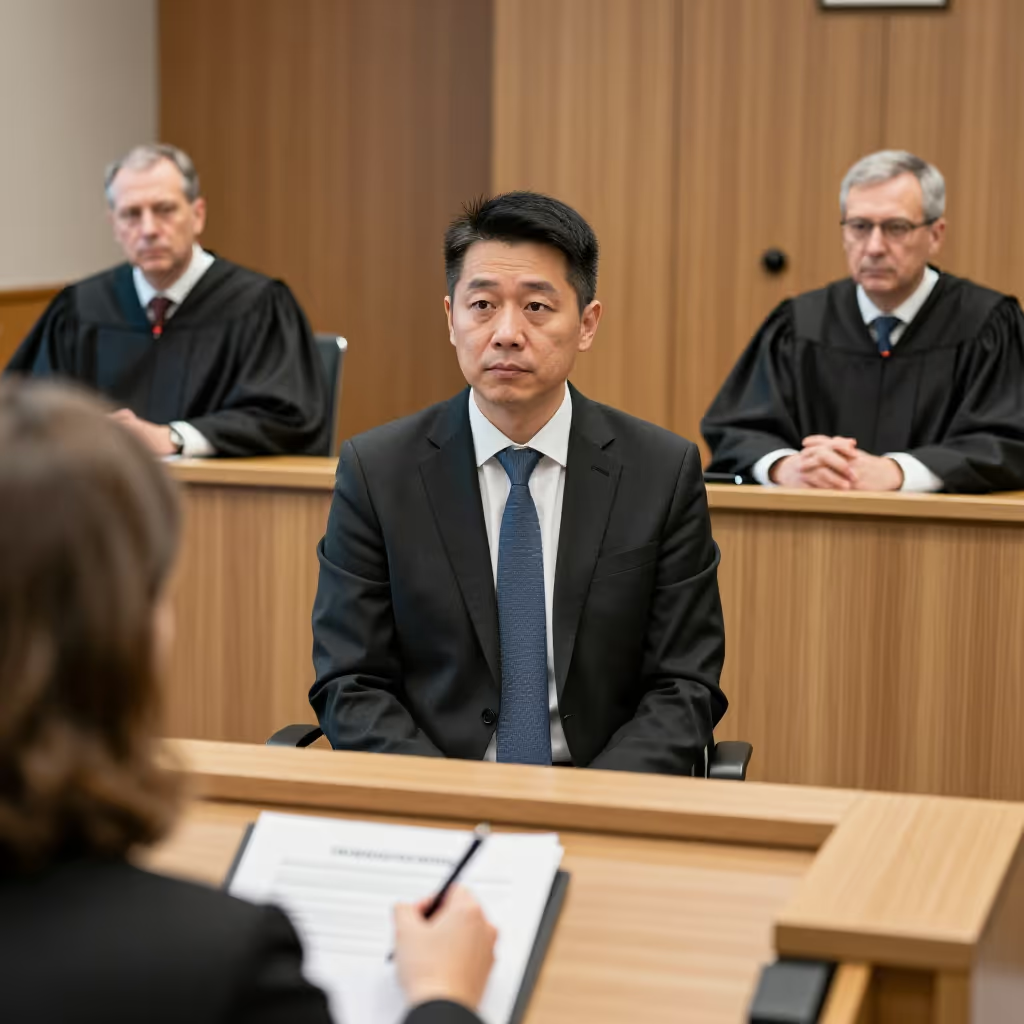
A citizen who, as a member of a jury in a court trial, helps decide whether the defendant is guilty or innocent.
example
Ein Geschworener muss unparteiisch sein und sein Urteil allein auf die vorgelegten Beweise stützen.
A juror must be impartial and base their verdict solely on the evidence presented.
Usage tips
Word structure
The word comes from the verb 'schwören' (to swear). A 'Geschworener' (juror) is therefore literally a person who has sworn an oath in order to judge impartially.
EXAMPLE
Die ausgewählten Geschworenen mussten einen Eid ablegen.
The selected jurors had to take an oath.
Adjectival declension
'Geschworener' (juror) is a nominalized adjective and is declined like one. The ending changes depending on the article and case.
EXAMPLE
Ein Geschworener muss aufmerksam sein.
A juror must be attentive.
Typical collocations
In legal contexts, this word is often used with certain verbs, for example 'als Geschworener berufen werden' (to be called as a juror), 'die Geschworenen beraten sich' (the jurors deliberate), or 'die Geschworenen fällen ein Urteil' (the jurors reach a verdict).
EXAMPLE
Nach langer Beratung fällten die Geschworenen ihr Urteil.
After a long deliberation, the jurors reached their verdict.
Compare with
confusable
Geschworene vs Richter
judge
'der Richter' and 'der Geschworene' both belong to the area of courts and trials. But they have different roles. 'der Richter' is a professional person at a court and leads the proceedings or passes judgment. 'der Geschworene' is a citizen on a jury and decides together with others whether a defendant is guilty or innocent. Learners may confuse the words because both are involved in a decision in court. The important point is: the judge is the legal official, while the juror is a member of the jury.
Geschworene
Ein Geschworener hörte während der Verhandlung sehr genau zu.
A juror listened very carefully during the trial.
Richter
Der Richter erklärte dem Angeklagten ruhig die Entscheidung.
The judge calmly explained the decision to the defendant.