

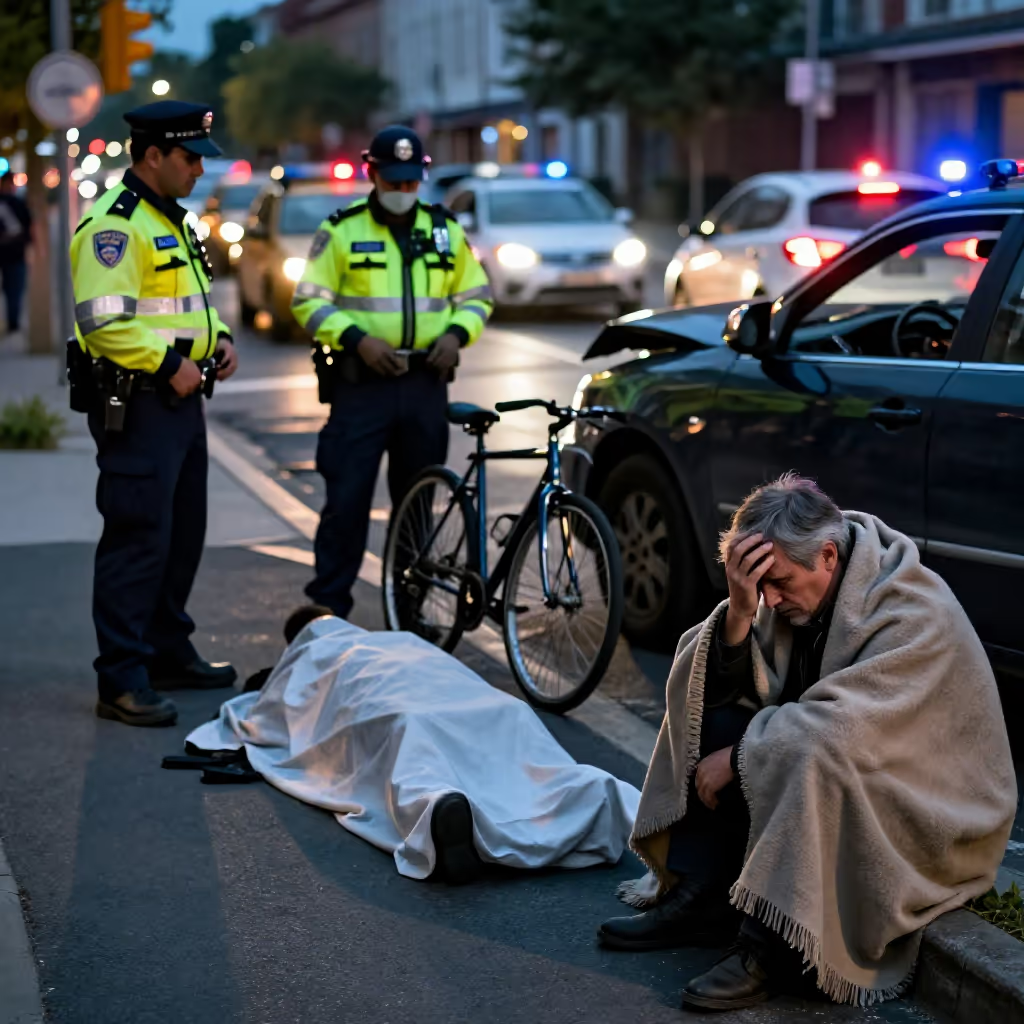
getötet
killed
Describes the state of having died as a result of an external influence such as an accident, an attack, or an illness.
Der bei dem Unfall getötete Fahrer war erst 20 Jahre alt.
The driver killed in the accident was only 20 years old.

killed
Loading your saved state.

killed
Describes the state of having died as a result of an external influence such as an accident, an attack, or an illness.
Der bei dem Unfall getötete Fahrer war erst 20 Jahre alt.
The driver killed in the accident was only 20 years old.
'Getötet' (killed) is the past participle of the verb 'töten' (to kill). This verb is derived from the adjective 'tot' (dead) and means 'to make someone dead.' So it always describes an action from the outside.
Der Jäger hat das Tier mit einem Schuss getötet.
The hunter killed the animal with one shot.
As a past participle, 'getötet' (killed) is used with the auxiliary verb 'werden' (to become/to be) to form the passive. This construction emphasizes that the death was caused by an external force or another person.
Viele Menschen wurden im Krieg getötet.
Many people were killed in the war.
To describe the circumstances of the death, 'getötet' (killed) is often combined with prepositions such as 'bei' (in/during, for an event) or 'durch' (by/through, for the cause or means).
Zwei Personen wurden bei dem Brand getötet.
Two people were killed in the fire.
deceased / dead
„Gestorben“ generally says that someone is no longer alive and is used with „sein“. „Getötet“ highlights an external cause of death and often occurs with „werden“. When the external cause is important, „getötet“ is the better choice; otherwise, „gestorben“ is usually used.

Der Fahrer wurde bei dem schweren Unfall getötet.
The driver was killed in the serious accident.
Der Fahrer ist bei dem schweren Unfall gestorben.
The driver died in the serious accident.