

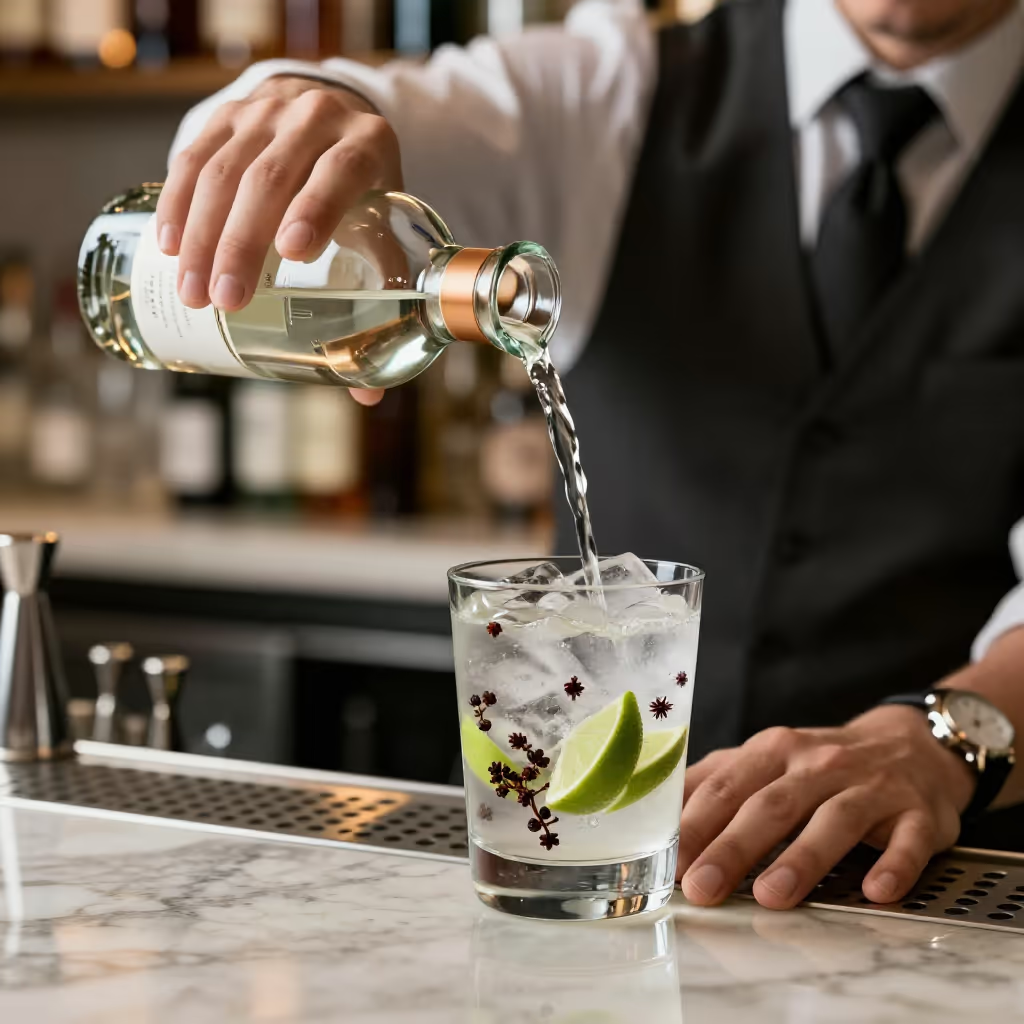
der Gin
gin
A usually colorless spirit that gets its characteristic flavor from being flavored with juniper berries.
An der Bar bestellte sie einen Gin Tonic mit einer Scheibe Gurke.
At the bar, she ordered a gin and tonic with a slice of cucumber.

gin
Loading your saved state.
gin
A usually colorless spirit that gets its characteristic flavor from being flavored with juniper berries.
An der Bar bestellte sie einen Gin Tonic mit einer Scheibe Gurke.
At the bar, she ordered a gin and tonic with a slice of cucumber.

'Gin' is a loanword from English. It is a shortened form of the Dutch word 'jenever', which means 'juniper' and points to the most important ingredient.
Gin ist eine beliebte Basis für viele Cocktails.
Gin is a popular base for many cocktails.
By far the most common and best-known combination is 'Gin Tonic' (gin and tonic). This name for the mixed drink is understood internationally.
Ich trinke im Sommer gerne einen erfrischenden Gin Tonic.
In summer, I like drinking a refreshing gin and tonic.
When talking about gin, verbs such as 'bestellen' (to order), 'trinken' (to drink), or 'mixen' (to mix) are often used. You can also drink it 'pur' (straight, without anything added).
Lass uns an der Bar einen Gin bestellen.
Let's order a gin at the bar.
schnapps
'der Schnaps' and 'der Gin' can be confused because both are high-proof alcoholic drinks. However, 'Schnaps' is a more general word and is often used for clear or distilled drinks served in small glasses. 'Gin' is a specific spirit with a typical juniper flavor. If you mean the exact type, say 'Gin'. If you are speaking generally about strong alcohol, 'Schnaps' may fit.

Im Supermarkt sucht Lisa einen Gin für die Feier am Samstag.
At the supermarket, Lisa is looking for a gin for the party on Saturday.
Zum Anstoßen tranken die Gäste einen kleinen Schnaps.
To toast, the guests drank a small glass of schnapps.