


die Glätte
slipperiness
A slippery condition of surfaces, especially roads, caused by ice, frost, or wetness.
EXAMPLE
Die Polizei warnt vor Glätte auf den Brücken.
The police are warning of slippery conditions on the bridges.
slipperiness / smoothness
Loading your saved state.
slipperiness
A slippery condition of surfaces, especially roads, caused by ice, frost, or wetness.
Die Polizei warnt vor Glätte auf den Brücken.
The police are warning of slippery conditions on the bridges.
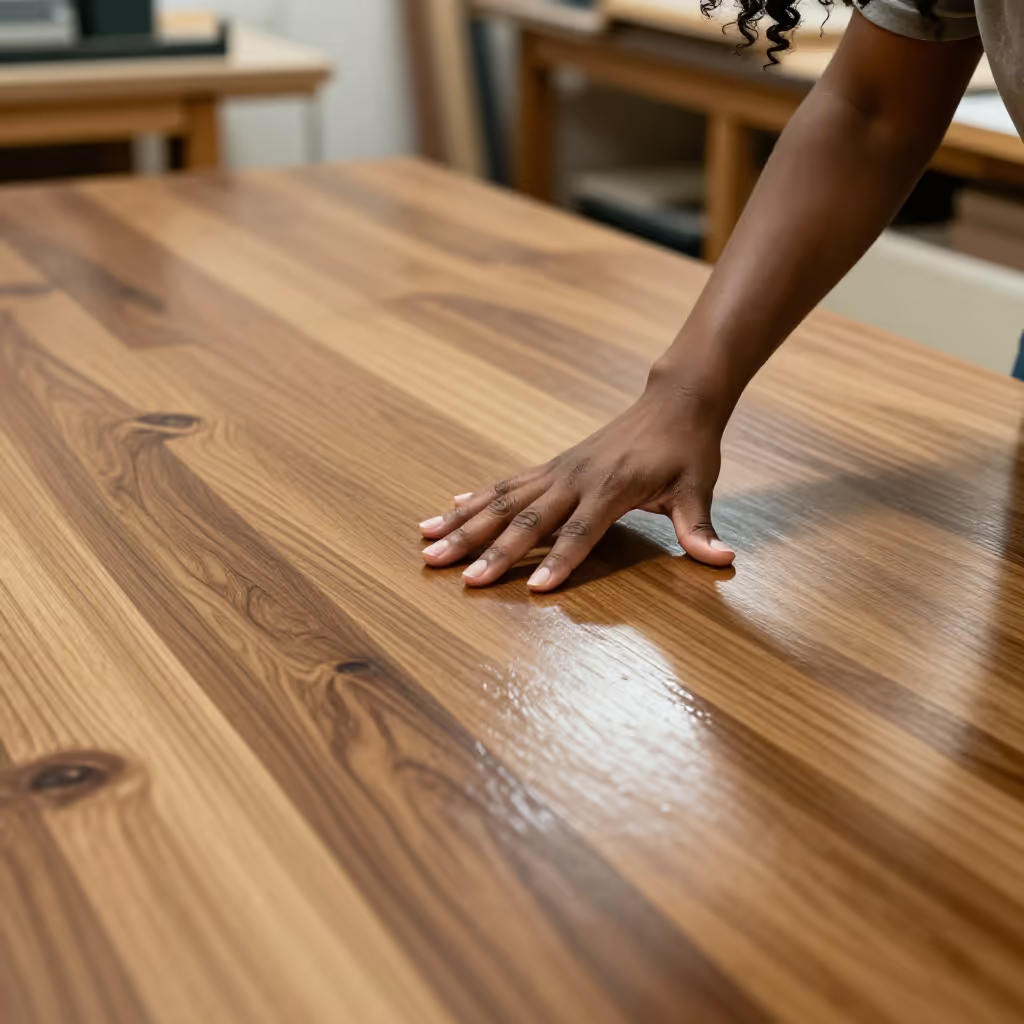
smoothness
The quality of a surface being even and without irregularities.
Die Glätte des Marmorbodens beeindruckte die Besucher.
The smoothness of the marble floor impressed the visitors.
The noun 'die Glätte' (slipperiness/smoothness) is derived directly from the adjective 'glatt' (smooth/slippery). So it describes the quality or state of being 'glatt' (smooth/slippery), whether slippery or even.
Das Eis auf dem See ist heute spiegelglatt.
The ice on the lake is mirror-smooth today.
You can easily recognize the meaning from context. In connection with weather, traffic, and winter, it refers to slipperiness. When it is about the texture or condition of materials like wood, stone, or skin, it refers to an even surface.
Fahr vorsichtig, es herrscht Glätte auf den Straßen!
Drive carefully, there are slippery conditions on the roads!
In connection with the weather, people often say 'vor Glätte warnen' (to warn of slippery conditions) or 'es herrscht Glätte' (there are slippery conditions). People also speak of 'Blitzeis' (black ice/sudden ice) or 'Eisglätte' (icy conditions) to specify the cause.
Wegen der plötzlichen Glätte kam es zu mehreren Unfällen.
Because of the sudden slippery conditions, there were several accidents.
When referring to the quality of a surface, 'Glätte' (smoothness) is often used with the genitive or the preposition 'von' (of) to name the material. For example, people speak of 'der Glätte des Papiers' (the smoothness of the paper) or 'der Glätte von Seide' (the smoothness of silk).
Die Glätte des Seidenstoffs fühlt sich sehr angenehm an.
The smoothness of the silk fabric feels very pleasant.