


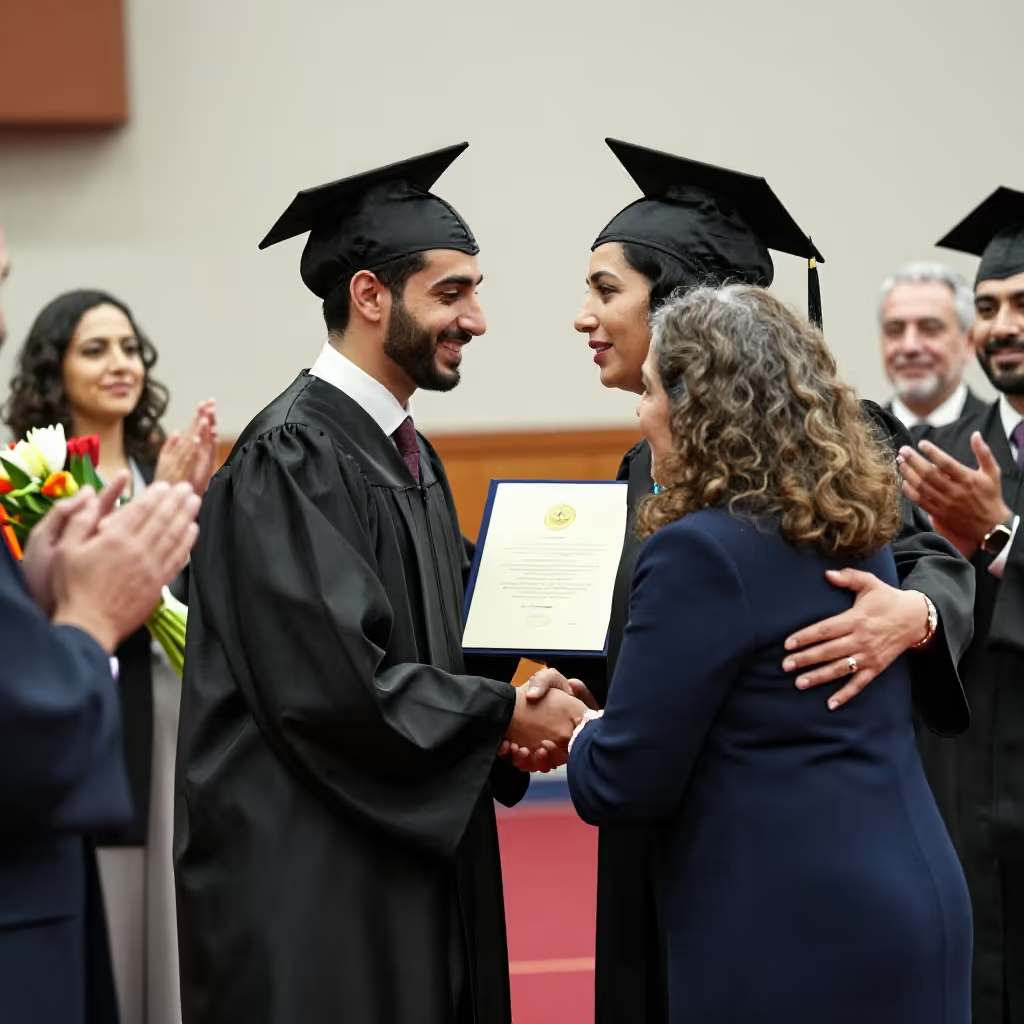
An expression used to congratulate someone on a special event (such as a birthday, wedding, or success) and wish them well. Usually used in the plural.
example
Herzlichen Glückwunsch zum bestandenen Examen!
Congratulations on passing the exam!
Usage tips
Word composition
'Glückwunsch' (congratulation) is a compound of 'das Glück' (luck/happiness) and 'der Wunsch' (wish). So you are, figuratively speaking, wishing someone luck for the future or for a success.
EXAMPLE
Mein Glückwunsch kommt von Herzen.
My congratulations come from the heart.
Fixed expression
The most common form is the fixed expression 'Herzlichen Glückwunsch!' (Congratulations!). It is used as a direct exclamation to congratulate someone.
EXAMPLE
Herzlichen Glückwunsch zur Geburt eurer Tochter!
Congratulations on the birth of your daughter!
Correct preposition
When you want to say what you are congratulating someone on, you use the preposition 'zu' followed by the dative. Typical occasions are birthdays, weddings, or professional successes.
EXAMPLE
Ich sende dir meine besten Glückwünsche zum neuen Job.
I’m sending you my best congratulations on the new job.
Compare with
near_synonym · confusable
Glückwunsch vs Wunsch
wish
'der Wunsch' and 'der Glückwunsch' both have to do with something good that you want for someone or for yourself. However, 'der Wunsch' means a personal desire, a hope, or also a request. 'der Glückwunsch' is a congratulation on a special event, for example a birthday or an exam. Learners may confuse the words because the word 'Wunsch' is inside 'Glückwunsch'. In practice: you have or express a 'Wunsch'; you say, send, or receive 'Glückwünsche' (congratulations).
Glückwunsch
Nach der bestandenen Prüfung bekam Sofia viele Glückwünsche von ihrer Familie.
After passing the exam, Sofia received many congratulations from her family.
Wunsch
Herr Yilmaz hat den Wunsch, den Termin noch vor dem Wochenende zu bekommen.
Mr. Yilmaz has the request to get the appointment before the weekend.