


groß
big / large
Describes above-average physical extent, height, or area.
EXAMPLE
Der Elefant ist ein sehr großes Tier.
The elephant is a very large animal.
big / great
Loading your saved state.
big / large
Describes above-average physical extent, height, or area.
Der Elefant ist ein sehr großes Tier.
The elephant is a very large animal.
great
Indicates high significance, importance, or quality.
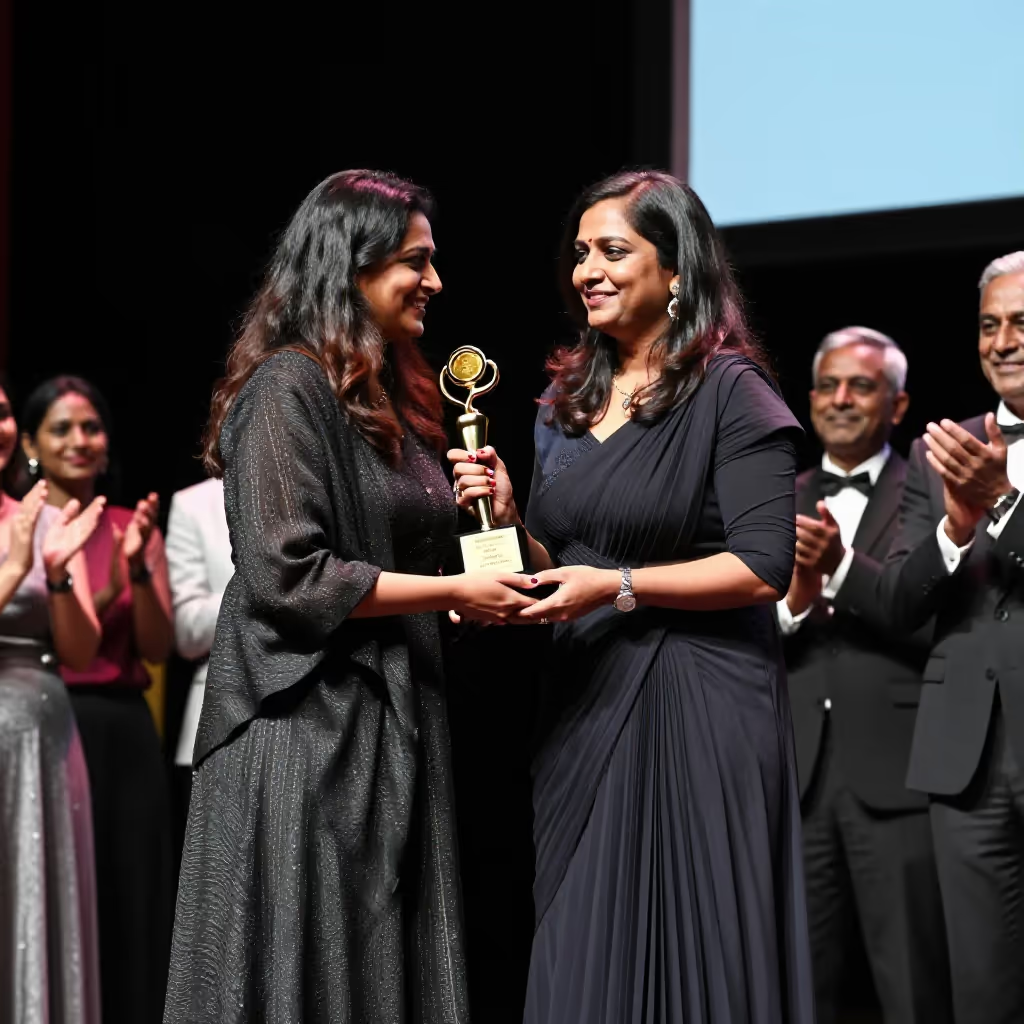
Marie Curie war eine große Wissenschaftlerin.
Marie Curie was a great scientist.

great / intense
Describes a high intensity or strong degree of a feeling or state.
Ich habe große Angst vor Spinnen.
I have a great fear of spiders.

older / grown-up
Refers to an advanced age or to being grown up.
Mein großer Bruder ist schon ausgezogen.
My older brother has already moved out.
by and large
An idiom that means 'overall' or 'essentially'.
Im Großen und Ganzen war das Projekt ein Erfolg.
By and large, the project was a success.
the Great
As part of a historical epithet for important rulers.
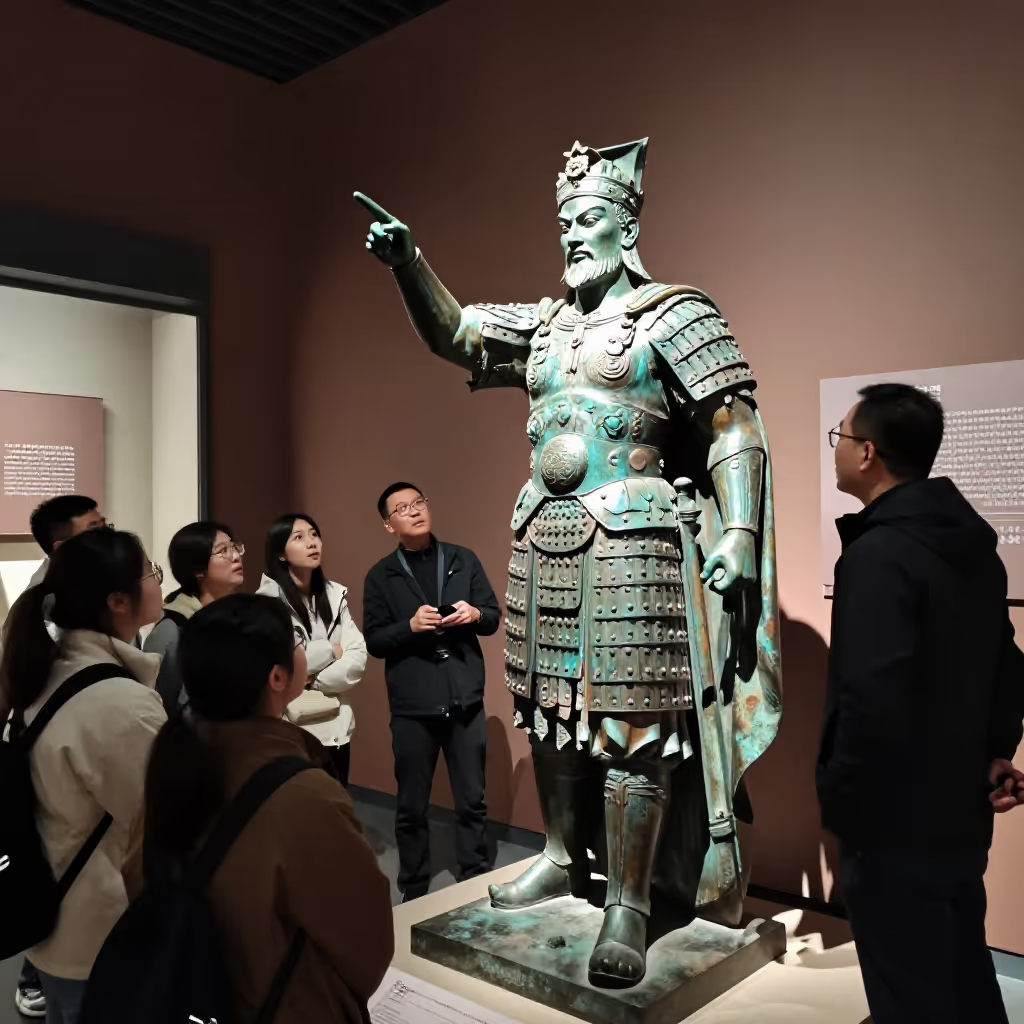
Die Regierungszeit von Friedrich dem Großen prägte Preußen.
The reign of Frederick the Great shaped Prussia.
As an adjective, 'groß' (big) is written with a lowercase letter. But when it is used as a noun (often after 'etwas' (something), 'nichts' (nothing), 'alles' (everything)), it is capitalized. This rule is important for correct spelling.
Das ist ein wirklich großes Haus.
That is a really big house.
'Groß' (big) is a basic word for many other German words. If you recognize 'groß', you can often understand the meaning of words like 'die Größe' (size), 'vergrößern' (to enlarge), or 'Großeltern' (grandparents) more easily.
Können Sie das Bild bitte etwas vergrößern?
Could you please enlarge the picture a little?
The literal meaning 'groß' (big) refers to the physical size of objects or people. In figurative meanings, it describes importance, intensity, or age, which becomes clear from the context.
Ein großer Baum spendet viel Schatten.
A big tree provides a lot of shade.
To express importance or quality, 'groß' (great) is often combined with abstract nouns. Typical phrases are 'ein großer Erfolg' (a great success), 'eine große Ehre' (a great honor), or 'ein großer Unterschied' (a big difference).
Seine Erfindung hat einen großen Unterschied gemacht.
His invention made a big difference.
To describe the intensity of a feeling or state, 'groß' (great/big) is used frequently. Typical combinations are 'großen Hunger haben' (to be very hungry), 'in großer Eile sein' (to be in a great hurry), or 'große Freude empfinden' (to feel great joy).
Nach der langen Wanderung hatte ich großen Hunger.
After the long hike, I was very hungry.
In the context of family and age, 'groß' (older) is used to distinguish older siblings from younger ones. It then stands directly before the noun.
Meine große Schwester studiert in Berlin.
My older sister is studying in Berlin.
The idiom 'im Großen und Ganzen' (by and large) is a fixed unit. It often stands at the beginning of a sentence and means 'considered as a whole'.
Im Großen und Ganzen bin ich mit dem Ergebnis zufrieden.
By and large, I am satisfied with the result.
important
Groß and wichtig can both express a high level of significance. Groß sounds more evaluative and can also emphasize special quality or scope, whereas wichtig refers more specifically to relevance for something. Groß is therefore more suitable for personal appreciation, while wichtig is more suitable for a necessary decision.

Ihre Hilfe bei der Rettung war für die Familie eine große Leistung.
Her help in the rescue was a great achievement for the family.
Ihre Hilfe bei der Rettung war für die Familie sehr wichtig.
Her help in the rescue was very important to the family.