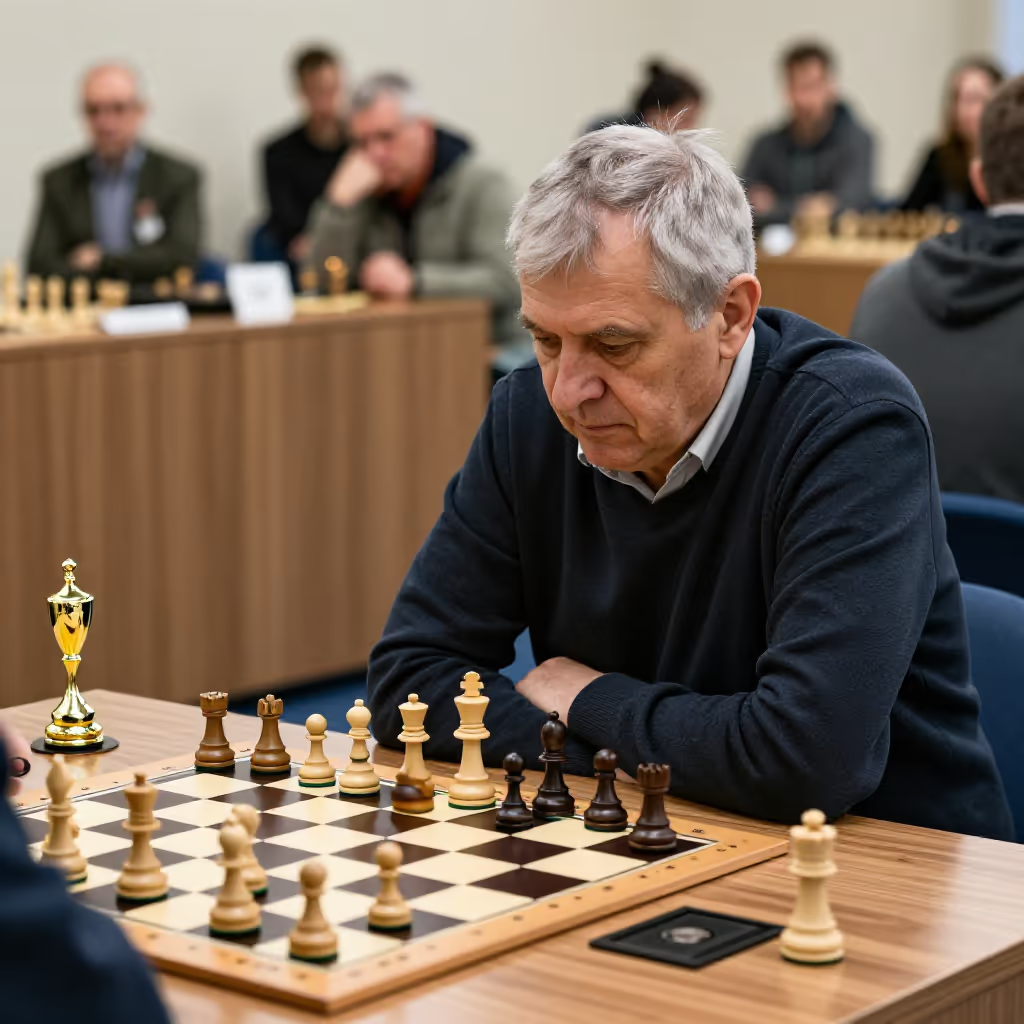
The highest title awarded to players by international chess federations. It is granted for outstanding achievements and a very high level of playing strength.
example
Magnus Carlsen wurde bereits mit 13 Jahren zum Schach-Großmeister ernannt.
Magnus Carlsen was named a chess grandmaster at the age of just 13.
Usage tips
Compound structure
The word is made up of 'groß' (great/big) and 'Meister' (master). So it literally means a 'great master', which makes its meaning as the highest title or as an expert understandable.
EXAMPLE
Nur die besten Spieler der Welt erhalten den Titel „Großmeister“.
Only the best players in the world receive the title 'Großmeister' (grandmaster).
Context clue
The context makes clear which meaning is intended. Words like 'Schach' (chess) or 'Turnier' (tournament) point to the player. Historical terms like 'Ritterorden' (order of knights) or 'Mittelalter' (Middle Ages) indicate the leader of an order. A genitive construction like 'der Kochkunst' (of the culinary arts) shows the figurative meaning.
EXAMPLE
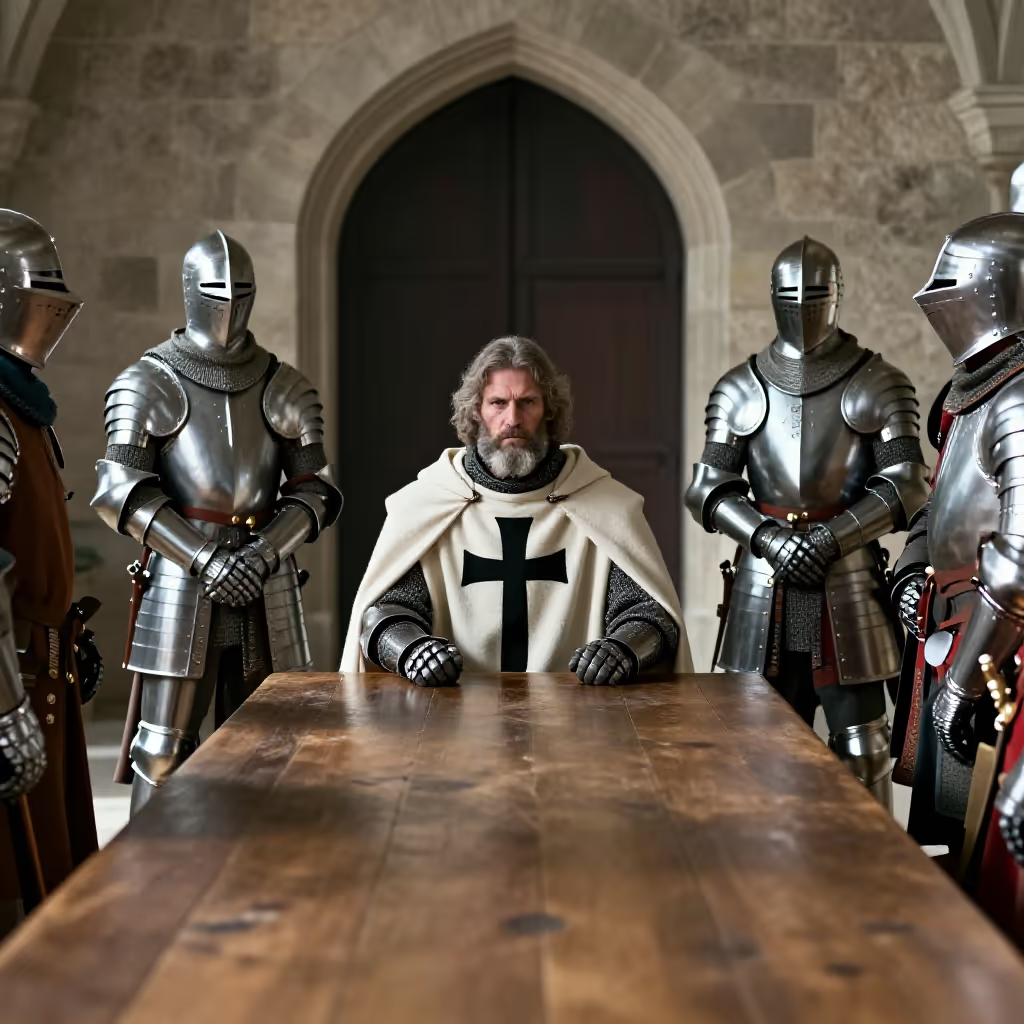
Der Großmeister des Templerordens hatte enorme Macht.
The Grand Master of the Knights Templar had enormous power.
Sentence structure with genitive
In the figurative meaning, 'Großmeister' is often used with a genitive or with the preposition 'von' (of) to name the field. The construction is: 'Großmeister der/des [Gebiets]' (master of the [field]).
EXAMPLE
Alfred Hitchcock war ein Großmeister des Suspense-Kinos.
Alfred Hitchcock was a master of suspense cinema.
Typical collocations
In a chess context, the title is often used with specific verbs. Typical phrases are 'zum Großmeister ernannt werden' (to be named a grandmaster), 'den Großmeistertitel tragen' (to hold the grandmaster title), or 'gegen einen Großmeister spielen' (to play against a grandmaster).
EXAMPLE
Mit nur 19 Jahren wurde er zum Großmeister ernannt.
At just 19 years old, he was named a grandmaster.
Compare with
near_synonym · confusable
Großmeister vs Meister
master / champion
'der Meister' and 'der Großmeister' can both describe a person with very great abilities. 'Meister' is more general and can be used for many areas, including everyday situations. 'Großmeister' is stronger and suggests a particularly high rank. In chess, 'Großmeister' is an official title. Figuratively, it means someone who is truly outstanding in a field. Learners may confuse the words because both show skill. But 'Großmeister' only fits when the achievement is especially high or when the title is really meant.
Großmeister
Mein Freund spielt heute gegen einen Großmeister im Schach.
My friend is playing against a chess grandmaster today.
Meister
Wir haben einen Meister gerufen, weil die Heizung kaputt ist.
We called a master tradesman because the heating is broken.