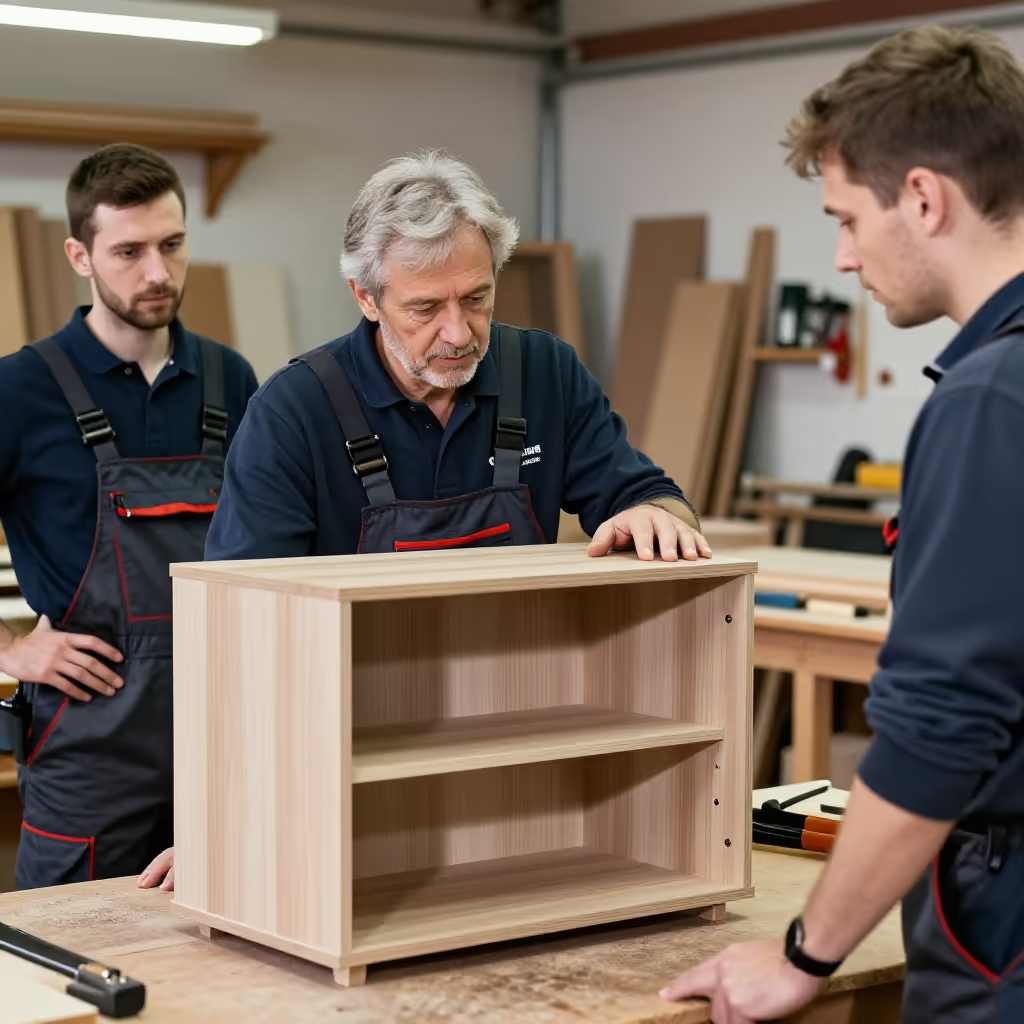
A person who has passed the master craftsman's examination in a trade and is allowed to run their own business as well as train apprentices.
example
Der junge Geselle möchte auch bald seinen Meister machen.
The young journeyman would also like to become a master craftsman soon.

Usage tips
Word family
'Der Meister' (master/champion) belongs to a word family with the verb 'meistern' (to master something) and the noun 'die Meisterschaft' (championship or mastery/perfection). All the words share the idea of the highest level of competence.
EXAMPLE
Sie hat die schwierige Aufgabe mit Bravour gemeistert.
She mastered the difficult task brilliantly.
In the trades
In the trades, the master craftsman qualification is the highest qualification. The fixed expression for this is 'seinen Meister machen' (to become a master craftsman). The job title is often combined with it, e.g., 'Bäckermeister' (master baker) or 'Malermeister' (master painter).
EXAMPLE
Nach der Lehre will er seinen Meister machen und eine eigene Werkstatt eröffnen.
After his apprenticeship, he wants to become a master craftsman and open his own workshop.
In sports
In sports, the 'Meister' (champion) is the winner of an important competition. Typical phrases are 'Meister werden' (to become champion) or 'den Meistertitel holen' (to win the championship title). It is often combined into 'Weltmeister' (world champion) or 'Europameister' (European champion).
EXAMPLE
Die Mannschaft hat hart trainiert, um dieses Jahr Meister zu werden.
The team trained hard to become champion this year.
In art
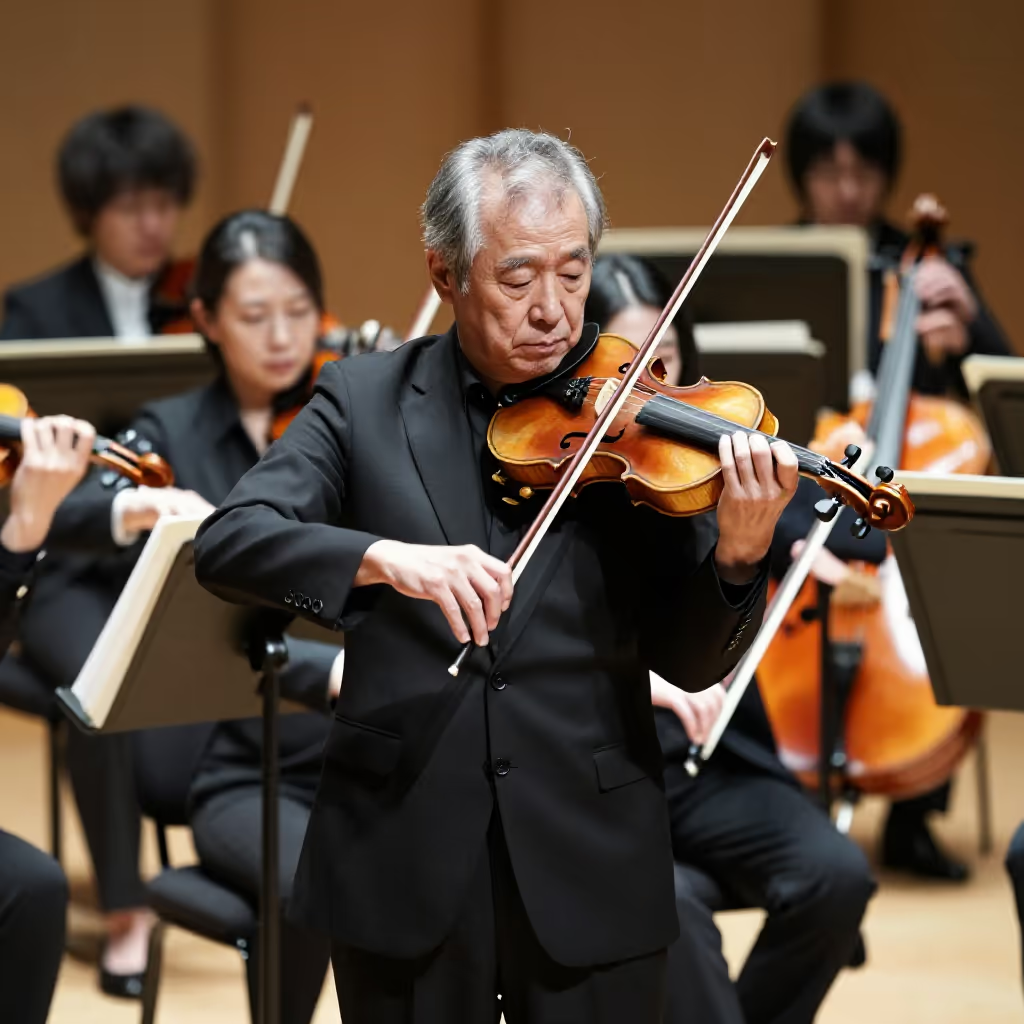
To describe an artist's skill, the structure 'ein Meister + Genitiv' (a master of + genitive), e.g., 'ein Meister der Farben' (a master of colors), or 'ein Meister von + Dativ' (a master of + dative) is often used.
EXAMPLE
Dieser Pianist ist ein wahrer Meister seines Fachs.
This pianist is a true master of his craft.
Figurative use
When someone is especially good at something (often a negative trait), the structure 'ein Meister in + Dativ' (a master in + dative) or 'ein Meister darin, zu...' (a master at doing...) is used. This is often meant ironically.
EXAMPLE
Mein Bruder ist ein Meister darin, seine Schlüssel zu verlieren.
My brother is a master at losing his keys.
Compare with
near_synonym · confusable
Meister vs Herr
gentleman / Mr.
'der Herr' and 'der Meister' can both have to do with a person's special position. In this meaning, 'der Herr' refers to someone who has power or control over others. 'der Meister' more often refers to someone who can do something very well, has a master craftsman's qualification, or is especially good in a field. The words can be confusing because 'Meister' can sometimes be understood like 'Gebieter' (master/ruler). In modern German, however, 'Meister' is usually connected with skill, skilled trades, or sports, while 'Herr' more often expresses power, ownership, or authority.
Meister
Nach vielen Jahren in der Werkstatt wurde Ali Meister im Schreinerhandwerk.
After many years in the workshop, Ali became a master craftsman in carpentry.
Herr
In der alten Geschichte musste der Knecht seinem Herrn gehorchen.
In the old story, the servant had to obey his master.