die Grube
pit
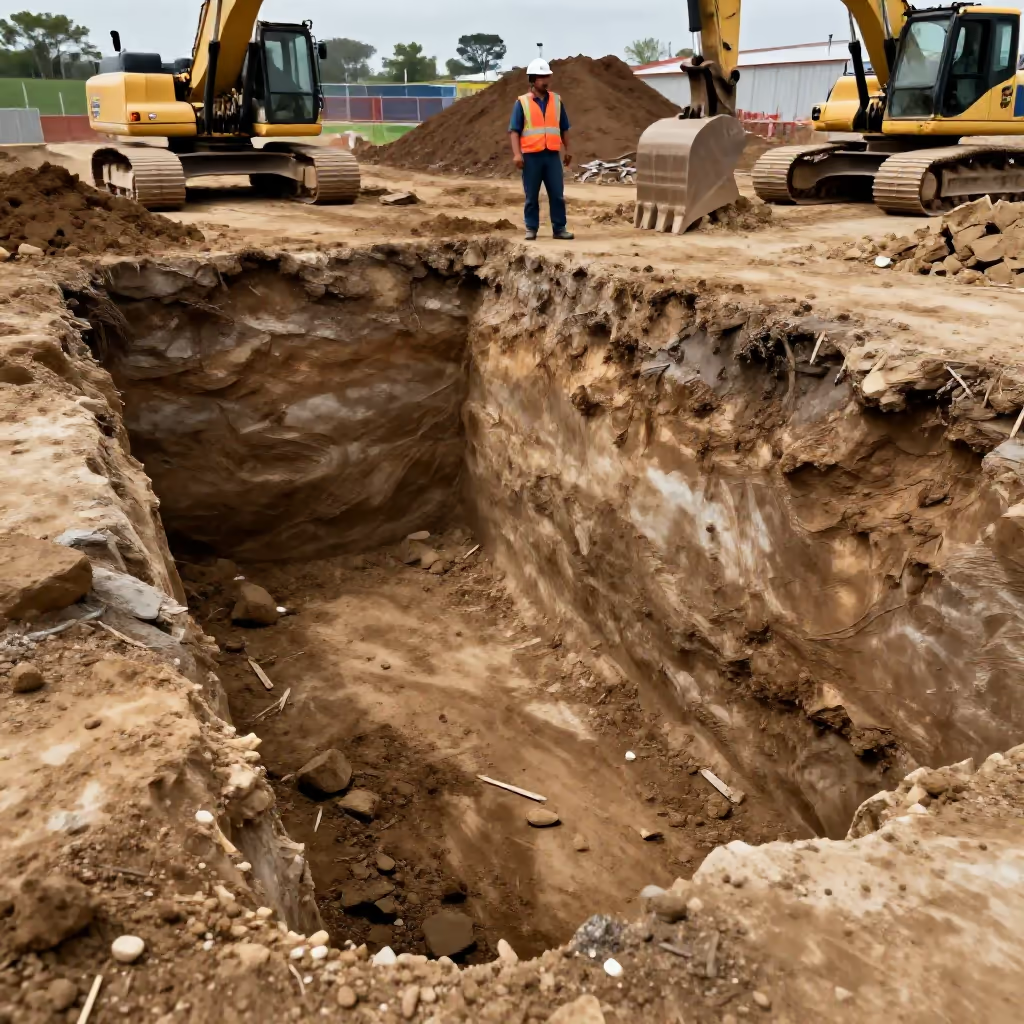
A deep hole dug into the ground, for example for construction work, waste disposal, or as a grave.
Für das Fundament des neuen Hauses wurde eine riesige Grube ausgehoben.
A huge pit was dug for the foundation of the new house.
pit / mine
Loading your saved state.

pit
A deep hole dug into the ground, for example for construction work, waste disposal, or as a grave.
Für das Fundament des neuen Hauses wurde eine riesige Grube ausgehoben.
A huge pit was dug for the foundation of the new house.


mine
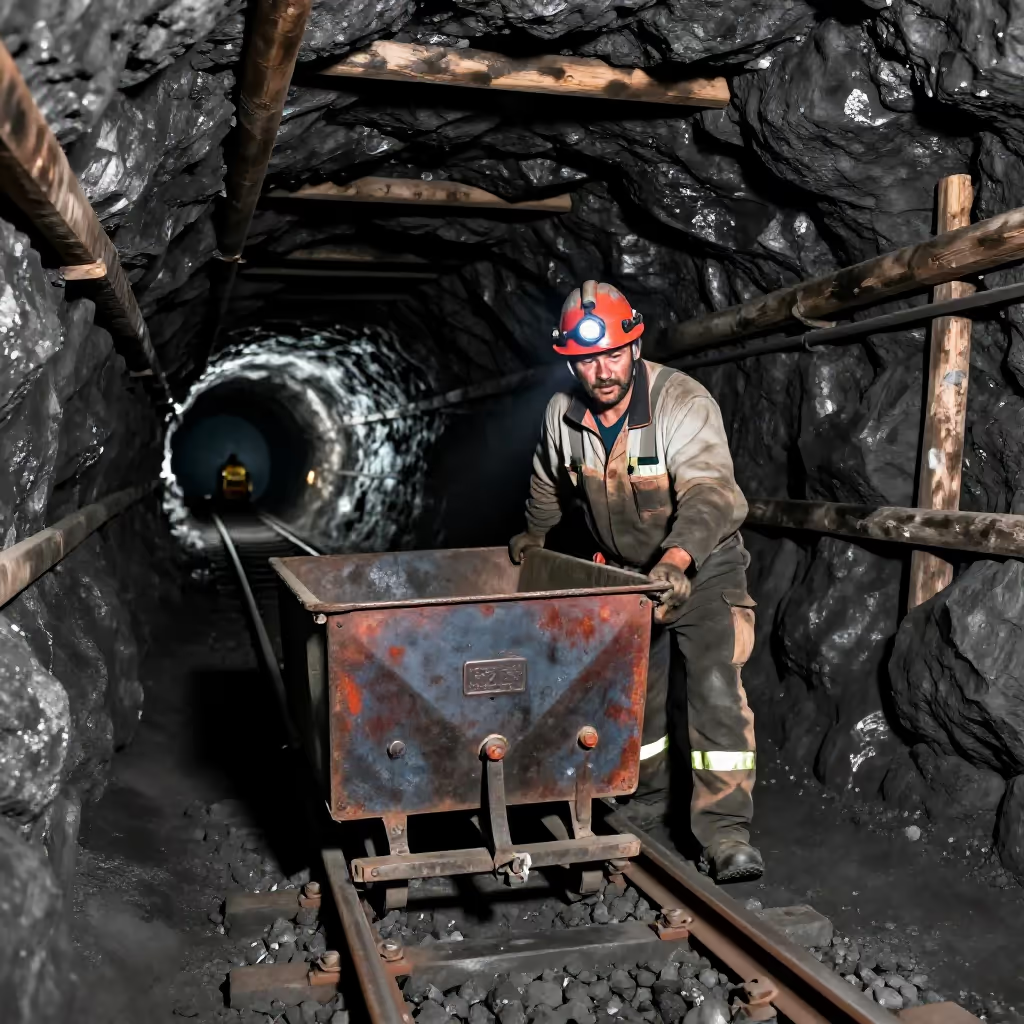
A mine, especially in the underground extraction of natural resources such as coal or ore. It is often used synonymously with 'Zeche' (coal mine).
Sein Großvater hat sein ganzes Leben lang in der Grube gearbeitet.
His grandfather worked in the mine his whole life.

to dig a pit for someone
An idiom that means to secretly want to harm someone or set a trap for them. Often used as part of the proverb 'Wer andern eine Grube gräbt, fällt selbst hinein' (whoever digs a pit for others falls into it himself).
Er versuchte, seinem Kollegen eine Grube zu graben, um dessen Beförderung zu verhindern.
He tried to dig a pit for his colleague in order to prevent his promotion.

grave
A figurative or old-fashioned term for the grave as one's final resting place.
Die alte Dame sagte, sie stehe schon mit einem Bein in der Grube.
The old lady said she already had one foot in the grave.
To distinguish the meanings: If it is about construction work, gardens, or holes in the ground, it means an earth pit (m01). If mining, coal, or workers underground are being discussed, it means a mine (m02).
Die Bauarbeiter hoben eine tiefe Grube für den Keller aus.
The construction workers dug a deep pit for the basement.
When 'Grube' means a hole in the ground, the most common verbs are 'eine Grube graben' (to dig a pit) or 'eine Grube ausheben' (to dig/excavate a pit).
Die Kinder graben im Sandkasten eine Grube.
The children are digging a pit in the sandbox.
In the meaning 'Bergwerk' (mine), the preposition 'in' with the dative is often used to describe the workplace. A typical phrase is 'in der Grube arbeiten' (to work in the mine).
Die Arbeit in der Grube war gefährlich und hart.
The work in the mine was dangerous and hard.
The idiom 'jemandem eine Grube graben' (to dig a pit for someone) is fixed. The person you want to harm is always in the dative.
Sie hat versucht, mir eine Grube zu graben, aber es hat nicht funktioniert.
She tried to dig a pit for me, but it didn't work.
The idiom 'mit einem Bein in der Grube stehen' (to have one foot in the grave) means that someone is old or very ill and close to death. The phrase is figurative and fixed.
Mein Urgroßvater ist 98, er sagt immer, er steht schon mit einem Bein in der Grube.
My great-grandfather is 98; he always says he already has one foot in the grave.
hole
Loch and Grube can both refer to a depression in the ground. Loch is the general term for such a defect, while Grube usually refers to a deeper or deliberately excavated form. Choose Grube when the digging or the size is important.

Für das Fundament hoben die Arbeiter eine tiefe Grube im Garten aus.
The workers dug a deep pit in the garden for the foundation.
Nach dem Sturm war ein großes Loch im Garten entstanden.
A large hole had formed in the garden after the storm.