

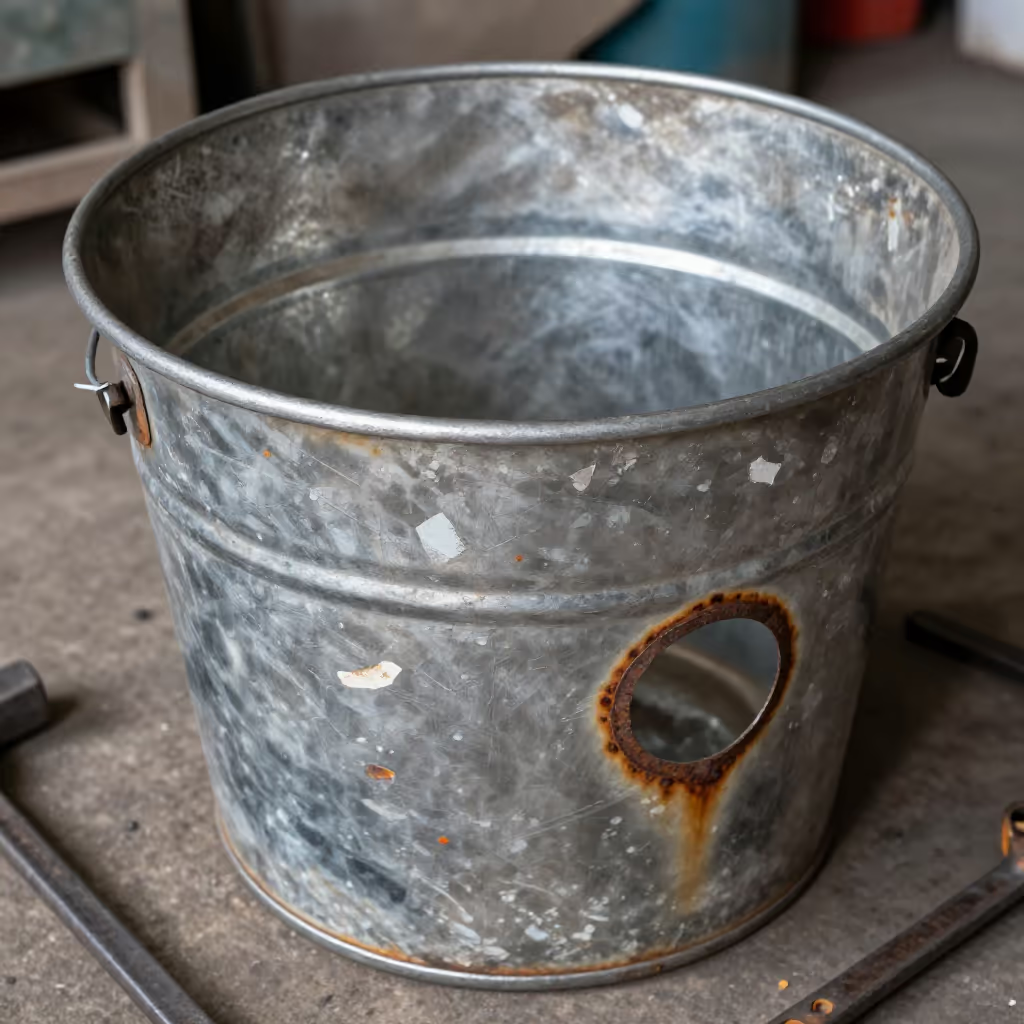
das Loch
hole
An opening or indentation in a surface or object that has been created by a loss of material.
EXAMPLE
Ich habe ein Loch in meiner Socke.
I have a hole in my sock.
hole
Loading your saved state.
hole
An opening or indentation in a surface or object that has been created by a loss of material.
Ich habe ein Loch in meiner Socke.
I have a hole in my sock.

hole / gap
A financial shortfall or a gap in a plan or system.
Die Steuerausfälle rissen ein tiefes Loch in den Staatshaushalt.
The tax losses tore a deep hole in the national budget.

to be in a hole
To be in a phase of psychological depression, lack of motivation, or a difficult life situation.
Nach der Trennung war sie wochenlang in einem tiefen Loch.
After the breakup, she was in a deep hole for weeks.
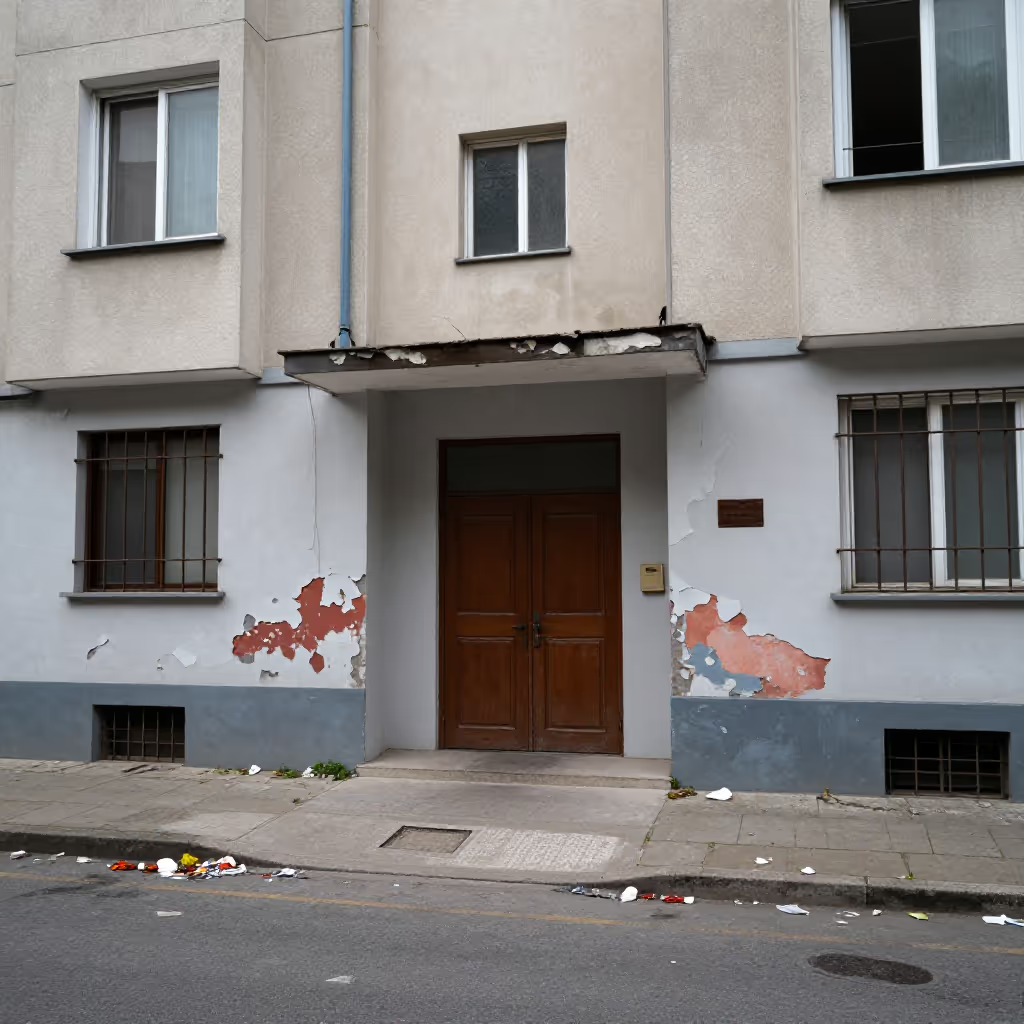
dump
A colloquial, derogatory term for an unattractive, boring, or run-down place.
Ich kann es kaum erwarten, aus diesem Loch von einem Dorf wegzuziehen.
I can hardly wait to move away from this dump of a village.

hole
In physics, especially in semiconductor technology, the term for a vacant position of an electron in the valence band that acts as a positive charge carrier.
Die Leitfähigkeit von p-dotierten Halbleitern basiert auf der Bewegung von Löchern.
The conductivity of p-doped semiconductors is based on the movement of holes.
The verb 'löchern' is derived from the noun 'das Loch' (hole). Colloquially, 'jemanden mit Fragen löchern' means to bombard someone with many questions nonstop.
Die Journalisten löcherten den Politiker mit Fragen.
The journalists bombarded the politician with questions.
The idiom 'jemandem ein Loch in den Bauch fragen' means to ask someone an extremely large number of, often curious, questions. The person being asked is in the dative.
Mein kleiner Neffe hat mir den ganzen Nachmittag ein Loch in den Bauch gefragt.
My little nephew spent the whole afternoon asking me question after question.
In connection with a physical hole, verbs are often used that describe its creation or removal. Typical ones are 'ein Loch graben' (to dig a hole), 'bohren' (to drill), 'stechen' (to poke/pierce), or 'stopfen' (to plug).
Der Gärtner gräbt ein Loch für den neuen Baum.
The gardener is digging a hole for the new tree.
You can recognize the figurative meaning of a financial deficit from words like 'Budget' (budget), 'Haushalt' (budget), or 'Kasse' (cash fund). The verb 'reißen' (to tear) is often used to describe the sudden creation of such a deficit.
Die unerwarteten Ausgaben haben ein großes Loch in unser Budget gerissen.
The unexpected expenses tore a big hole in our budget.
The idiom for a psychological crisis is 'in einem Loch sein' (to be in a hole) or 'in einem Loch stecken' (to be stuck in a hole). The person who feels bad is the subject of the sentence.
Nach dem Jobverlust steckte er in einem tiefen Loch.
After losing his job, he was stuck in a deep hole.
When 'Loch' (hole) describes a place, it is usually colloquial and strongly derogatory. It refers to a boring, unattractive, or run-down place.
Er nannte seine Heimatstadt immer nur „dieses gottverlassene Loch“.
He always called his hometown 'this godforsaken dump'.
In physics and semiconductor technology, 'Loch' (hole) has a very specific technical meaning. There, it refers to a missing negative charge (electron) that acts like a positive charge.
In p-dotierten Halbleitern sind die Löcher die Mehrheitsladungsträger.
In p-doped semiconductors, the holes are the majority charge carriers.
deep
For feelings of despondency, tief mainly describes the strength of the feeling or state. Being in einem Loch (in a hole), on the other hand, means going through a difficult phase and often feeling stuck in it. Tief is appropriate for a strong feeling, while das Loch refers to the difficult phase.

Nach mehreren Niederlagen war die Spielerin in einem Loch und fand lange nicht zu ihrer Form zurück.
After several defeats, the player was in a hole and did not regain her usual form for a long time.
Nach der Niederlage war die Spielerin tief niedergeschlagen.
After the defeat, the player was deeply depressed.