

das Haar
hair
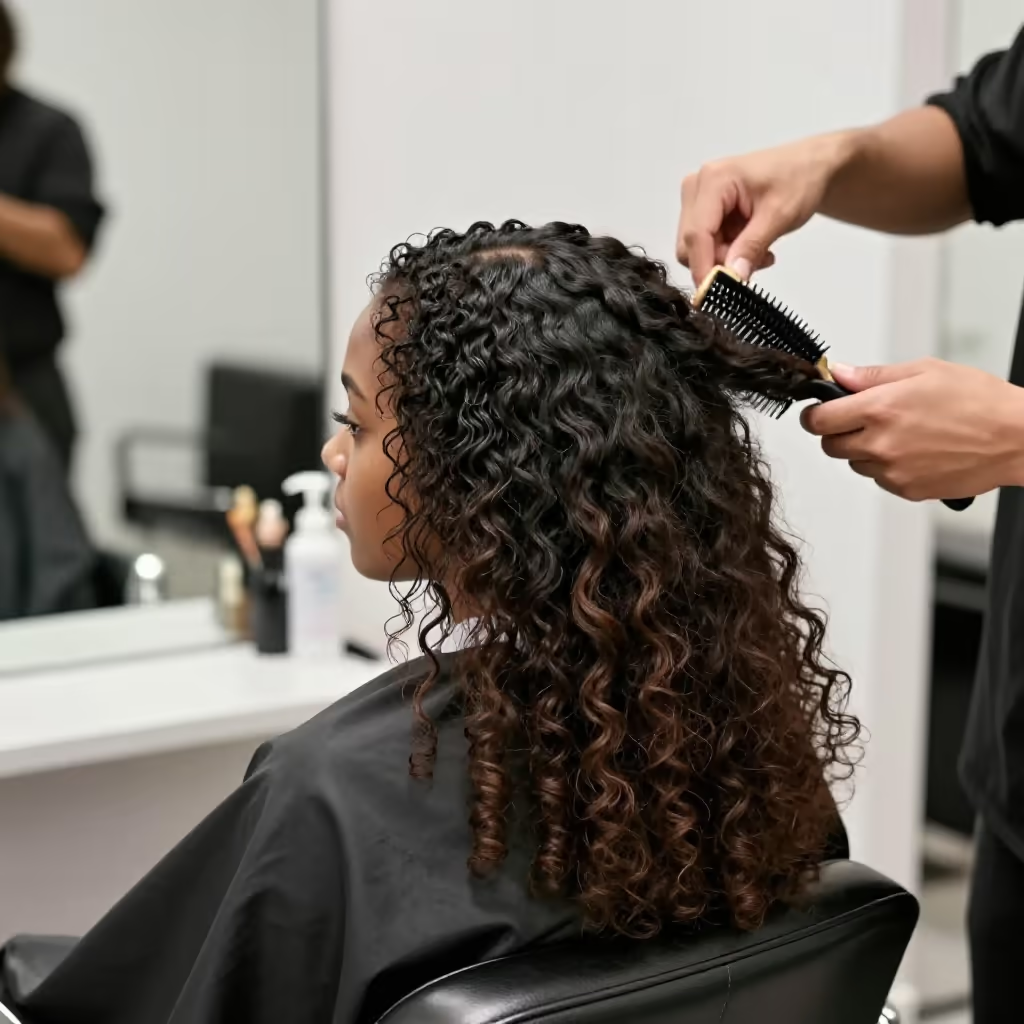
The entirety of the thread-like horny structures that grow on people's heads. Often used in the singular as a collective term.
EXAMPLE
Sie hat schönes, dichtes Haar.
She has beautiful, thick hair.
hair
Loading your saved state.
hair
The entirety of the thread-like horny structures that grow on people's heads. Often used in the singular as a collective term.
Sie hat schönes, dichtes Haar.
She has beautiful, thick hair.
hair
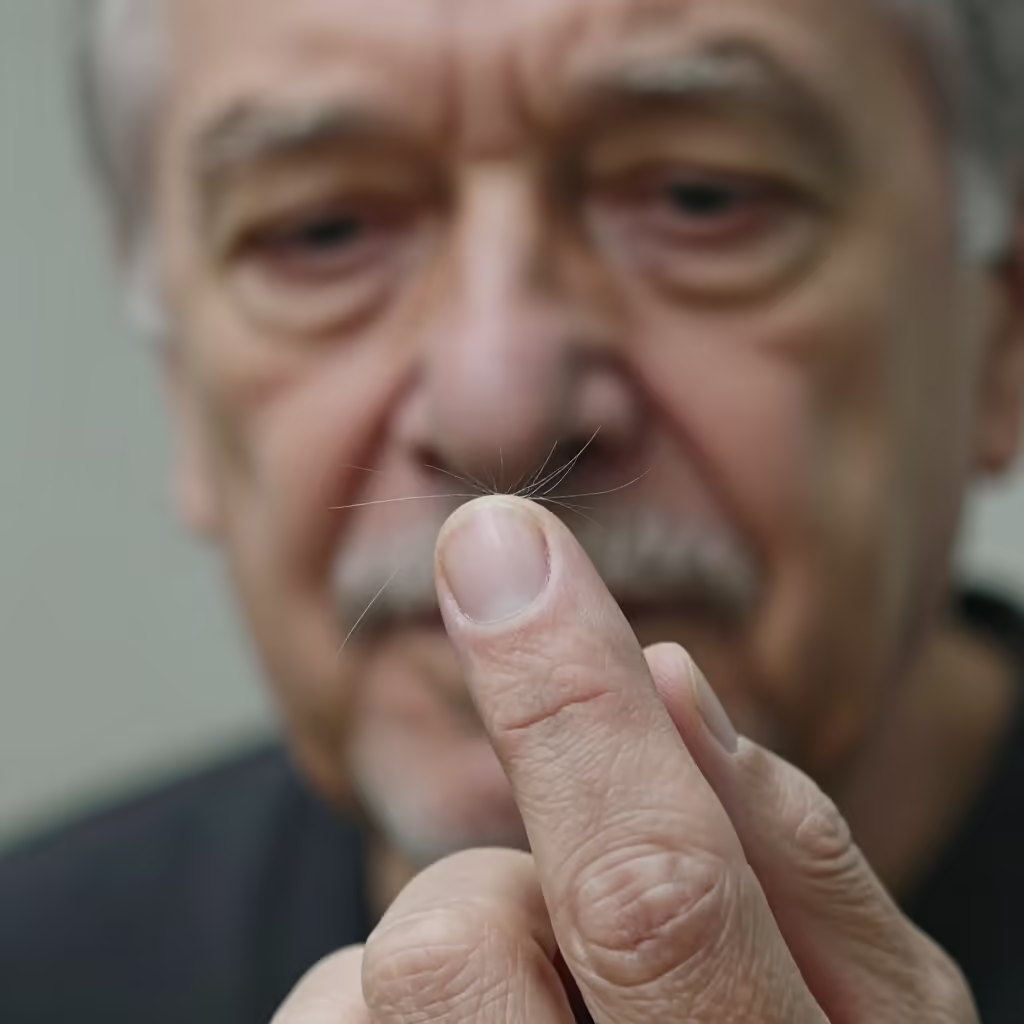
A single thread-like horny structure that grows on the skin of humans or animals.
Ich habe ein langes blondes Haar auf meinem Pullover gefunden.
I found a long blond hair on my sweater.

to get into a fight
Informal expression for starting an argument with someone or arguing with someone.
Die beiden Geschwister sind sich wegen einer Kleinigkeit in die Haare geraten.
The two siblings got into a fight over a small thing.

to tear someone apart
To criticize someone or something very strongly and thoroughly.
Die Rezension hat kein gutes Haar an dem neuen Roman gelassen.
The review tore the new novel apart.

by a hair
Only very narrowly; almost.
Um ein Haar hätte ich den Zug verpasst.
I almost missed the train.
'Das Haar' (hair) in the singular refers to all the hair on the head. When talking about individual strands, you use the plural 'die Haare' (the hairs/hair) or 'ein Haar' (one hair) for a single strand.
Er hat schwarzes Haar.
He has black hair.
Around hair care, there are fixed verb combinations such as 'sich die Haare waschen' (to wash one's hair), 'sich die Haare kämmen' (to comb one's hair), or 'sich die Haare schneiden lassen' (to get one's hair cut).
Ich muss mir dringend die Haare schneiden lassen.
I urgently need to get my hair cut.
The expression 'sich in die Haare geraten' (to get into a fight) describes an argument. It is often used reciprocally, that is, with 'sich' or 'einander', to show that both sides are arguing.
Die Nachbarn sind sich schon wieder wegen des Lärms in die Haare geraten.
The neighbors have gotten into a fight over the noise again.
In the expression 'kein gutes Haar an jemandem/etwas lassen' (to tear someone/something apart), the object of criticism always appears with the preposition 'an' in the dative.
Der Kritiker hat an dem neuen Film kein gutes Haar gelassen.
The critic tore the new film apart.
The expression 'um ein Haar' (by a hair) is a fixed phrase and means 'nearly' or 'almost'. It often appears at the beginning or in the middle of a sentence.
Ich wäre um ein Haar zu spät gekommen.
I would have been late by a hair.
bristle
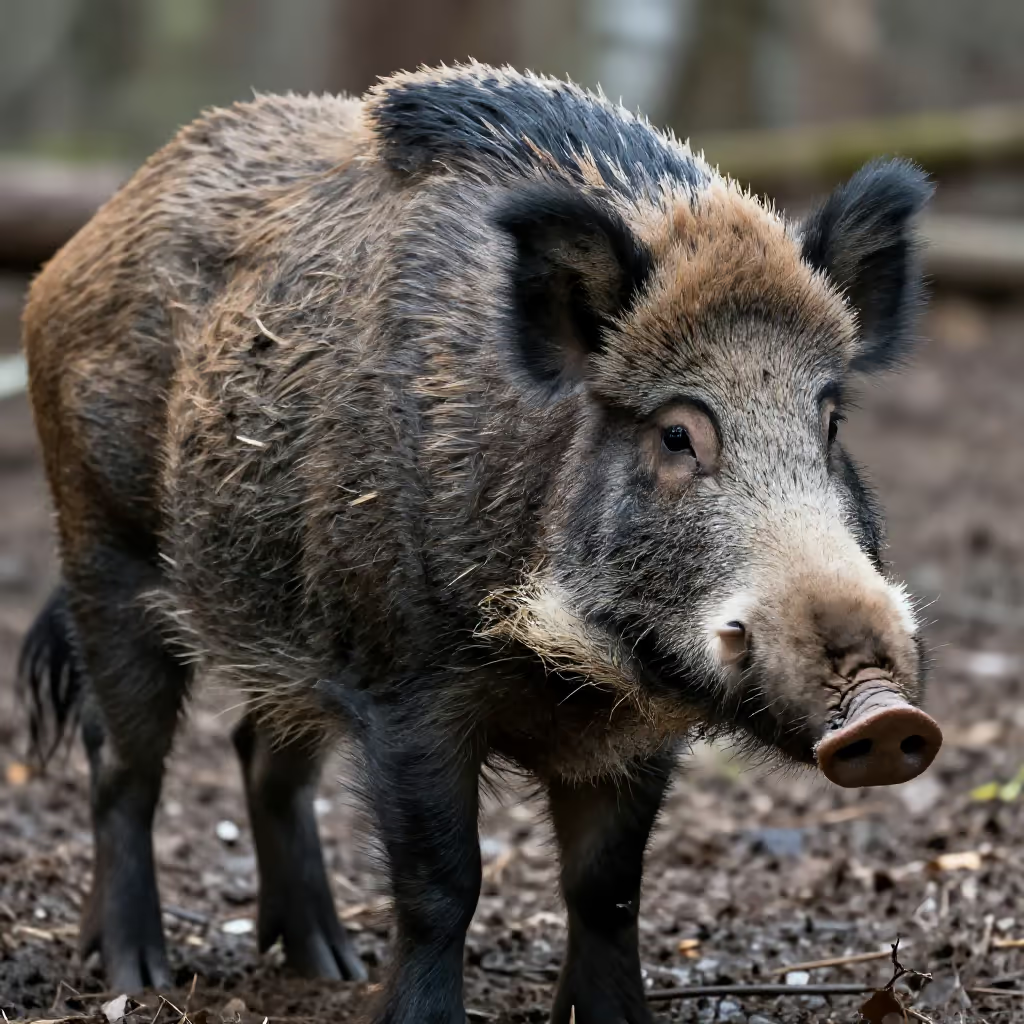
Haar is the neutral term for a single hair from a person or animal. Borste, on the other hand, refers to a short, noticeably stiff animal hair, such as one from a pig or badger. Haar is the better choice for a soft animal hair or one that is not described in more detail.
Auf der Decke lag ein langes, weiches Haar der Katze.
A long, soft cat hair was lying on the blanket.
Auf der Decke lag eine kurze, steife Borste des Schweins.
A short, stiff pig bristle was lying on the blanket.