

hacken
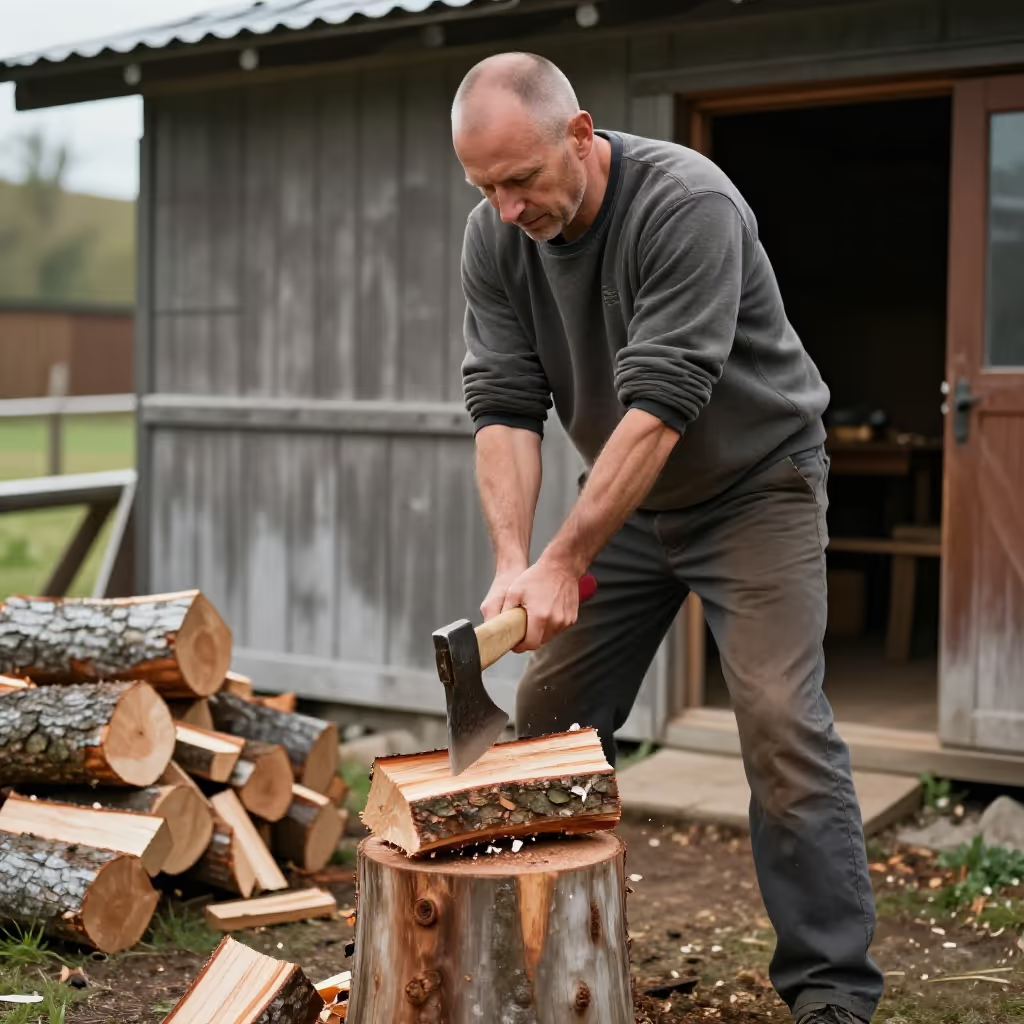
to chop
To cut something apart with strong, short blows, usually with a hatchet, an axe, or a large knife.
EXAMPLE
Für das Kaminfeuer müssen wir noch Holz hacken.
For the fireplace, we still need to chop wood.
to chop / hack
Loading your saved state.
to chop
To cut something apart with strong, short blows, usually with a hatchet, an axe, or a large knife.
Für das Kaminfeuer müssen wir noch Holz hacken.
For the fireplace, we still need to chop wood.

to hack
To gain unauthorized access to someone else's computer system or network.
Es ist jemandem gelungen, das System der Firma zu hacken und Daten zu stehlen.
Someone managed to hack the company's system and steal data.

to hoe
To loosen the soil in the garden with a hoe in order to remove weeds or prepare the earth for planting.
Im Frühling muss ich immer das ganze Gemüsebeet hacken.
In spring, I always have to hoe the whole vegetable bed.
to peck
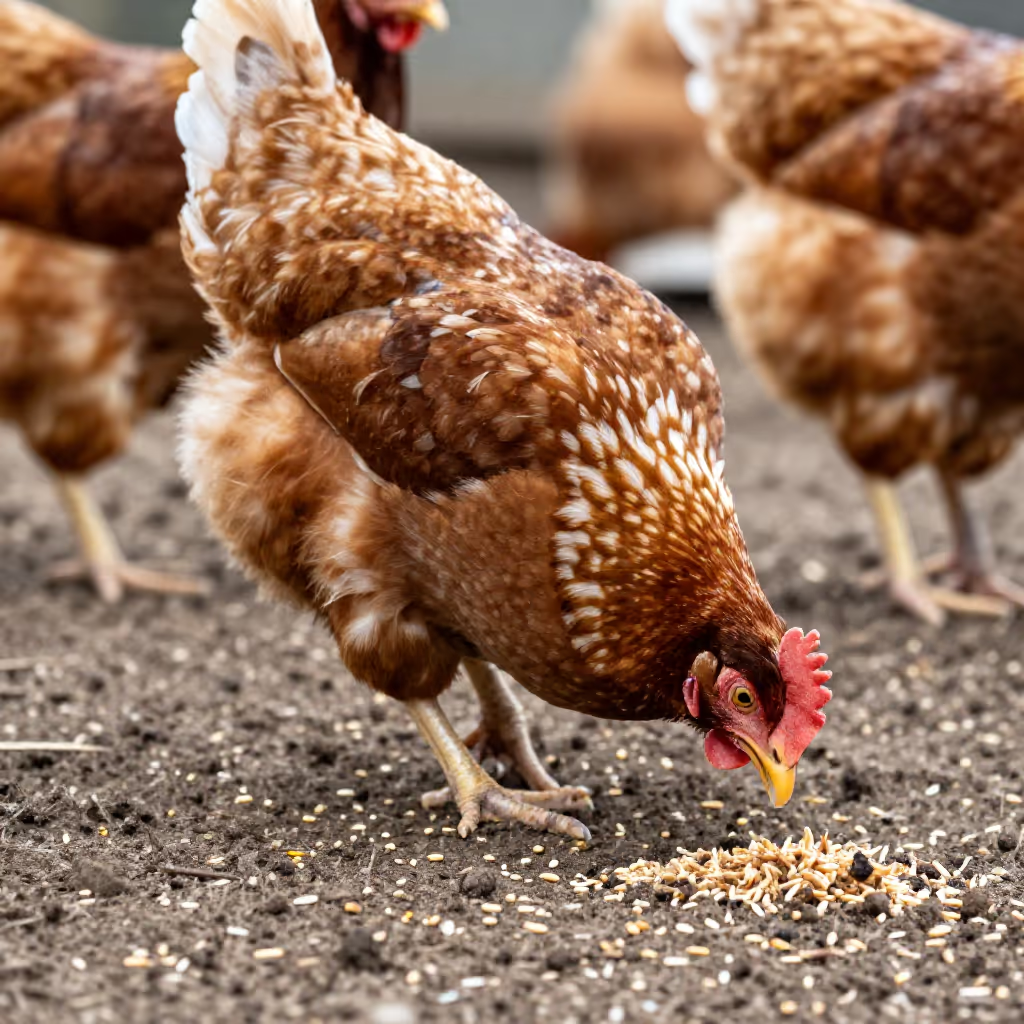
To make short, thrusting movements with the beak; to peck. Usually refers to birds.
Der Specht hackt ein Loch in den Baumstamm.
The woodpecker pecks a hole in the tree trunk.

to pick on someone
To criticize or bully someone repeatedly and in a petty way.
Hör auf, ständig auf deinem kleinen Bruder herumzuhacken!
Stop constantly picking on your little brother!

to pound the keys
Colloquial for fast, often loud and forceful typing on a keyboard.
Er muss den Bericht heute noch fertigstellen, deshalb hackt er wie wild in die Tasten.
He has to finish the report today, so he's pounding away at the keys like crazy.
to catch / stick
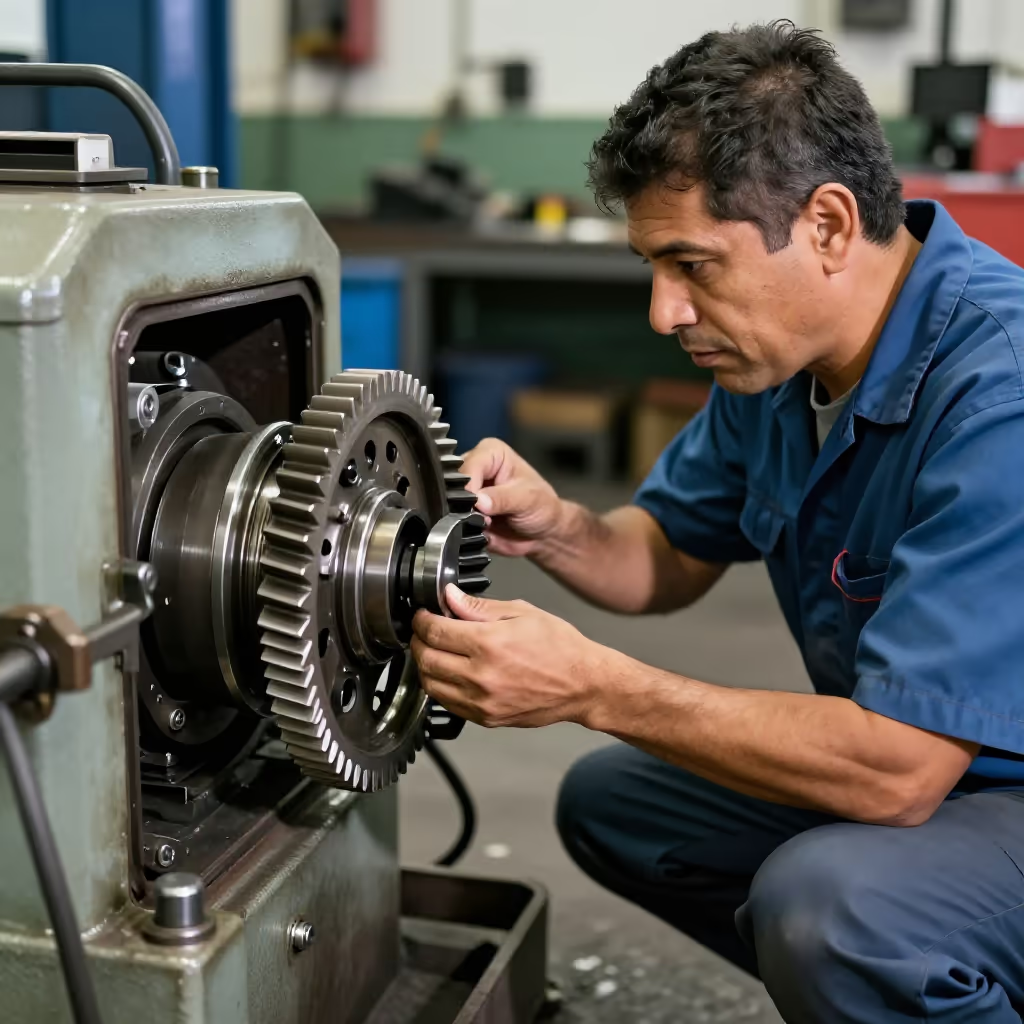
When a mechanical device or a gearbox does not work smoothly but jerks or briefly jams.
Das Getriebe von meinem alten Auto hackt manchmal beim Schalten in den zweiten Gang.
The gearbox in my old car sometimes catches when shifting into second gear.
The core idea of 'hacken' (to chop/hack) is a short, forceful, and often repeated movement. This idea appears in many meanings: when chopping wood, doing garden work, when a bird pecks, or even when typing on a keyboard.
Der Gärtner hackt das Unkraut im Beet.
The gardener hoes the weeds in the bed.
The context usually makes the meaning of 'hacken' (to chop/hack) very clear. If it's about 'Holz' (wood), it means cutting apart. If it's about 'Computer' (computers) or 'Systeme' (systems), it means digital intrusion. If it's about the 'Garten' (garden), it means working the soil.
Er hat den ganzen Nachmittag Holz für den Winter gehackt.
He chopped wood for the winter all afternoon.
In the kitchen, 'hacken' (to chop) means to cut something very small with a knife. Typical examples are 'Zwiebeln hacken' (to chop onions), 'Knoblauch hacken' (to chop garlic), or 'Kräuter hacken' (to chop herbs).
Für die Soße müssen Sie eine Zwiebel und zwei Knoblauchzehen fein hacken.
For the sauce, you need to finely chop one onion and two cloves of garlic.
The meaning in the computer context is very common today and internationally understandable. You can say 'ein System hacken' (to hack a system), 'einen Account hacken' (to hack an account), or 'sich in ein Netzwerk hacken' (to hack into a network).
Er versucht, sich in das WLAN der Nachbarn zu hacken.
He is trying to hack into the neighbors' Wi-Fi.
The expression 'auf jemandem herumhacken' means to constantly criticize someone. The preposition is always 'auf' with the dative, and the 'herum-' emphasizes the repeated and annoying nature of the criticism.
Die Chefin hat den ganzen Tag auf ihm herumgehackt.
The boss picked on him all day.
The phrase 'in die Tasten hacken' is a colloquial and figurative description for very fast or loud typing on a keyboard. It is often used when someone is working under time pressure.
Ich muss den Artikel noch fertig schreiben und die ganze Nacht in die Tasten hacken.
I still have to finish writing the article and pound the keys all night.
When a mechanical part does not work smoothly, you say it 'hackt' (catches/sticks). The word describes a brief jamming or jerking, for example with a gearbox, a lock, or a drawer.
Der Schlüssel lässt sich nur schwer drehen, das Schloss hackt ein wenig.
The key is hard to turn; the lock sticks a little.
heel / paragraph / sales
Der Absatz is the standard term for the raised part of a shoe beneath the heel. Regionally or colloquially, this part is also called Hacken. However, this use of Hacken is not included among the specified meanings of the verb hacken.

In dieser Region nennt man den abgebrochenen Fersenteil des Schuhs Hacken.
In this region, the broken heel section of a shoe is called Hacken.
Bei meinem rechten Schuh ist der Absatz abgebrochen.
The heel on my right shoe broke off.