

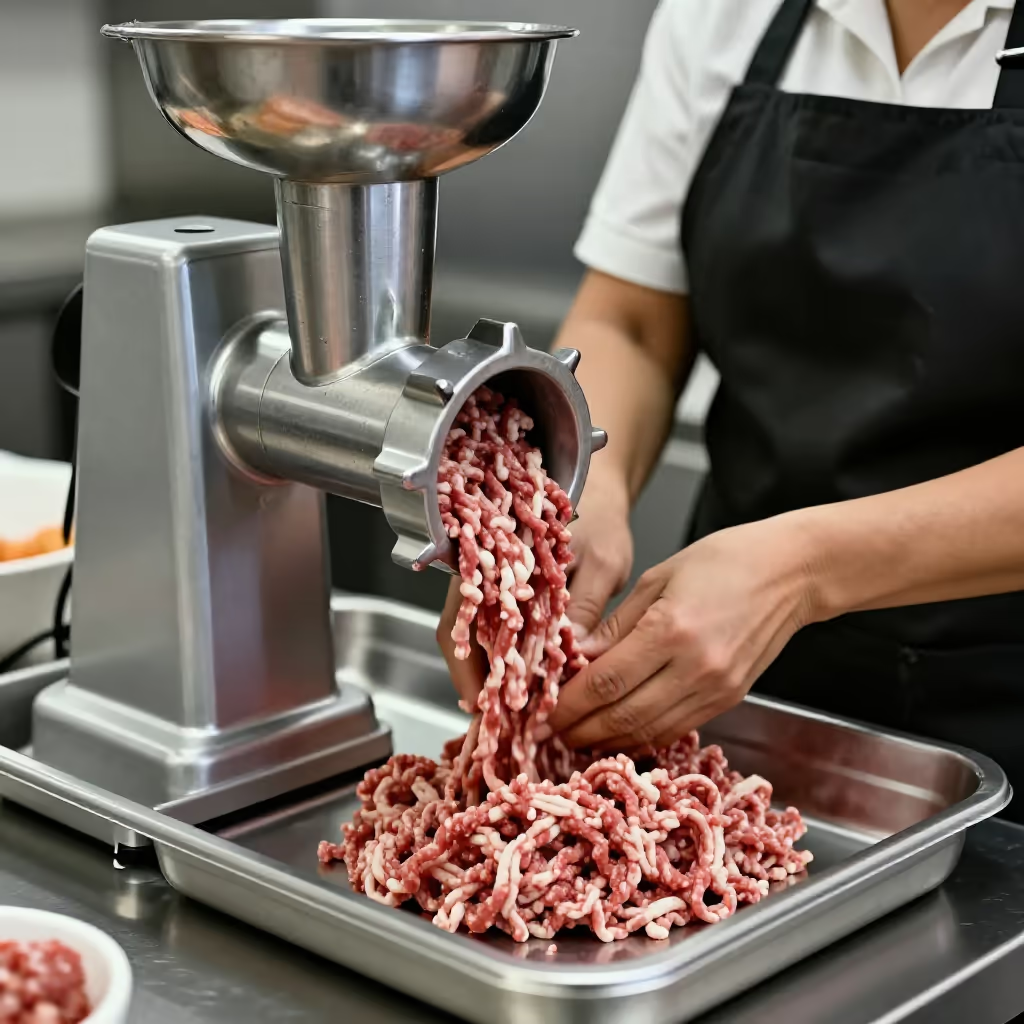
Meat that has been put through a meat grinder and thereby finely minced. It is the basis for many dishes such as meat patties or Bolognese sauce.
example
Für die Lasagne kaufe ich immer frisches Hackfleisch beim Metzger.
For lasagna, I always buy fresh ground meat from the butcher.
Usage tips
Word composition
The word is made up of 'hacken' (to chop finely) and 'Fleisch' (meat). So it literally describes meat that has been chopped into small pieces.
EXAMPLE
Für die Soße muss das Hackfleisch zuerst scharf angebraten werden.
For the sauce, the ground meat first has to be seared over high heat.
Regional variants
Depending on the region, there are different terms. In Austria, the word 'das Faschierte' is common; in parts of Germany you may also hear 'das Gehacktes'.
EXAMPLE
In Wien bestellt man ein „Faschiertes Laibchen“ und keine Frikadelle.
In Vienna, people order a 'Faschiertes Laibchen' and not a Frikadelle.
Typical types
At the supermarket or butcher's, you will find different types. 'gemischtes Hackfleisch' (mixed ground meat, made from pork and beef) is very common, but so are pure 'Rinderhackfleisch' (ground beef) or 'Schweinehackfleisch' (ground pork).
EXAMPLE
Für Burger nehme ich am liebsten reines Rinderhackfleisch.
For burgers, I prefer to use pure ground beef.
Compare with
synonym
Hackfleisch vs Hack
ground meat / hack
In cooking, 'Hack' and 'Hackfleisch' mean the same thing: finely minced meat. 'Hackfleisch' is the full and neutral form and works in all situations. 'Hack' is the short form and sounds more everyday, for example when shopping or cooking at home. Context is important, because in technology 'Hack' can also mean something else. But when it is about food, 'Hack' is simply the short form of 'Hackfleisch'.
Hackfleisch
Sie kauft Hackfleisch, weil sie am Abend Frikadellen machen möchte.
She buys ground meat because she wants to make meat patties in the evening.
Hack
Für die Soße brät Hannah zuerst das Hack mit Zwiebeln an.
For the sauce, Hannah first fries the ground meat with onions.