

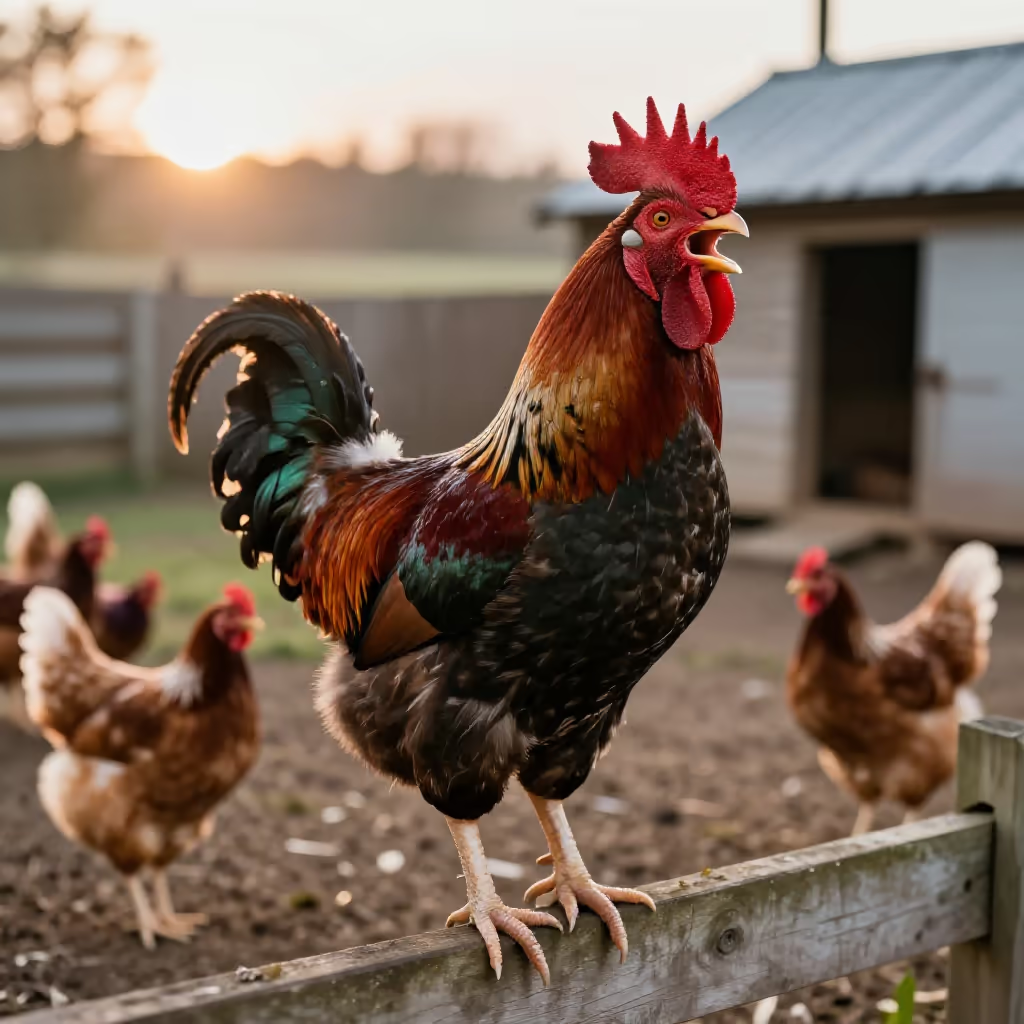
der Hahn
rooster
A male chicken known for its crowing.
EXAMPLE
Jeden Morgen weckt uns der Hahn vom Nachbarn.
Every morning, the neighbor's rooster wakes us up.
rooster / tap
Loading your saved state.
rooster
A male chicken known for its crowing.
Jeden Morgen weckt uns der Hahn vom Nachbarn.
Every morning, the neighbor's rooster wakes us up.
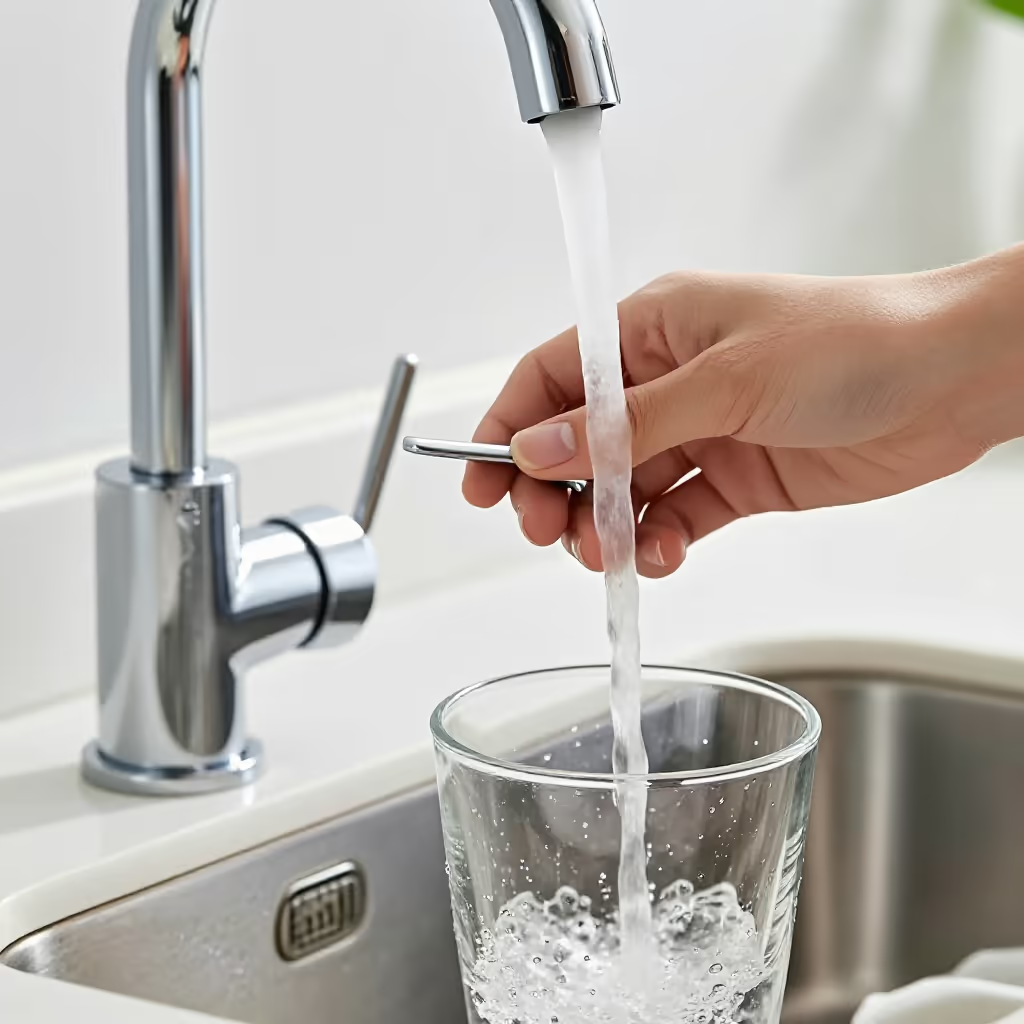
tap
A device for regulating or stopping the flow of liquids or gases from a pipe, e.g. a water tap.
Kannst du bitte den Hahn in der Küche zudrehen? Er tropft.
Could you please turn off the tap in the kitchen? It's dripping.

to be the only man
To be the only male person in a group of women and enjoy their attention.
Auf der Party war er mit seinen fünf Schwestern der Hahn im Korb.
At the party, he was the only man there with his five sisters.
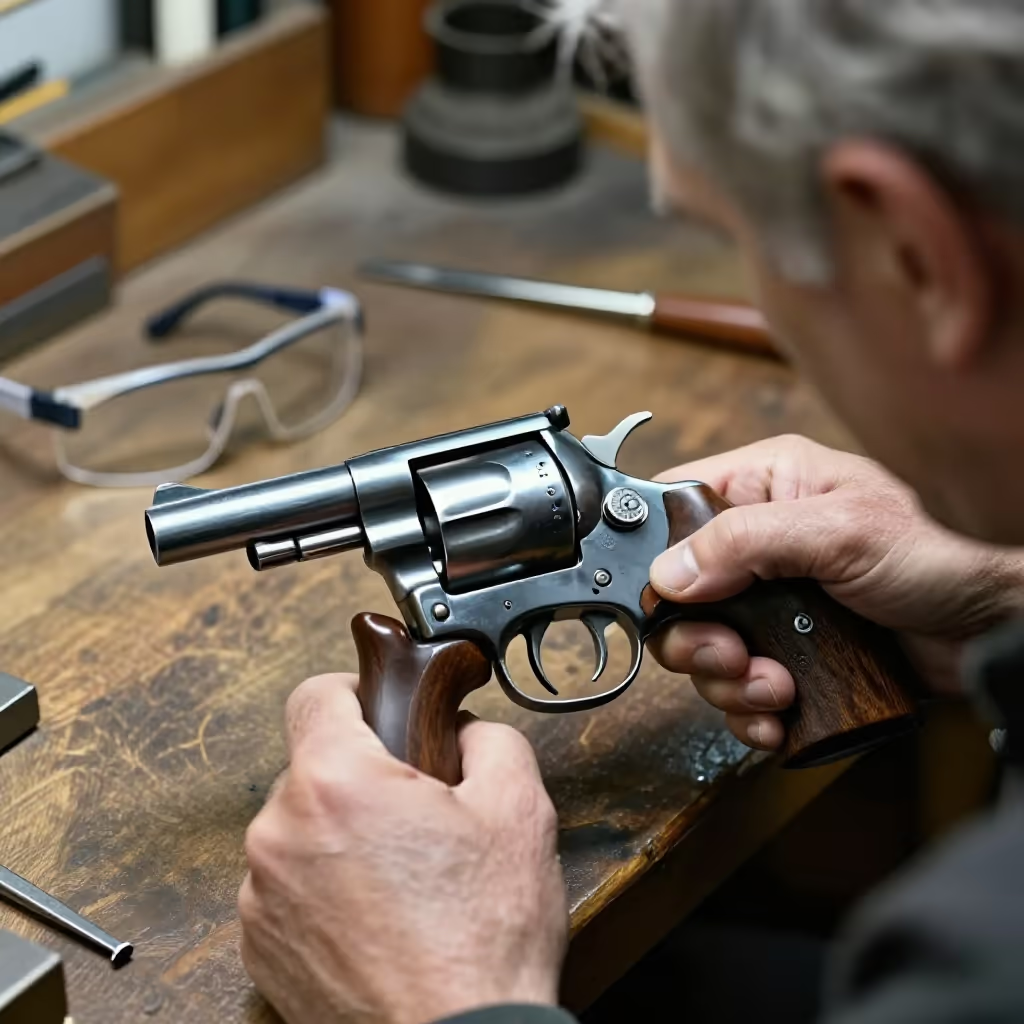
hammer
The part of a firearm that strikes the primer to fire the shot.
Der Jäger spannte langsam den Hahn seines Gewehrs.
The hunter slowly cocked the hammer of his rifle.
You can easily recognize the meaning of 'Hahn' from context. If people are talking about animals, a farm, or the verb 'krähen' (to crow), it refers to the male chicken. If the topic is water, the kitchen, or the bathroom, it means the water tap.
Auf dem Bauernhof krähte der Hahn schon früh am Morgen.
On the farm, the rooster crowed early in the morning.
For a water tap, the separable verbs 'aufdrehen' (to turn on) and 'zudrehen' (to turn off) are essential. The prefix appears at the end of the sentence.
Dreh bitte den Hahn auf, ich brauche heißes Wasser.
Please turn on the tap; I need hot water.
To make the meaning more precise, 'Hahn' is often used in compound words. The most common are 'der Wasserhahn' (water tap) and 'der Gashahn' (gas valve).
Der Installateur repariert den undichten Wasserhahn.
The plumber is repairing the leaky tap.
The characteristic sound that a rooster makes is described with the verb 'krähen' (to crow). This combination is very typical.
Jeden Morgen um fünf Uhr kräht der Hahn.
Every morning at five o'clock, the rooster crows.
The expression 'der Hahn im Korb sein' (to be the rooster in the basket / the only man among women) is a fixed idiom. It is always used in this form with the verb 'sein' (to be).
Als einziger Mann unter all seinen Kolleginnen war er der Hahn im Korb.
As the only man among all his female colleagues, he was the center of attention.
valve
Hahn and Ventil can both regulate the flow of water or gas. Hahn usually refers in everyday language to the directly operated shut-off or outlet device, while Ventil is more general and often used in technical contexts for the regulating mechanism. For a water tap, Hahn is usually the right word; in technical descriptions, Ventil is often more appropriate.
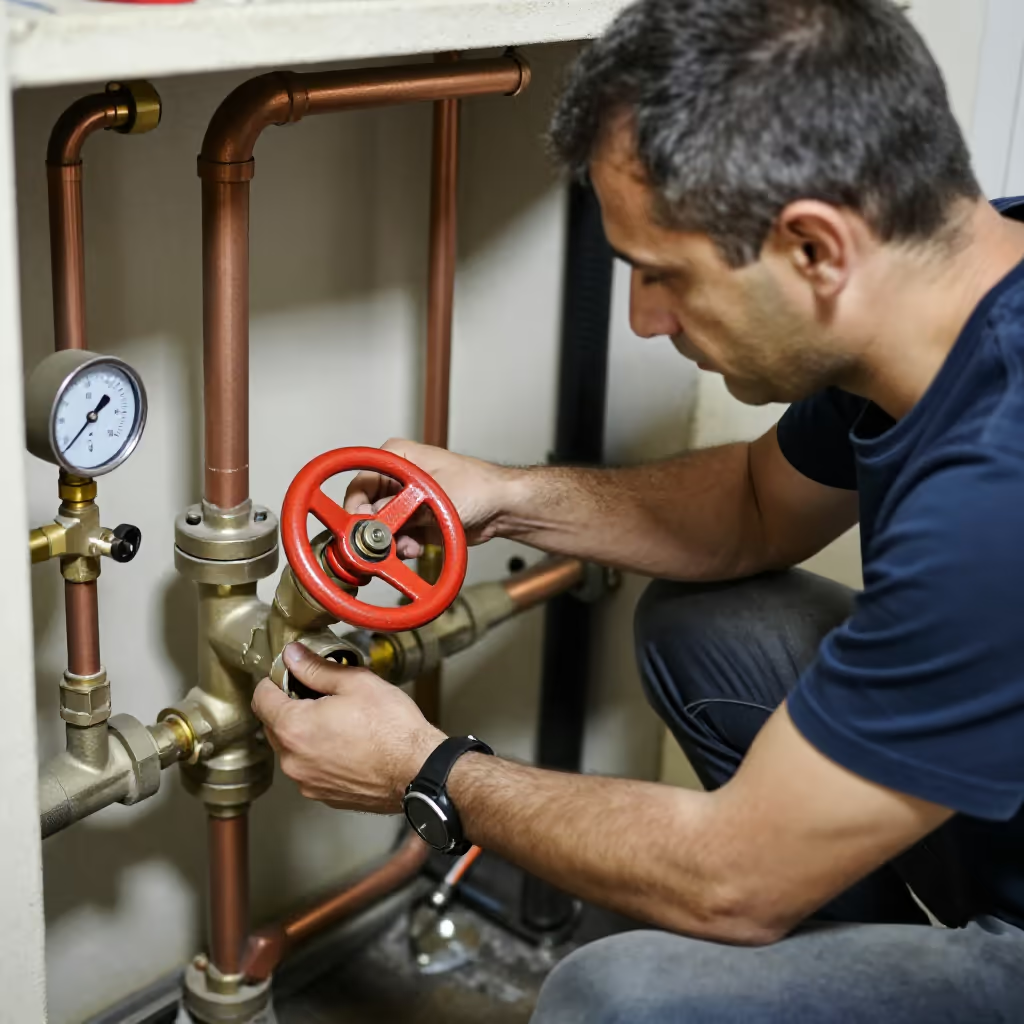
Bitte dreh den Hahn zu, weil Wasser aus dem Schlauch läuft.
Please turn off the tap because water is leaking from the hose.
Der Techniker prüft das Ventil, das den Gasfluss in der Leitung regelt.
The technician is inspecting the valve that regulates the gas flow in the pipe.