

griechisch
Greek
Relates to Greece, its culture, its inhabitants, or its language.
EXAMPLE
Wir haben gestern in einem sehr guten griechischen Restaurant gegessen.
Yesterday we ate at a very good Greek restaurant.
Greek
Loading your saved state.
Greek
Relates to Greece, its culture, its inhabitants, or its language.
Wir haben gestern in einem sehr guten griechischen Restaurant gegessen.
Yesterday we ate at a very good Greek restaurant.

Greco-Roman
Describes a specific style of wrestling in which attacks are only allowed above the waist.
Er wurde Olympiasieger im griechisch-römischen Ringen.
He became Olympic champion in Greco-Roman wrestling.
The adjective 'griechisch' (Greek) is derived from the country name 'Griechenland' (Greece). The ending '-isch' is a typical ending for adjectives that describe origin or affiliation.
Die italienische Küche ist weltberühmt.
Italian cuisine is world-famous.
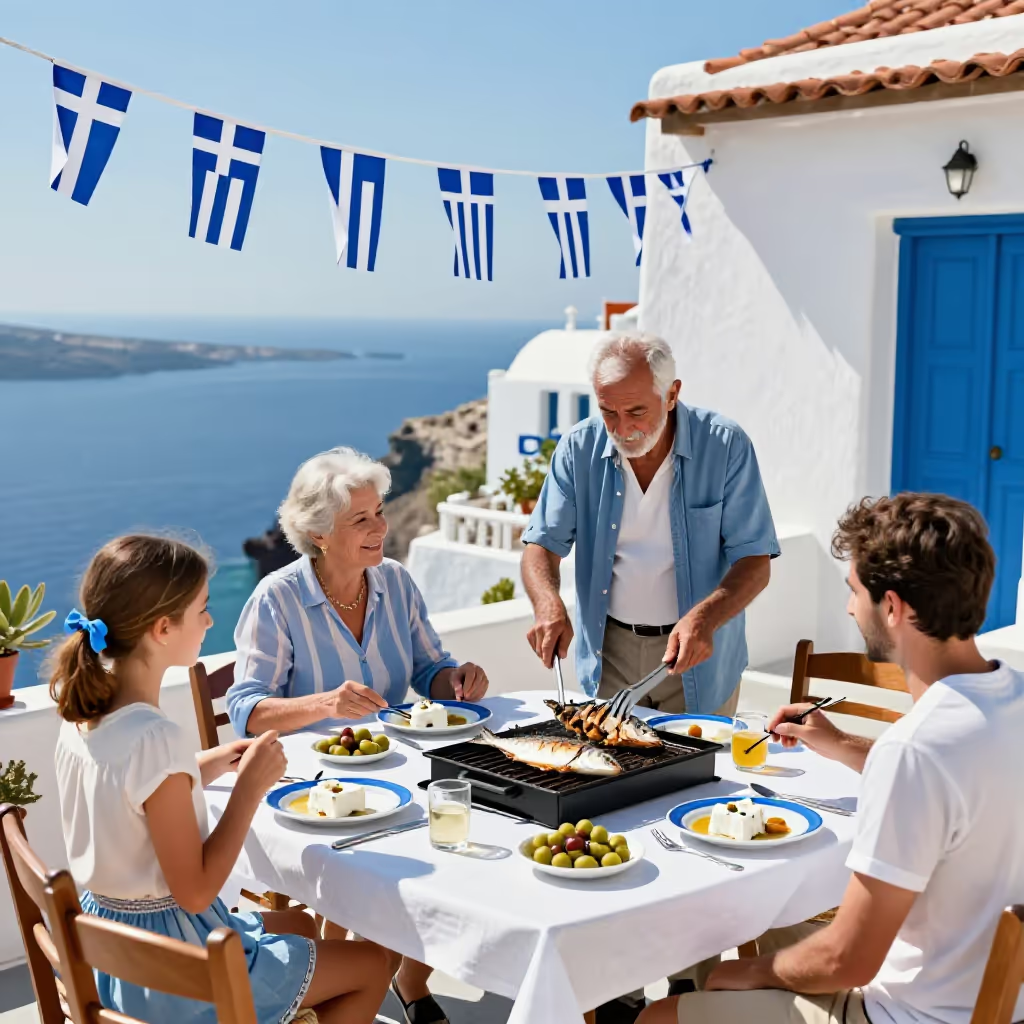
'Griechisch' (Greek) is often associated with culture and food. Typical combinations are 'griechischer Wein' (Greek wine), 'griechischer Salat' (Greek salad), 'griechische Inseln' (Greek islands), and 'griechische Mythologie' (Greek mythology).
Im Sommer machen wir Urlaub auf einer griechischen Insel.
In the summer, we go on vacation on a Greek island.
When talking about the language itself, the word is capitalized as a noun: 'das Griechische' (the Greek language) or simply 'Griechisch' (Greek). In this form, it does not need declension.
Sie lernt seit einem Jahr Griechisch.
She has been learning Greek for a year.