

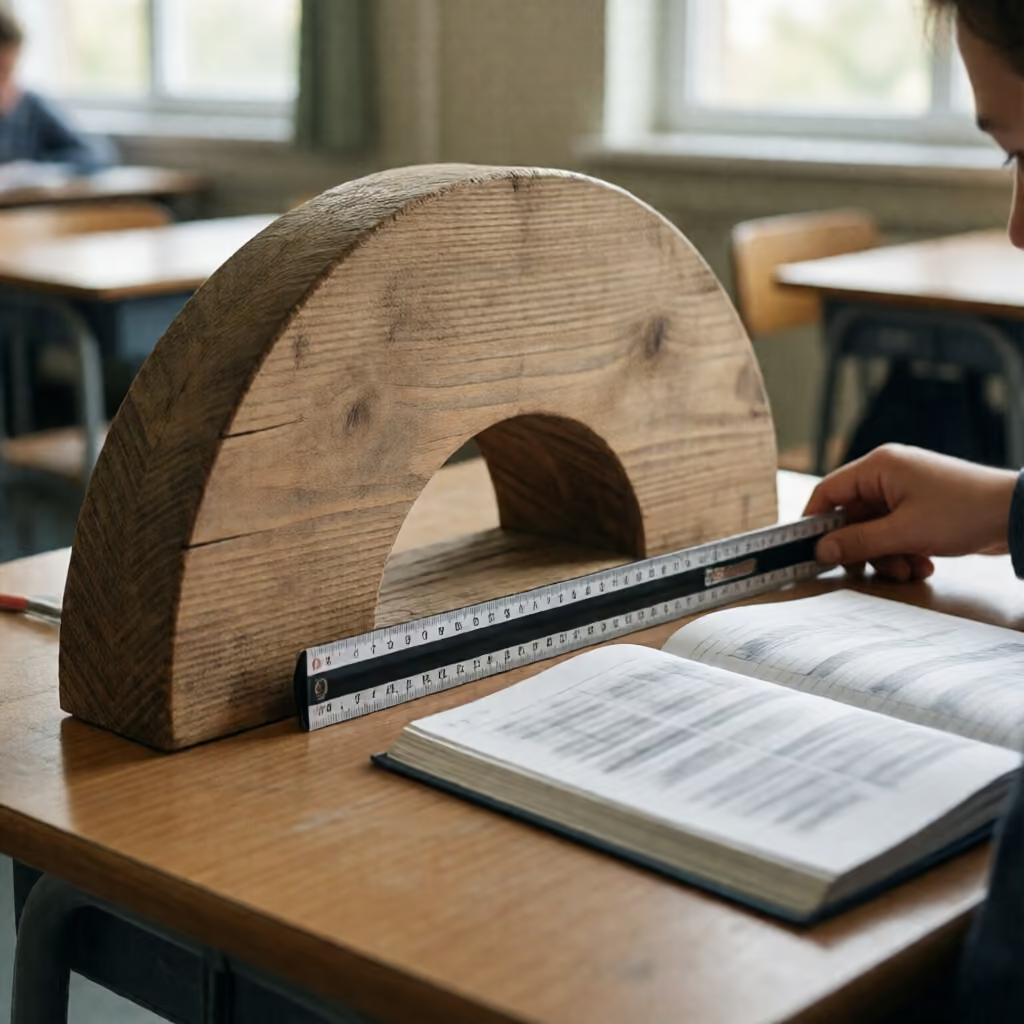
der Halbkreis
semicircle
A flat geometric figure consisting of half a circle and its corresponding diameter.
EXAMPLE
Der Halbkreis hat einen Durchmesser von sechs Zentimetern.
The semicircle has a diameter of six centimeters.
semicircle
der Halbkreis, die Halbkreise
Loading your saved state.
semicircle
A flat geometric figure consisting of half a circle and its corresponding diameter.
Der Halbkreis hat einen Durchmesser von sechs Zentimetern.
The semicircle has a diameter of six centimeters.
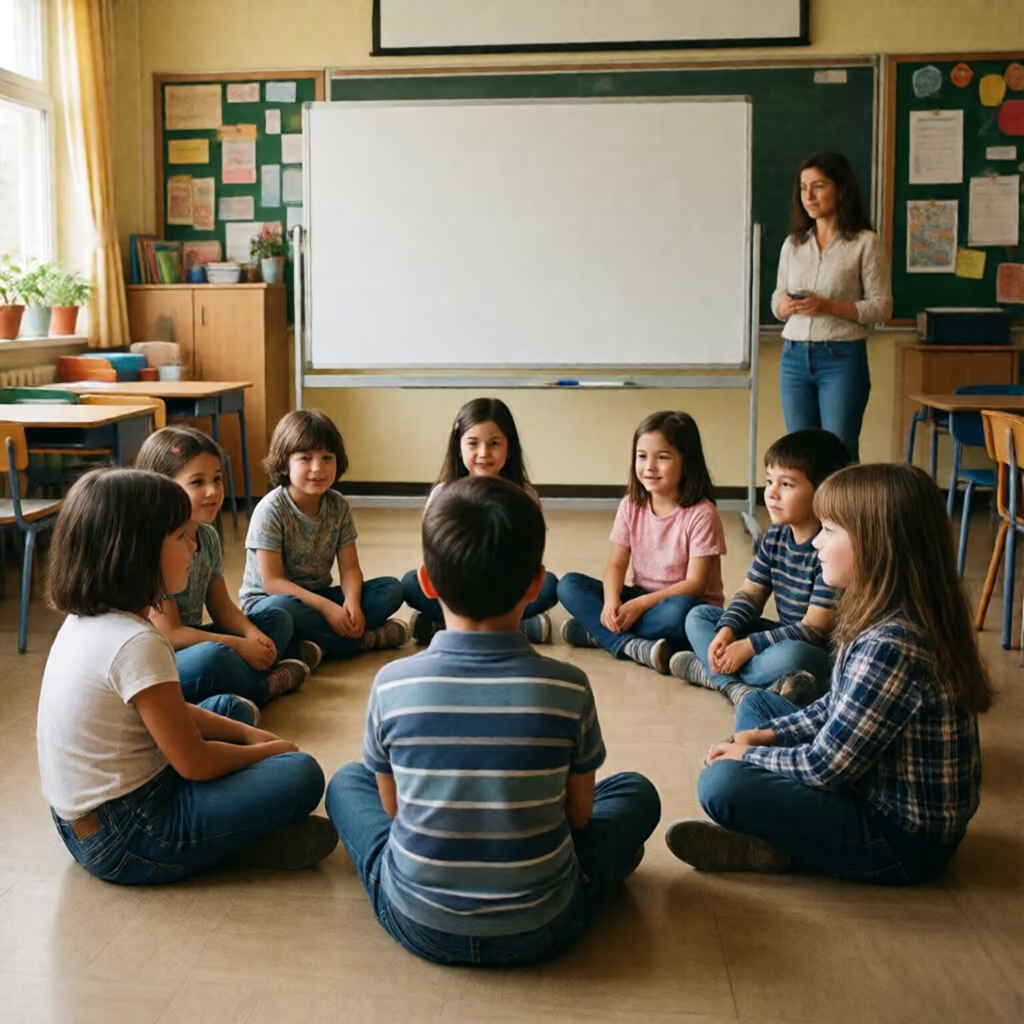
semicircle
A semicircular arrangement of people or objects.
Die Kinder setzten sich im Halbkreis vor die Tafel.
The children sat in a semicircle in front of the board.
| gender | masculine der |
|---|---|
| plural | die Halbkreise |
| genitive | des Halbkreises |
| singular | plural | |
|---|---|---|
| nominative | der Halbkreis | die Halbkreise |
| accusative | den Halbkreis | die Halbkreise |
| dative | dem Halbkreis | den Halbkreisen |
| genitive | des Halbkreises | der Halbkreise |
The article changes with the case; it is shown in colour.
'Halbkreis' (semicircle) is made up of 'halb' (half) and 'Kreis' (circle). The word therefore makes it clear that only half of a circle is meant.
Die Lehrerin zeichnete einen Halbkreis an die Tafel.
The teacher drew a semicircle on the board.
In geometry, 'Halbkreis' (semicircle) is often described together with 'Durchmesser' (diameter), 'Radius' (radius), or 'Kreislinie' (circumference). The diameter forms the straight side of the semicircle.
Für den Halbkreis müssen die Schülerinnen zuerst den Radius berechnen.
For the semicircle, the students first have to calculate the radius.
When referring to an arrangement of people or objects, 'Halbkreis' (semicircle) often appears with verbs such as 'sitzen' (to sit), 'stehen' (to stand), or 'sich aufstellen' (to line up). The preposition 'in' is usually used with the dative: 'im Halbkreis' (in a semicircle).
Die Musiker standen im Halbkreis und warteten auf ihren Dirigenten.
The musicians stood in a semicircle and waited for their conductor.