

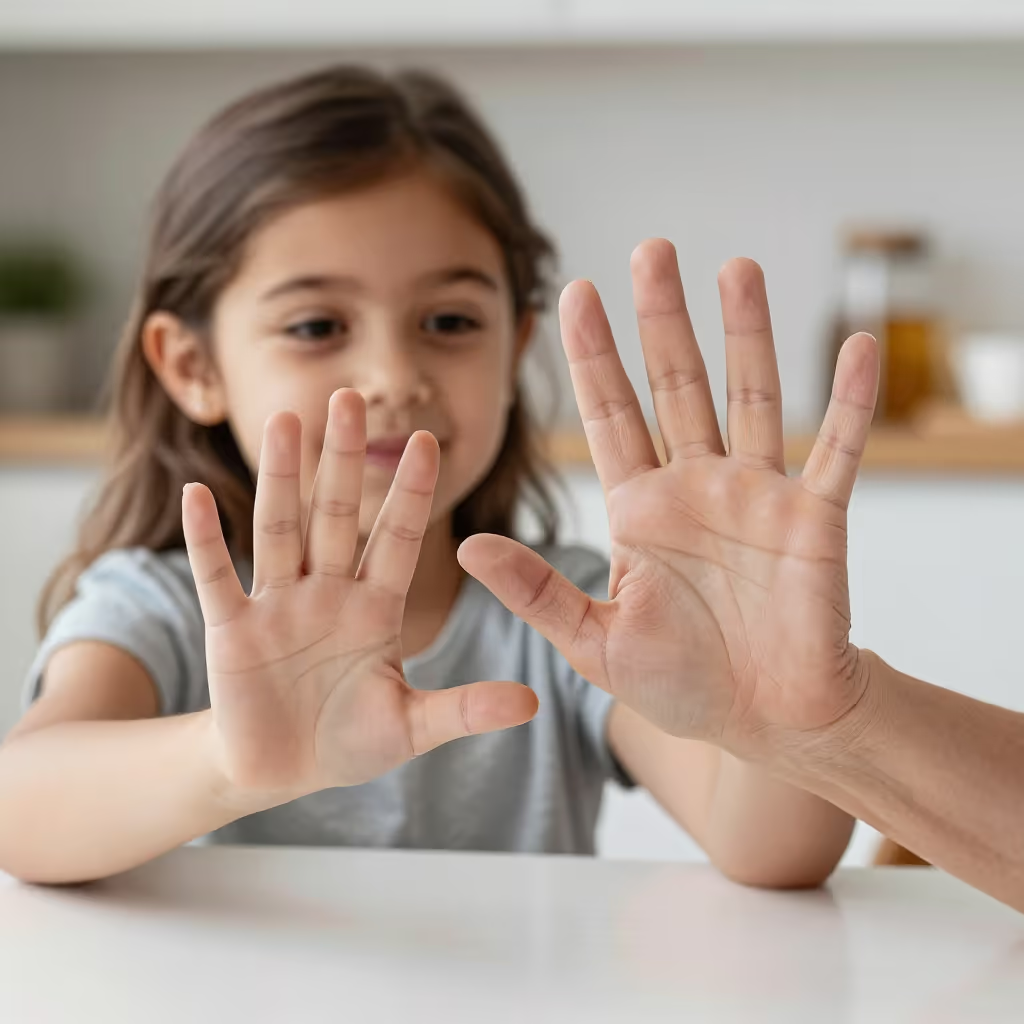
die Hand
hand
The part of the body at the end of the arm that is used for grasping and feeling and has five fingers.
EXAMPLE
Zur Begrüßung reichte er mir die Hand.
As a greeting, he offered me his hand.
hand
Loading your saved state.
hand
The part of the body at the end of the arm that is used for grasping and feeling and has five fingers.
Zur Begrüßung reichte er mir die Hand.
As a greeting, he offered me his hand.
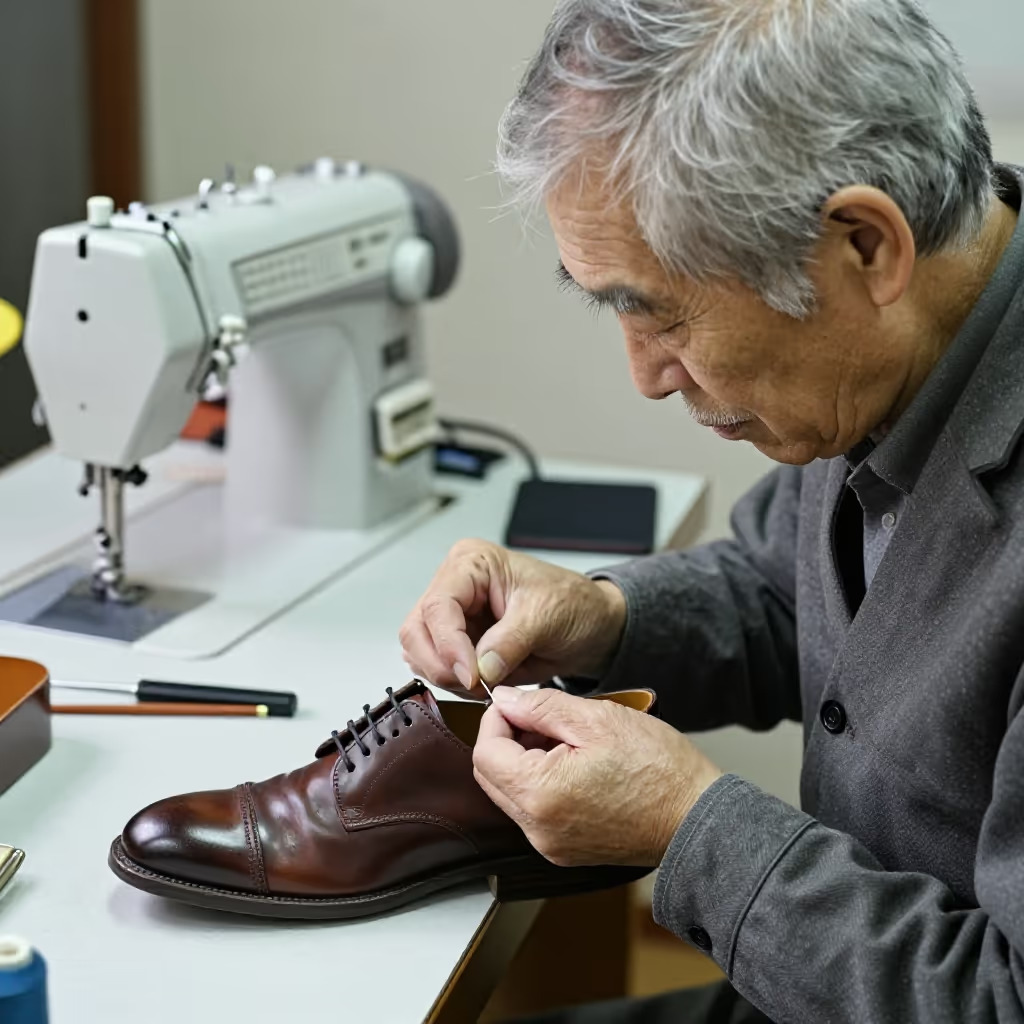
by hand
Manually, without the use of machines.
Diese Grußkarte wurde komplett von Hand gestaltet.
This greeting card was designed completely by hand.
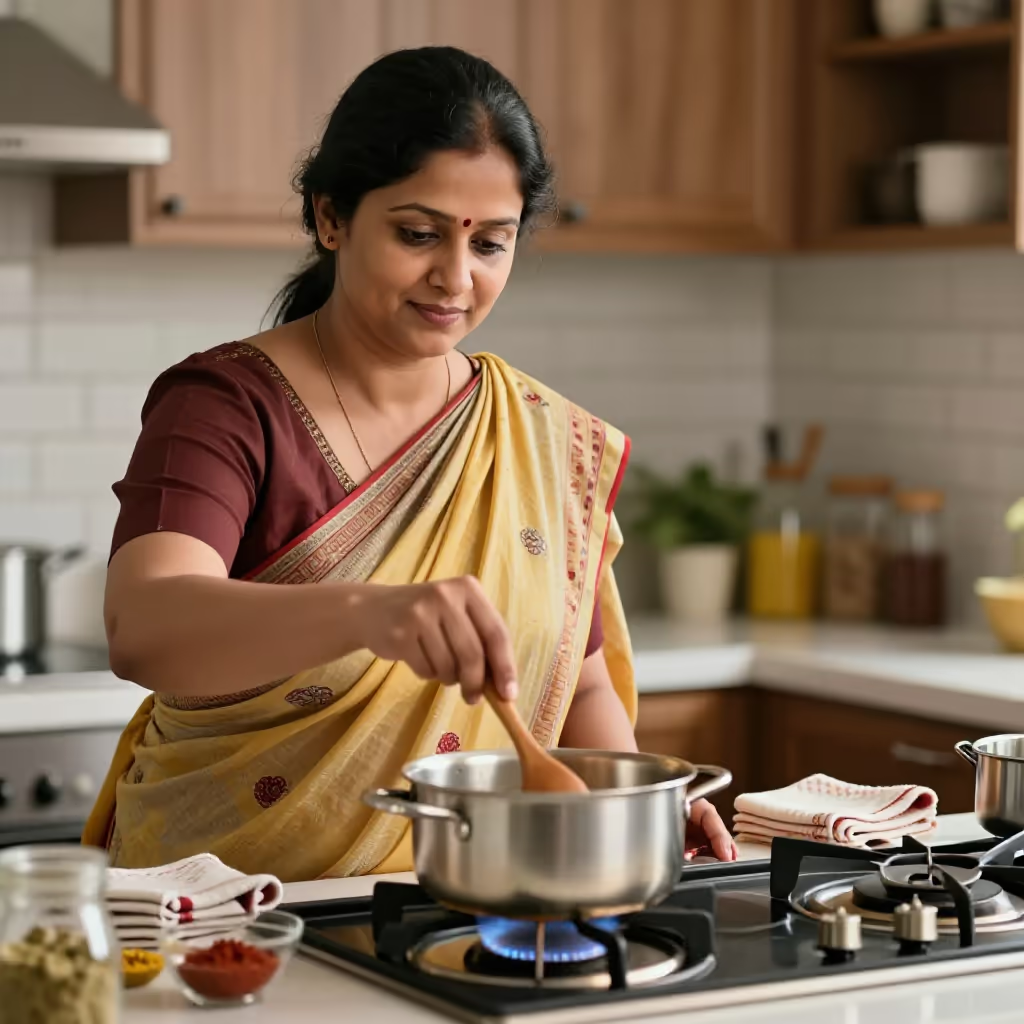
to have at hand
To have something within reach or available.
Haben Sie zufällig einen Stift zur Hand?
Do you happen to have a pen at hand?

to have something in hand
To have control or power over a situation or person.
Nach der Umstrukturierung hat die neue Geschäftsführerin alles fest in der Hand.
After the restructuring, the new managing director has everything firmly in hand.

hand in hand
In close cooperation and harmony; together.
Umweltschutz und Wirtschaft müssen Hand in Hand gehen.
Environmental protection and the economy must go hand in hand.
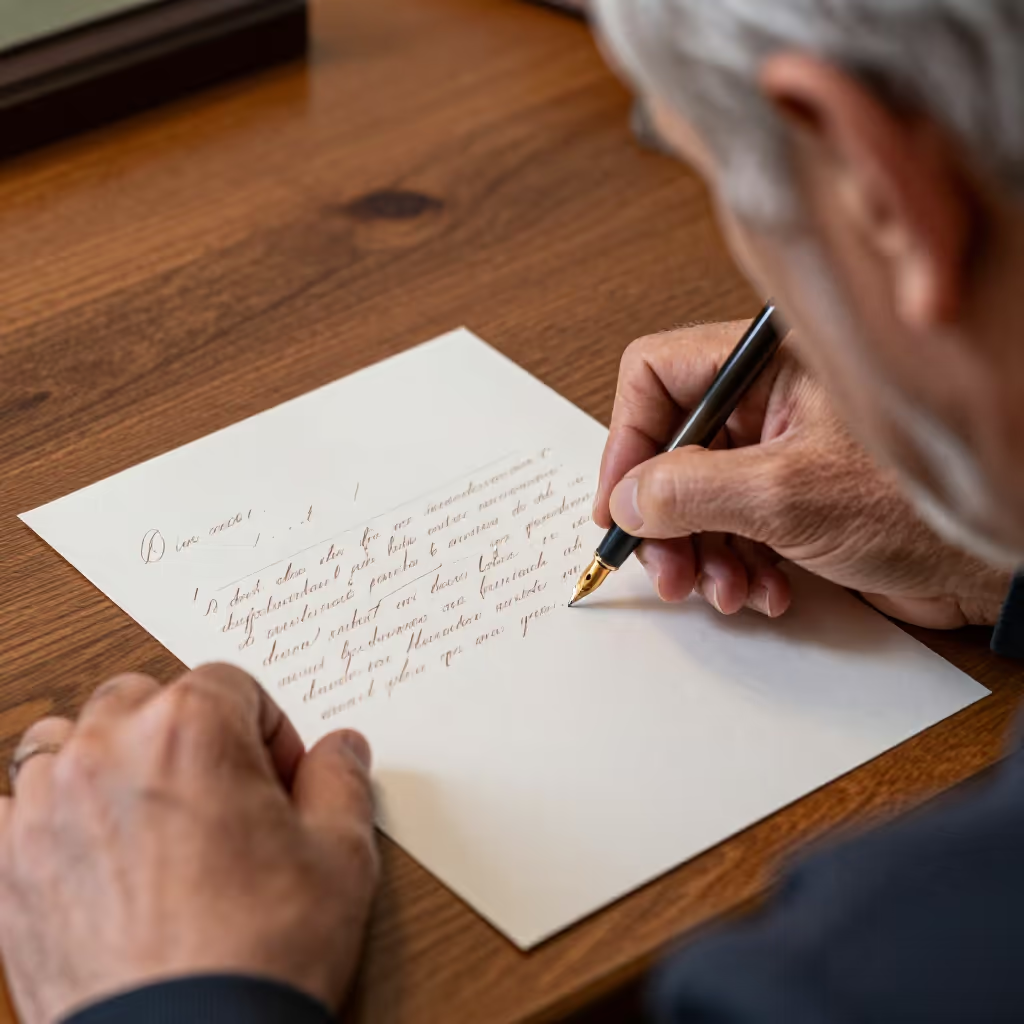
handwriting
A person's personal handwriting.
An seiner unordentlichen Hand erkannte ich sofort, dass er den Brief geschrieben hatte.
From his messy handwriting, I immediately recognized that he had written the letter.
firsthand
Receiving information directly from the original source, without intermediaries.
Ich weiß das aus erster Hand, denn der Chef hat es mir selbst erzählt.
I know that firsthand, because the boss told me himself.

to vouch for someone
To guarantee for someone and trust them completely.
Auf ihn kann man sich verlassen, für ihn würde ich meine Hand ins Feuer legen.
You can rely on him; I would vouch for him.
'Hand' (hand) is a very productive base word in German. It forms many compound nouns such as 'Handschuh' (glove), 'Handtuch' (towel), 'Handtasche' (handbag), or 'Handwerk' (craft/trade).
Für den Winter brauche ich neue Handschuhe.
I need new gloves for the winter.
Many idioms with 'Hand' use a fixed preposition that you should learn along with them. Examples are 'von Hand' (by hand), 'zur Hand' (at hand), 'in der Hand' (in hand), or 'aus erster Hand' (firsthand).
Ich habe die Information aus erster Hand.
I have the information firsthand.
In connection with greetings and gestures, 'Hand' (hand) is often used with the verbs 'geben' (to give), 'reichen' (to offer/extend), or 'schütteln' (to shake).
Der Politiker schüttelte viele Hände.
The politician shook many hands.
The expression 'von Hand' (by hand) always means 'manuell' (manually) or 'ohne Maschine' (without a machine). It is used as an adverbial phrase to describe the production process.
Dieser Pullover wurde von meiner Großmutter von Hand gestrickt.
This sweater was knitted by hand by my grandmother.
The idiom 'etwas in der Hand haben' (to have something in hand) means to have control over a situation. It is often intensified with adverbs like 'fest' (firmly) or 'sicher' (securely).
Die Projektleiterin hat alle Fäden fest in der Hand.
The project manager has all the strings firmly in hand.
The expression 'Hand in Hand' (hand in hand) can literally mean that two people are holding hands. But it is also often used figuratively for close cooperation.
Das Paar ging Hand in Hand am Strand spazieren.
The couple walked hand in hand along the beach.
You can usually recognize the meaning 'Handschrift' (handwriting) from the context. It is often used together with verbs like 'erkennen' (to recognize) or adjectives like 'leserlich' (legible) or 'unleserlich' (illegible).
Ich erkenne seine Hand sofort, sie ist sehr markant.
I recognize his handwriting immediately; it is very distinctive.
'Die Hand für jemanden ins Feuer legen' (to put one's hand in the fire for someone / to vouch for someone) is a fixed idiom that expresses strong trust. You cannot swap out the words in it.
Ich kenne ihn seit Jahren. Für ihn lege ich meine Hand ins Feuer.
I've known him for years. I vouch for him completely.
finger
Anyone who refuses to help macht keinen Finger krumm (doesn't lift a finger). In this fixed expression, Finger cannot be replaced with Hand. Hand refers here only to the body part and, without a suitable expression, does not convey complete inactivity.

Obwohl seine Hand frei war, half er beim Tragen nicht mit.
Although one of his hands was free, he did not help carry anything.
Obwohl er Zeit hatte, machte er beim Tragen keinen Finger krumm.
Although he had time, he did not lift a finger to help carry anything.