


der Finger
finger
One of the movable parts at the end of a human hand.
EXAMPLE
Ich habe mich beim Kochen in den Finger geschnitten.
I cut my finger while cooking.
finger
Loading your saved state.
finger
One of the movable parts at the end of a human hand.
Ich habe mich beim Kochen in den Finger geschnitten.
I cut my finger while cooking.

not lift a finger
To be completely inactive or refuse to help with a task.
Während wir alles aufgeräumt haben, hat er keinen Finger krumm gemacht.
While we cleaned everything up, he didn't lift a finger.

wrap someone around one's finger
To easily influence or charm someone into doing what you want.
Mit ihrem Charme wickelt sie jeden sofort um den Finger.
With her charm, she immediately wraps everyone around her finger.
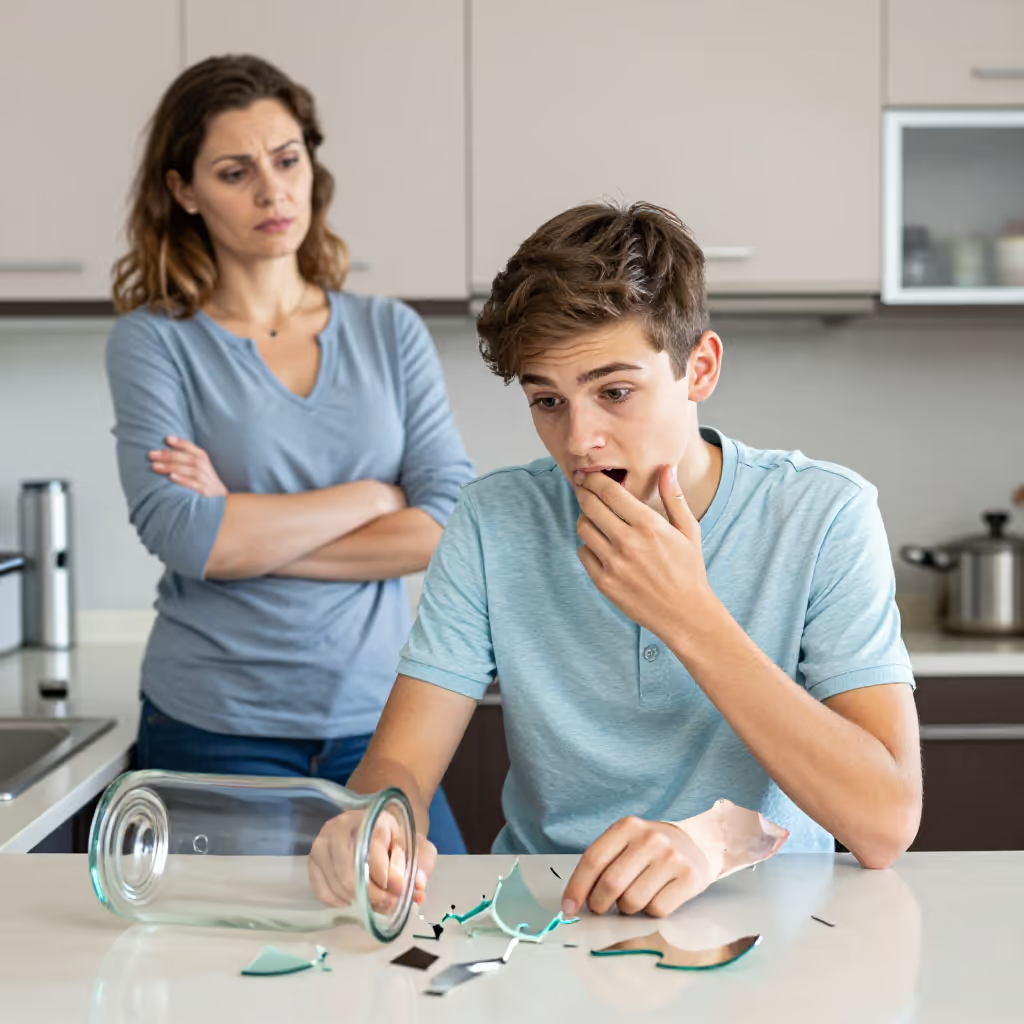
make something up
To invent information or a story that is not true.
Diese ganze Geschichte hat er sich nur aus den Fingern gesogen, um nicht bestraft zu werden.
He just made up that whole story to avoid being punished.
'Finger' (finger) is the basis for many useful words. These include body parts like 'Zeigefinger' (index finger) or 'Fingerspitze' (fingertip), but also abstract terms like 'Fingerspitzengefühl' (intuition/tact).
Für diese heikle Aufgabe braucht man viel Fingerspitzengefühl.
For this delicate task, you need a lot of tact.
In the literal sense, 'Finger' (finger) is often combined with certain verbs. Typical phrases are 'mit dem Finger auf jemanden zeigen' (to point at someone with one's finger), 'sich in den Finger schneiden' (to cut one's finger), or 'sich die Finger verbrennen' (to burn one's fingers).
Es ist unhöflich, mit dem Finger auf andere Leute zu zeigen.
It's impolite to point at other people with your finger.
The idiom 'keinen Finger krumm machen' (not to lift a finger) is grammatically fixed. The verb is 'krumm machen' and it is almost always used in this negated form to express inactivity.
Er hat den ganzen Tag nur auf dem Sofa gelegen und keinen Finger krumm gemacht.
He just lay on the sofa all day and didn't lift a finger.
In the expression 'jemanden um den Finger wickeln' (to wrap someone around one's finger), the person being manipulated is always in the accusative. The person doing the action is the subject of the sentence.
Der kleine Junge kann seine Großmutter mit einem Lächeln um den Finger wickeln.
The little boy can wrap his grandmother around his finger with a smile.
The idiom 'sich etwas aus den Fingern saugen' (to make something up) is reflexive. The person inventing something often appears with a dative reflexive pronoun: 'Ich sauge mir eine Ausrede aus den Fingern.' (I'm making up an excuse.)
Die Journalistin hat sich die Fakten für ihren Artikel nicht nur aus den Fingern gesogen.
The journalist didn't just make up the facts for her article.
hand
Anyone who refuses to help macht keinen Finger krumm (doesn't lift a finger). In this fixed expression, Finger cannot be replaced with Hand. Hand refers here only to the body part and, without a suitable expression, does not convey complete inactivity.
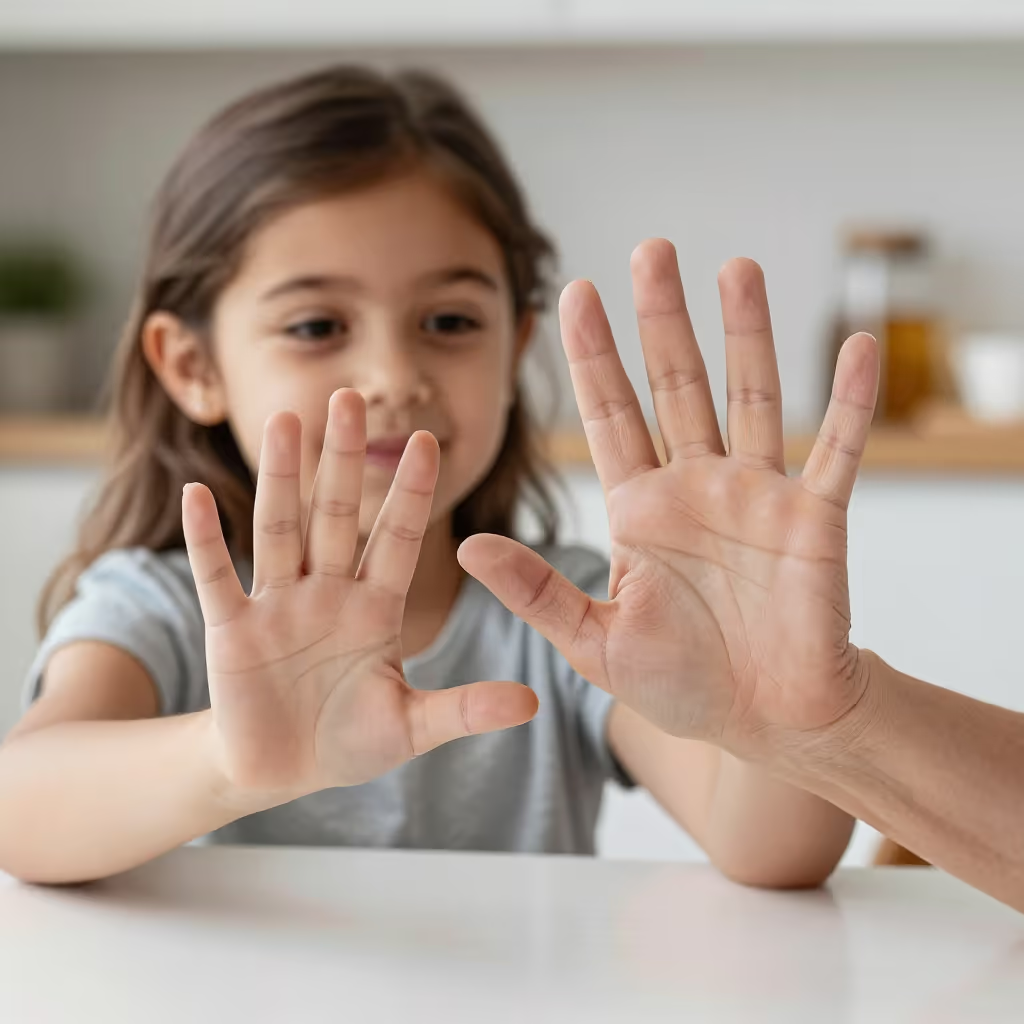
Obwohl er Zeit hatte, machte er beim Tragen keinen Finger krumm.
Although he had time, he did not lift a finger to help carry anything.
Obwohl seine Hand frei war, half er beim Tragen nicht mit.
Although one of his hands was free, he did not help carry anything.