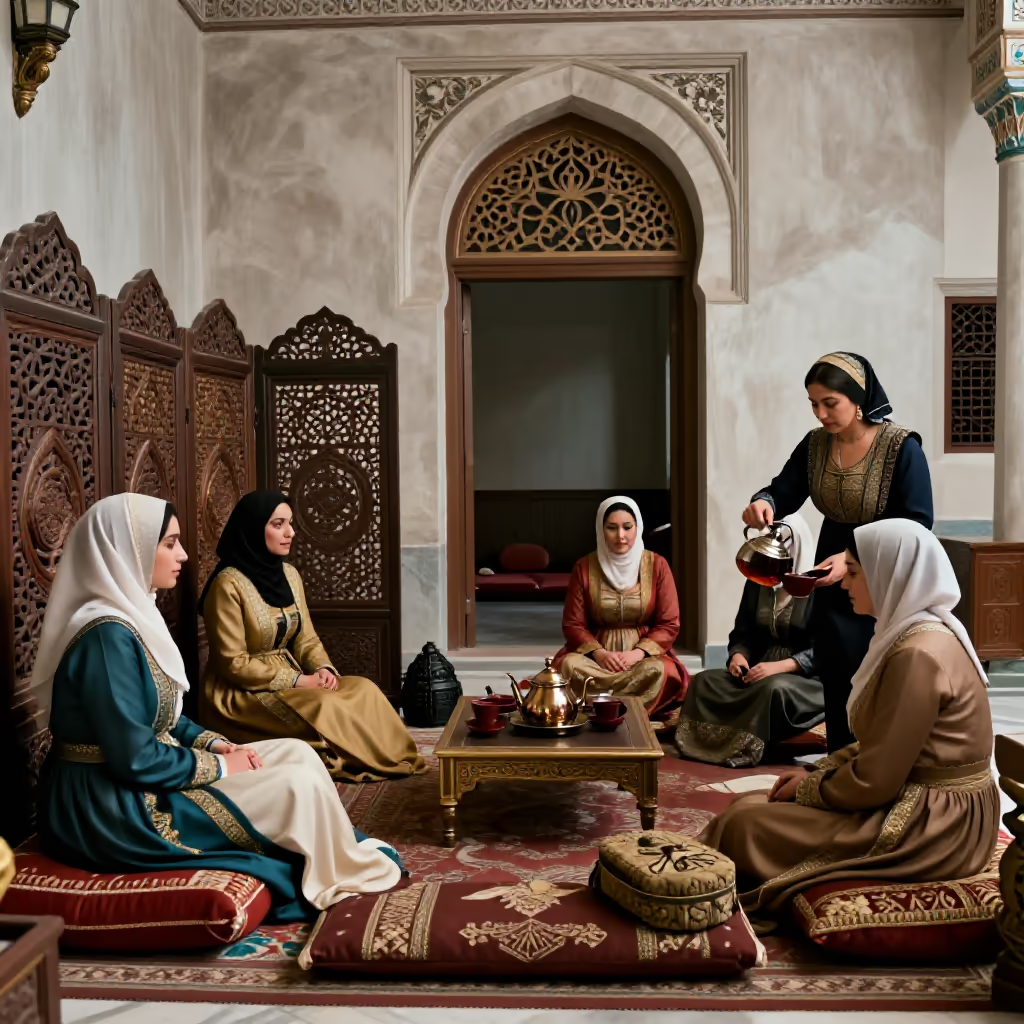
The secluded living area for women (wives, concubines, female relatives, and female servants) in a traditional Muslim household, especially in a palace.
example
Touristen können heute den ehemaligen Harem im Topkapi-Palast in Istanbul besichtigen.
Today, tourists can visit the former harem quarters in Topkapi Palace in Istanbul.

Usage tips
Origin of the word
The word 'Harem' (harem) comes from Arabic (ḥarīm) and literally means 'forbidden place' or 'sanctuary'. This refers to the private area of a house that is inaccessible to unrelated men.
EXAMPLE
Der Harem war der am strengsten bewachte Teil des Palastes.
The harem was the most strictly guarded part of the palace.
Context clue
The meaning can be recognized from the context: in connection with palaces and architecture, it means the living quarters. When talking about animals, the zoological meaning is intended. If it is about a ruler and his women, it means the group of people.
EXAMPLE
Die Führung durch den Harem des Sultans war faszinierend.
The tour through the sultan's harem quarters was fascinating.
Colloquial usage
Colloquially and often humorously, 'Harem' (harem) is also used for a group of women surrounding a man. This usage has nothing to do with polygamy, but describes a social situation.
EXAMPLE
Der Sänger reist immer mit seinem ganzen „Harem“ aus Assistentinnen und Fans.
The singer always travels with his whole 'harem' of assistants and fans.
Typical collocations
In zoology, 'Harem' (harem) is often combined with verbs such as 'verteidigen' (to defend), 'anführen' (to lead), or 'sammeln' (to gather). Typical animals that form harems are deer, seals, or gorillas.
EXAMPLE
Der Platzhirsch führt einen Harem von bis zu 20 Hirschkühen an.