

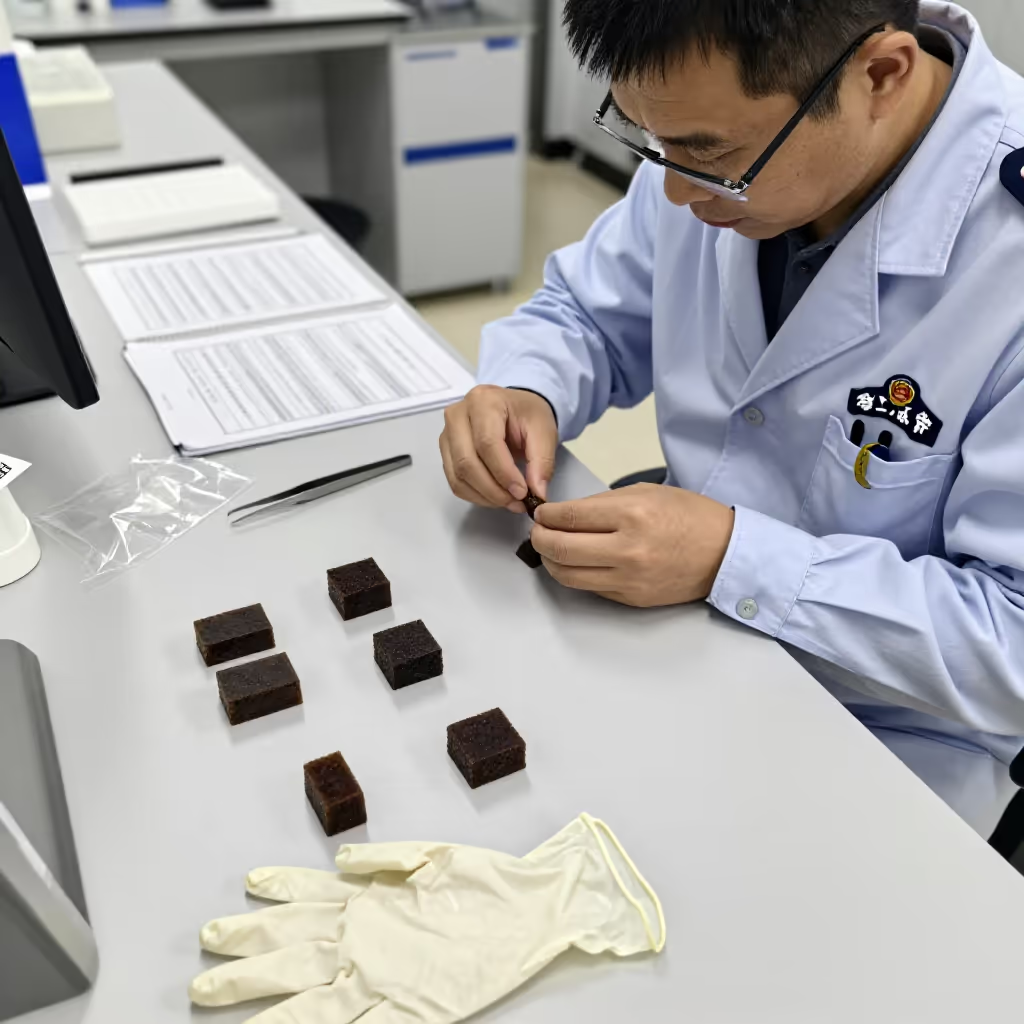
A colloquial term for hashish, an intoxicating drug obtained from the resin of the female hemp plant.
example
Bei der Grenzkontrolle wurde bei ihm eine kleine Menge Hasch gefunden.
During the border check, a small amount of hash was found on him.
Usage tips
Register
'Hasch' (hash) is the short and colloquial form of 'Haschisch' (hashish). In formal contexts, such as police reports or the news, the full word is more likely to be used.
EXAMPLE
Die Jugendlichen wurden beim Rauchen von Hasch erwischt.
The teenagers were caught smoking hash.
Uncountable noun
'Hasch' (hash) is used as an uncountable noun (a substance noun). It therefore usually appears without an article and has no plural form.
EXAMPLE
Der Besitz von Hasch ist in Deutschland illegal.
Possession of hash is illegal in Germany.
Typical verbs
Common verbs in connection with 'Hasch' (hash) are 'rauchen' (to smoke), 'konsumieren' (to consume/use), and 'dealen' (colloquial for to deal/sell drugs).
EXAMPLE
Er hat zugegeben, regelmäßig Hasch zu rauchen.
He admitted to smoking hash regularly.
Compare with
near_synonym · confusable
Hasch vs Gras
grass
'das Gras' and 'das Hasch' can both be connected to cannabis in colloquial language. In this meaning, 'Gras' usually means marijuana, that is, dried parts of the plant. 'Hasch' is short for 'Haschisch' and means an intoxicating drug made from the resin of the hemp plant. The words can be confused because they occur in the same drug-related context. However, they do not refer to exactly the same product. Also important: in normal everyday language, 'Gras' first means the green plant found in meadows and gardens; the drug meaning is colloquial.
Hasch
Der Zoll entdeckte Hasch in einem kleinen Paket.
Customs officers discovered hash in a small package.
Gras
Im Bericht der Polizei stand, dass in der Tasche etwas Gras gefunden wurde.
The police report said that some weed was found in the bag.