

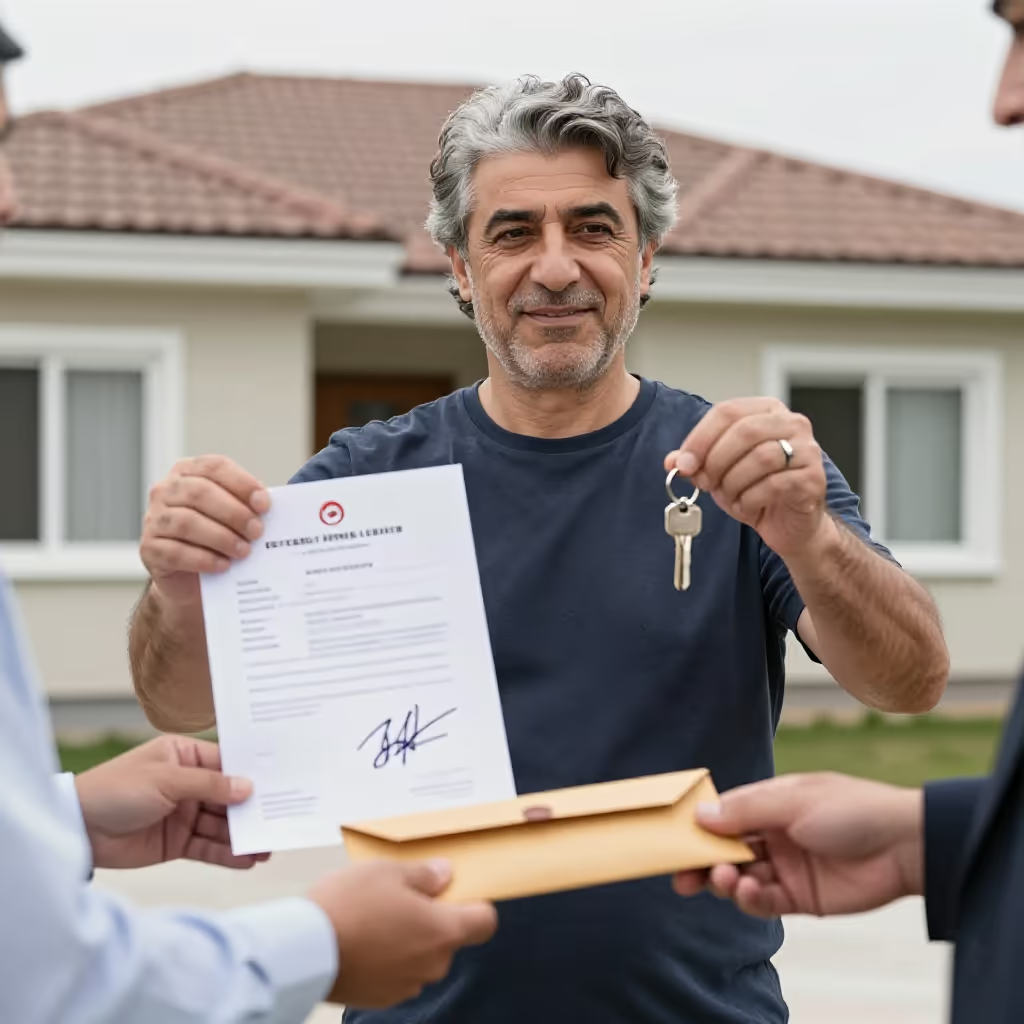
A person who legally owns a residential house. The feminine form is 'die Hausbesitzerin' (female homeowner).
example
Der Hausbesitzer ist für die Reparatur des kaputten Daches verantwortlich.
The homeowner is responsible for repairing the broken roof.
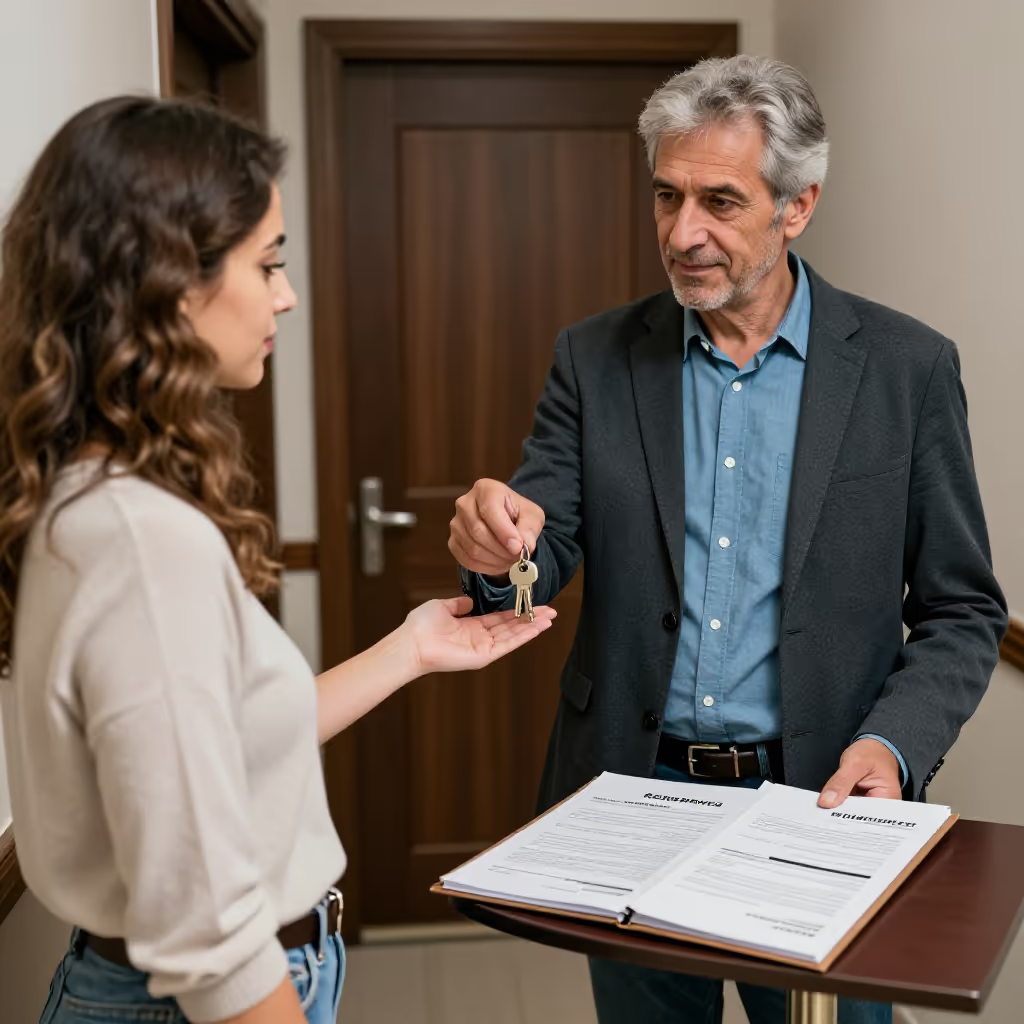
Usage tips
Word composition
'Hausbesitzer' (homeowner) is a clear compound made up of 'das Haus' (the house) and 'der Besitzer' (the owner). A 'Besitzer' is someone to whom something belongs.
EXAMPLE
Als neuer Hausbesitzer hat er viele Pläne für den Garten.
As a new homeowner, he has many plans for the garden.
Productive ending
The ending '-besitzer' can be attached to many nouns to name the owner of that thing. This pattern helps you understand and form many new words.
EXAMPLE
Der Autobesitzer muss für den Schaden aufkommen.
The car owner has to pay for the damage.
Typical context
The word 'Hausbesitzer' (homeowner) is often used in a legal or administrative context. It frequently involves rights, obligations, costs, or the maintenance of a property.
EXAMPLE
Die Hausbesitzer müssen sich an die neuen Vorschriften halten.
The homeowners must comply with the new regulations.
Compare with
near_synonym · confusable
Hausbesitzer vs Besitzer
owner
'der Besitzer' and 'der Hausbesitzer' both describe someone who owns something. 'der Besitzer' is more general: it can refer to a bicycle, an animal, a car, or also a house. 'der Hausbesitzer' is more precise and means only a person who owns a residential house. Learners may confuse the words because a homeowner is also an owner. If the thing is not specifically a house, or if that is not important, 'Besitzer' fits. If it is explicitly about a residential house, 'Hausbesitzer' is more natural and more precise.
Hausbesitzer
Der Hausbesitzer lässt morgen die alte Heizung prüfen.
The homeowner is having the old heating system checked tomorrow.
Besitzer
Nach der Arbeit hat er den Besitzer des gefundenen Hundes angerufen.
After work, he called the owner of the dog he had found.