

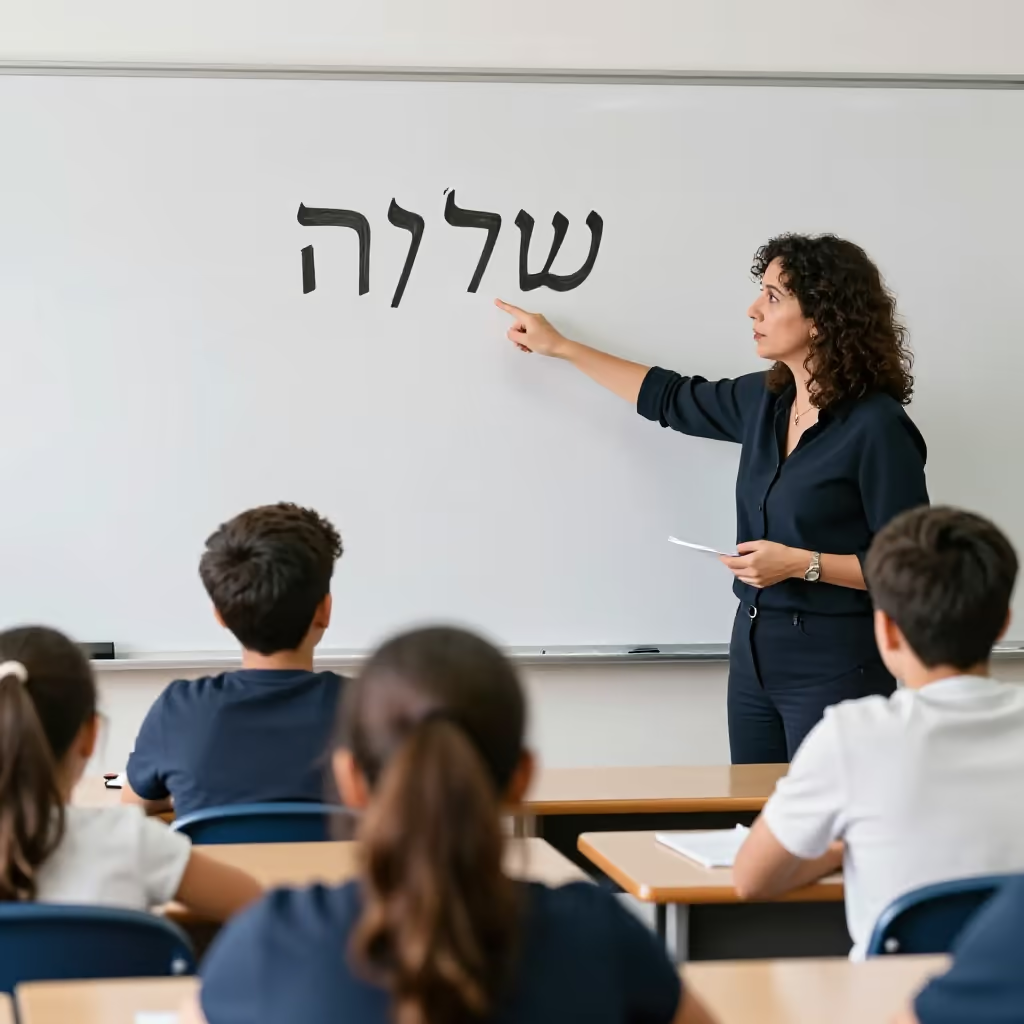
hebräisch
Hebrew
Relating to the Hebrew language, the Hebrew people, or the culture of Israel.
EXAMPLE
In ihrem Sprachkurs lernt sie gerade das hebräische Alphabet.
In her language course, she is currently learning the Hebrew alphabet.
Hebrew
Loading your saved state.
Hebrew
Relating to the Hebrew language, the Hebrew people, or the culture of Israel.
In ihrem Sprachkurs lernt sie gerade das hebräische Alphabet.
In her language course, she is currently learning the Hebrew alphabet.
As an adjective, 'hebräisch' (Hebrew) describes a noun and is written in lowercase in German unless it is at the beginning of a sentence. It must be declined like any adjective.
Sie interessiert sich für hebräische Literatur und Geschichte.
She is interested in Hebrew literature and history.
When the word refers to the language itself, it is used as the noun 'das Hebräisch' (Hebrew) and capitalized. In a sentence, it often appears without an article.
Er spricht fließend Hebräisch.
He speaks Hebrew fluently.
The construction 'auf Hebräisch' means 'in Hebrew'. This pattern with 'auf' + language is used for many languages.
Der Film wurde im Original auf Hebräisch gedreht.
The film was originally shot in Hebrew.
Jewish
Jüdisch generally refers to the religion, culture, history, or origin of Jews. Hebräisch is more specific when the Hebrew language or script is meant; it can also have a broader connection. When discussing a specific text in this language, „hebräisch“ is more precise; otherwise, „jüdisch“ is often used.

Die Schülerin liest den kurzen Text im Original auf Hebräisch.
The student is reading the short text in the original Hebrew.
Das Museum zeigt eine jüdische Tradition, die bis heute gepflegt wird.
The museum showcases a Jewish tradition that is still practiced today.